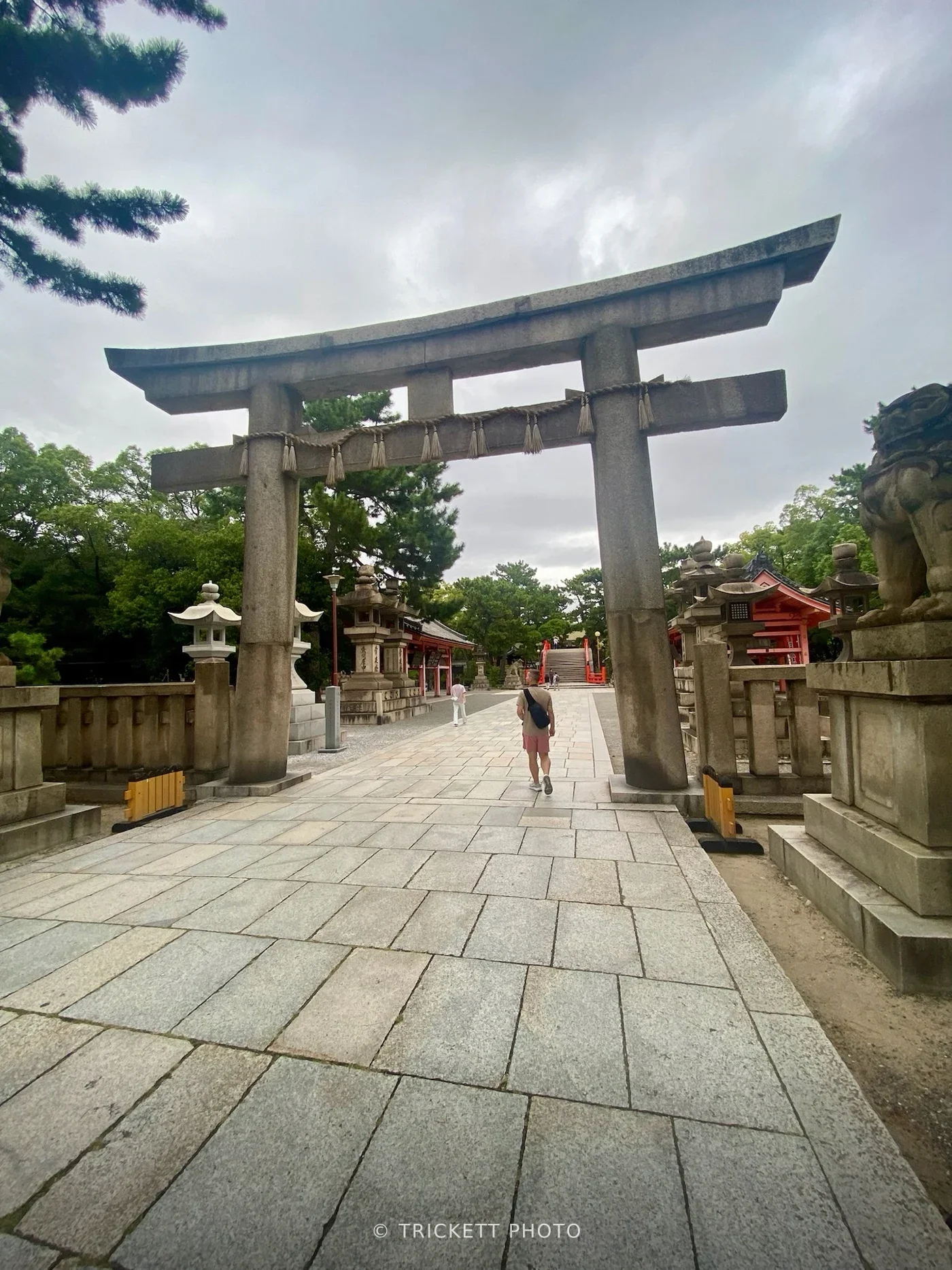
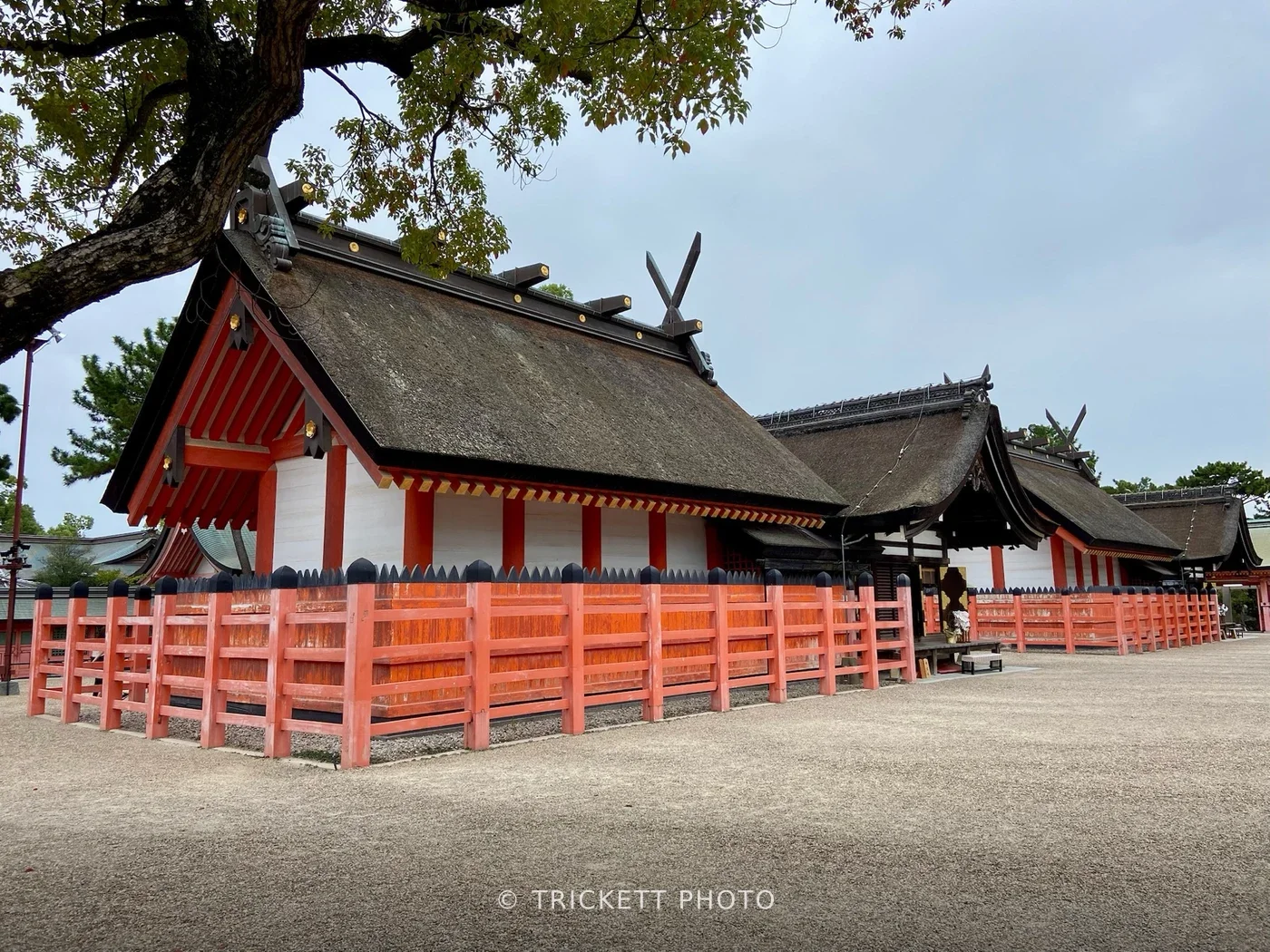
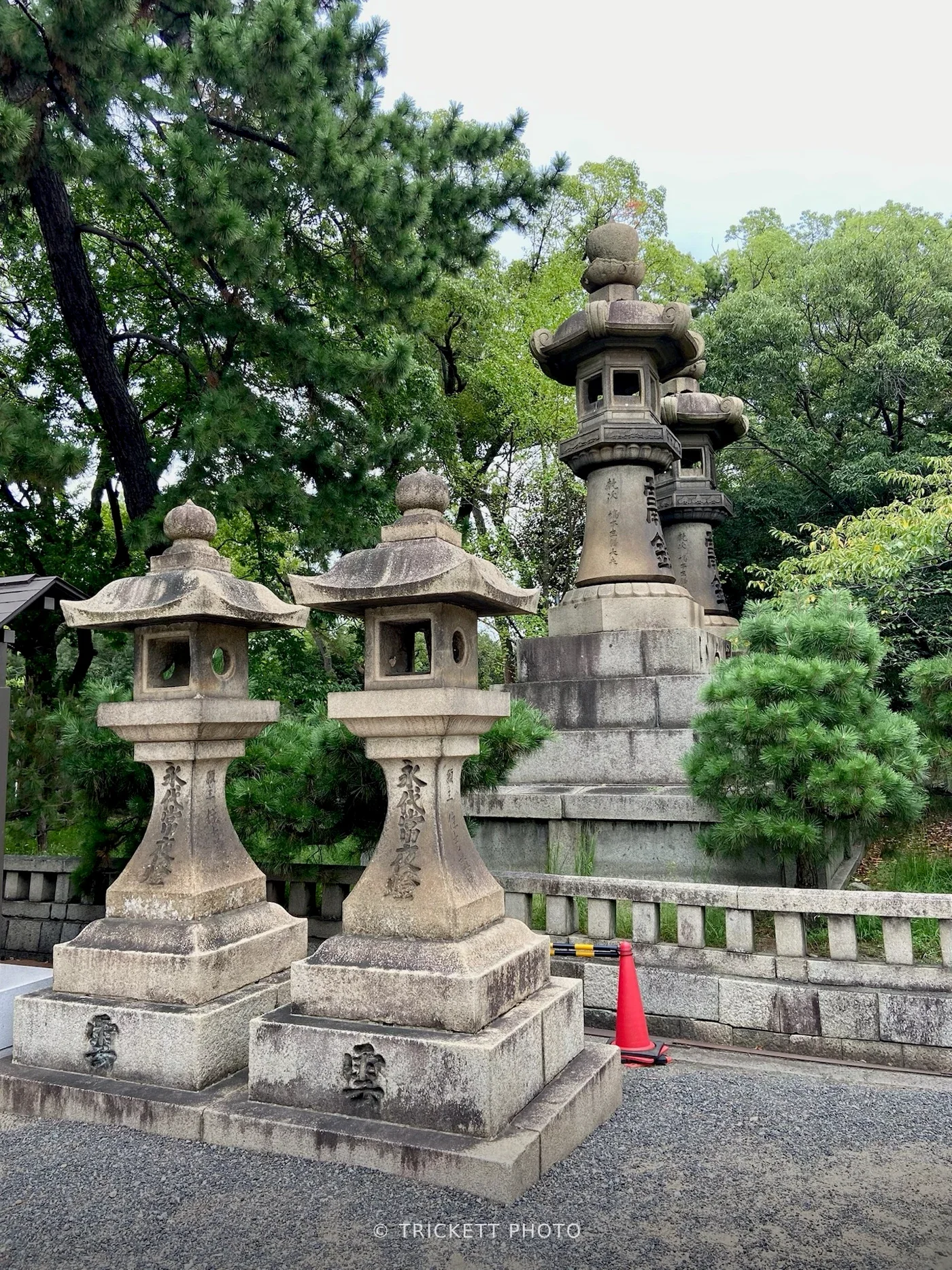
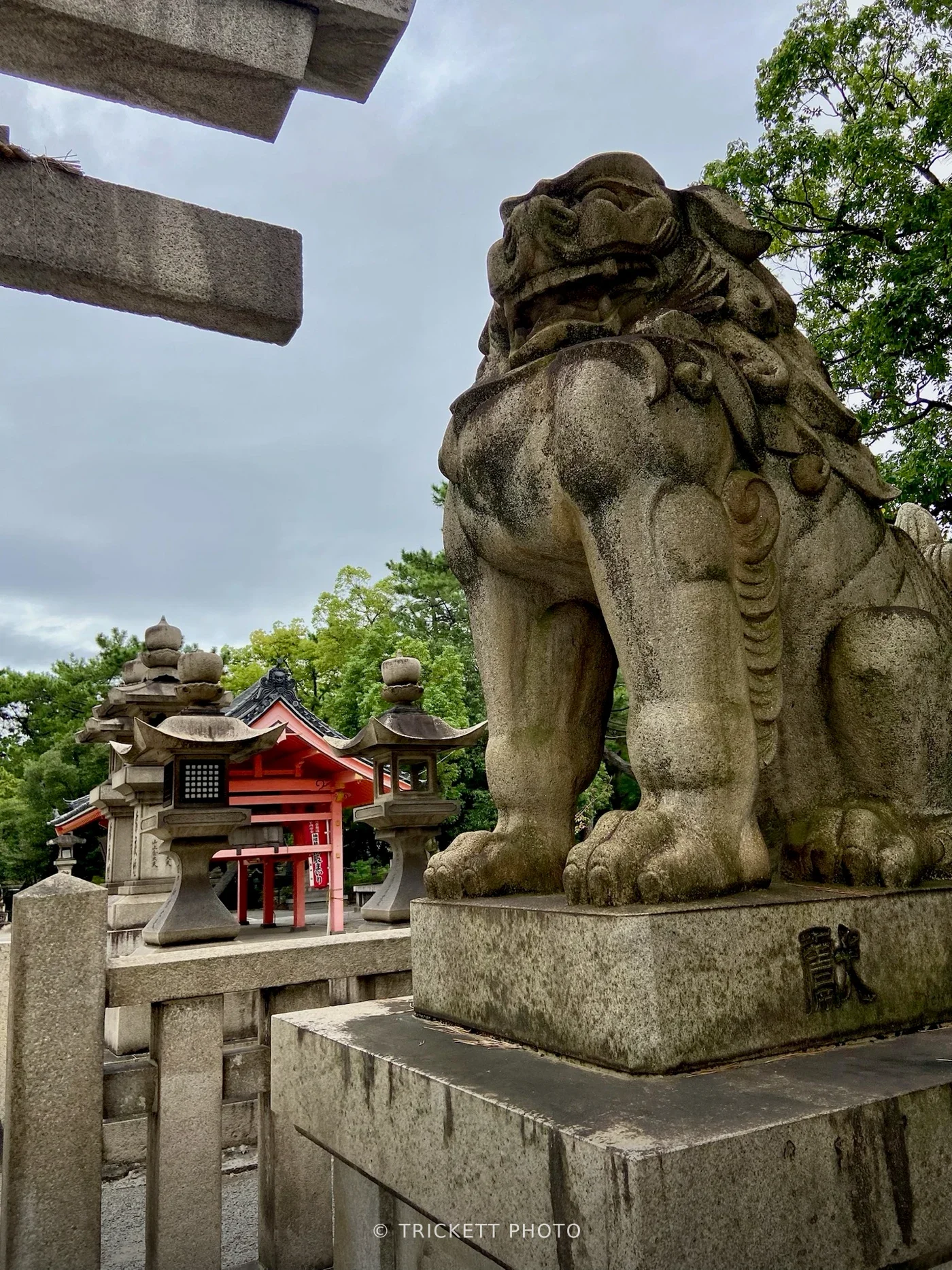
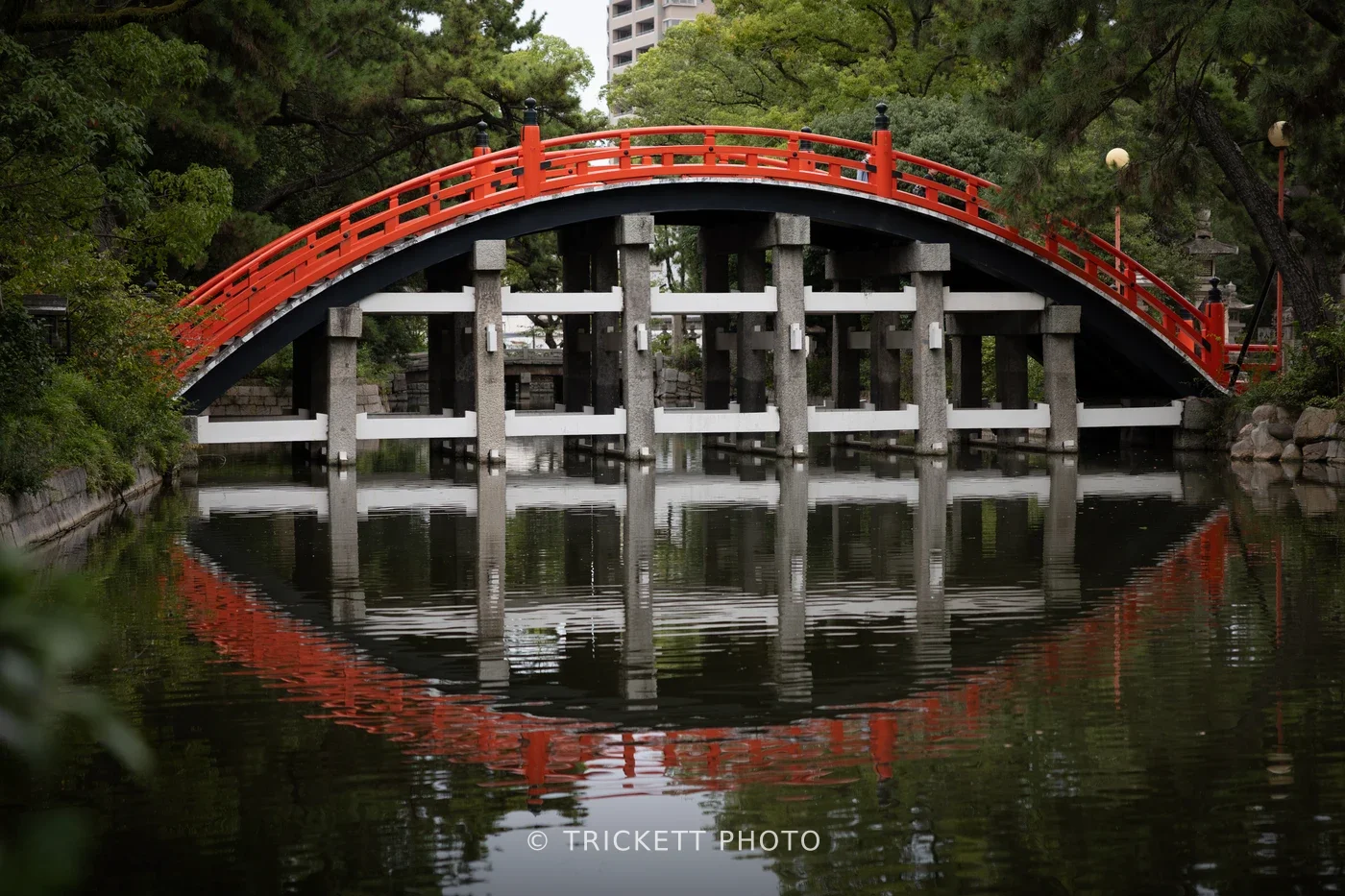
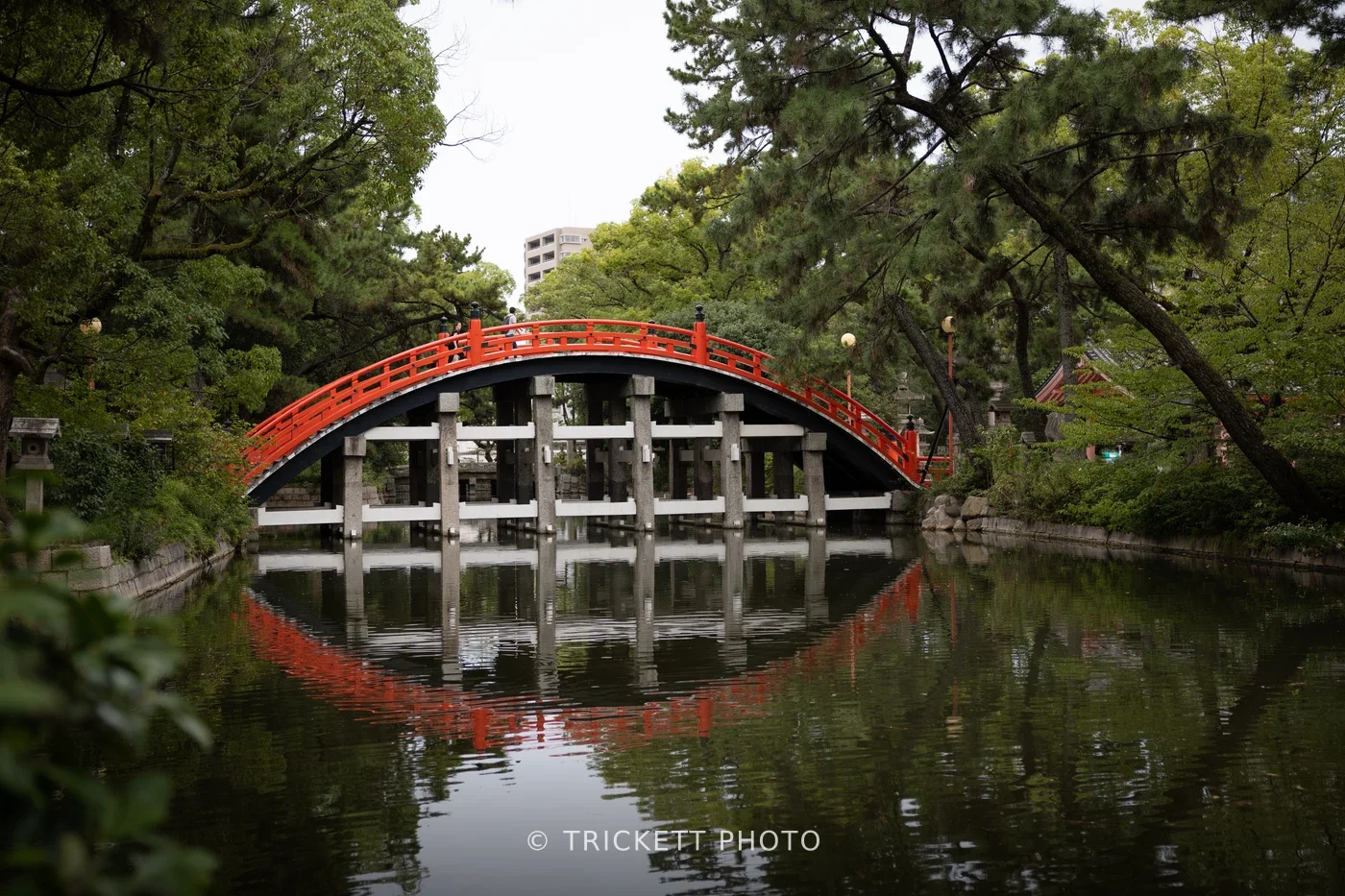
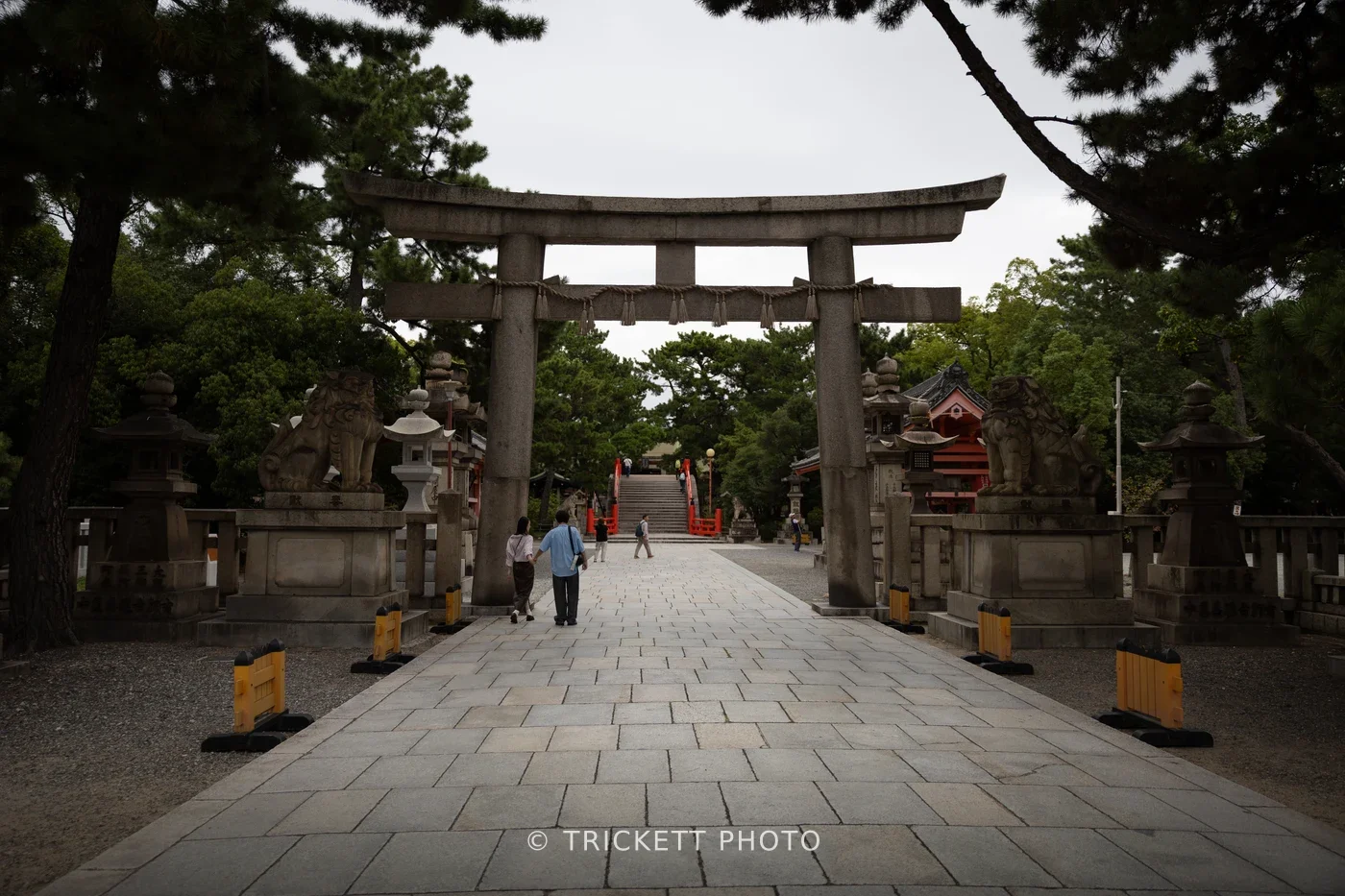
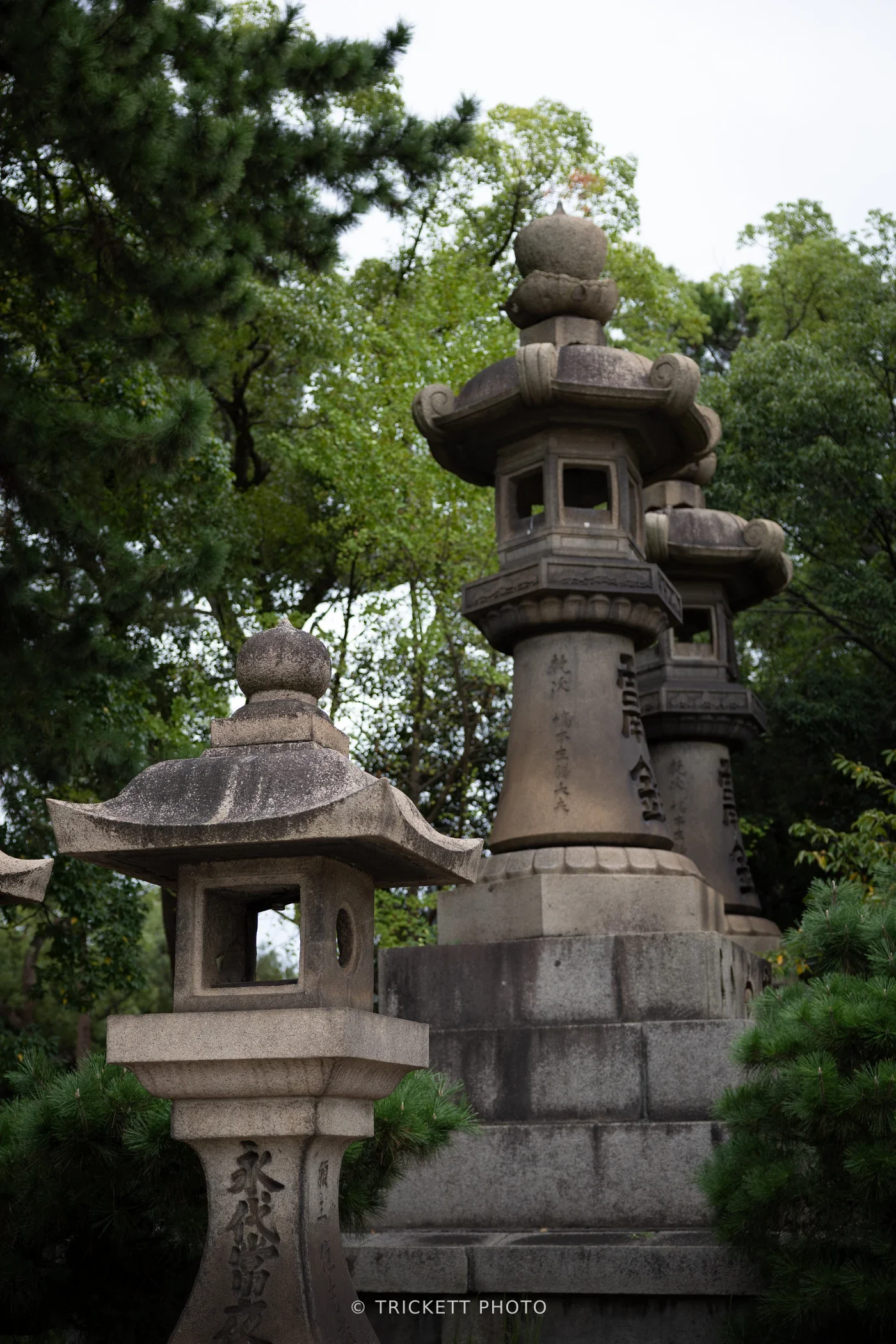
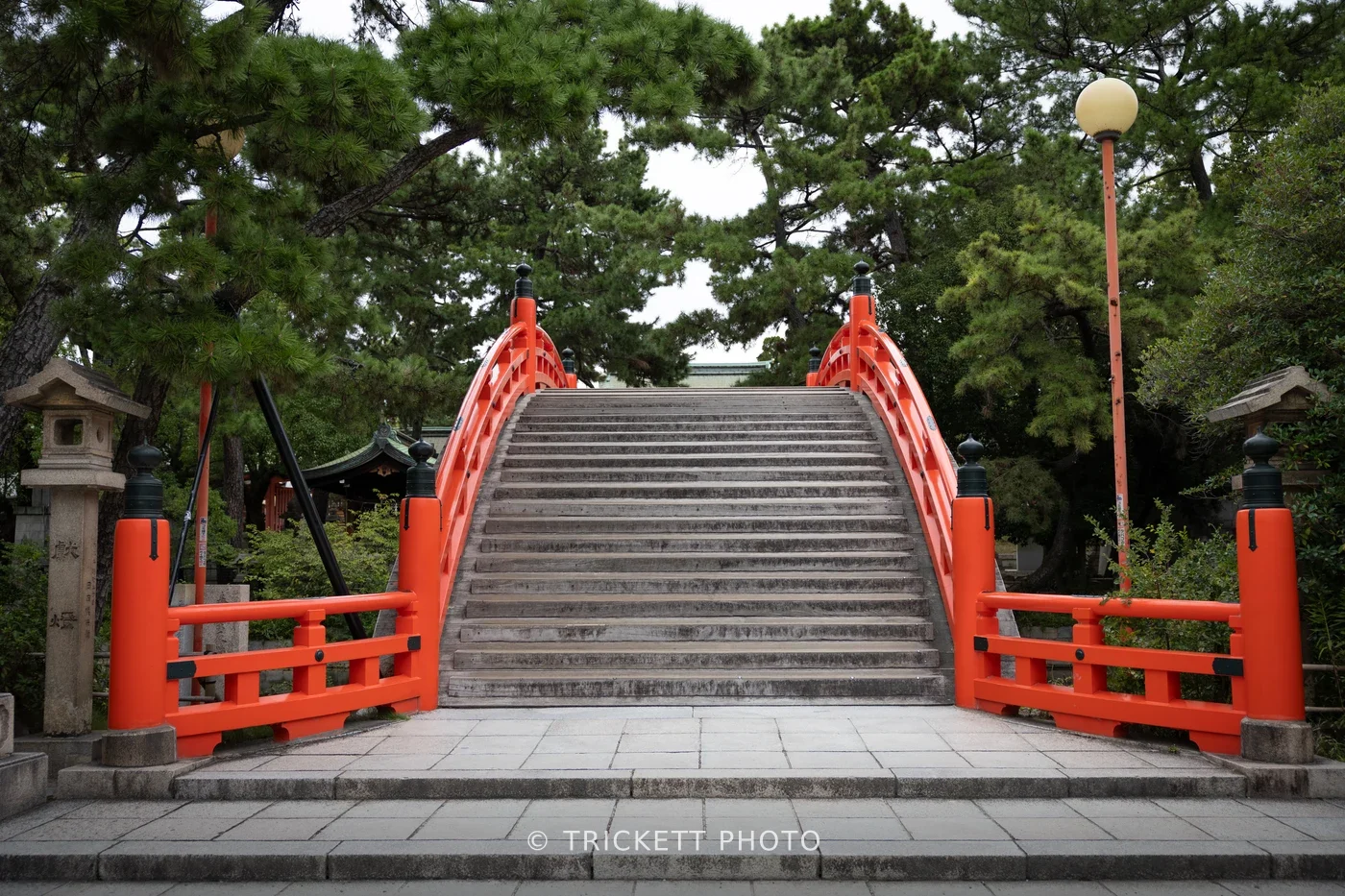
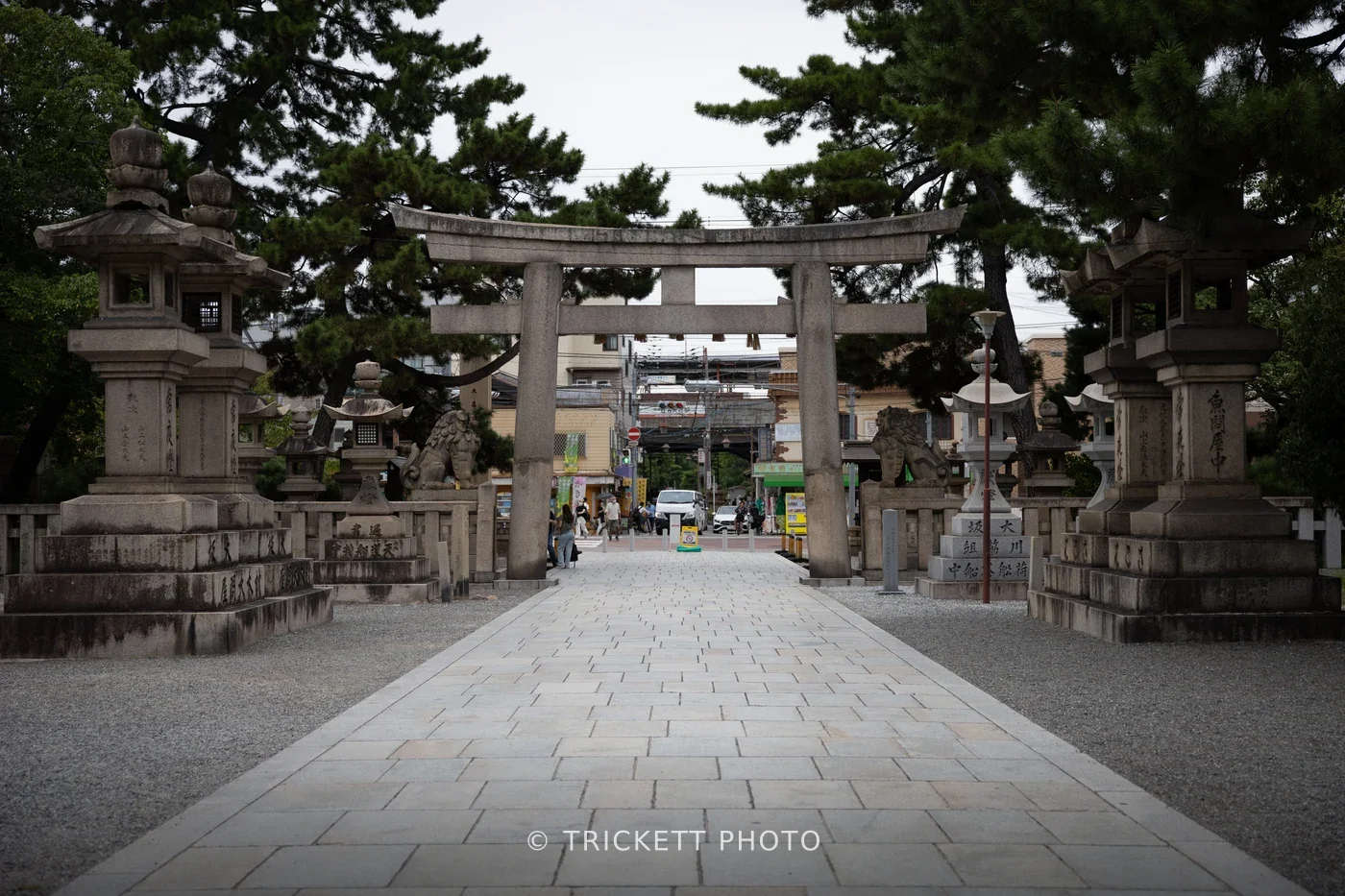
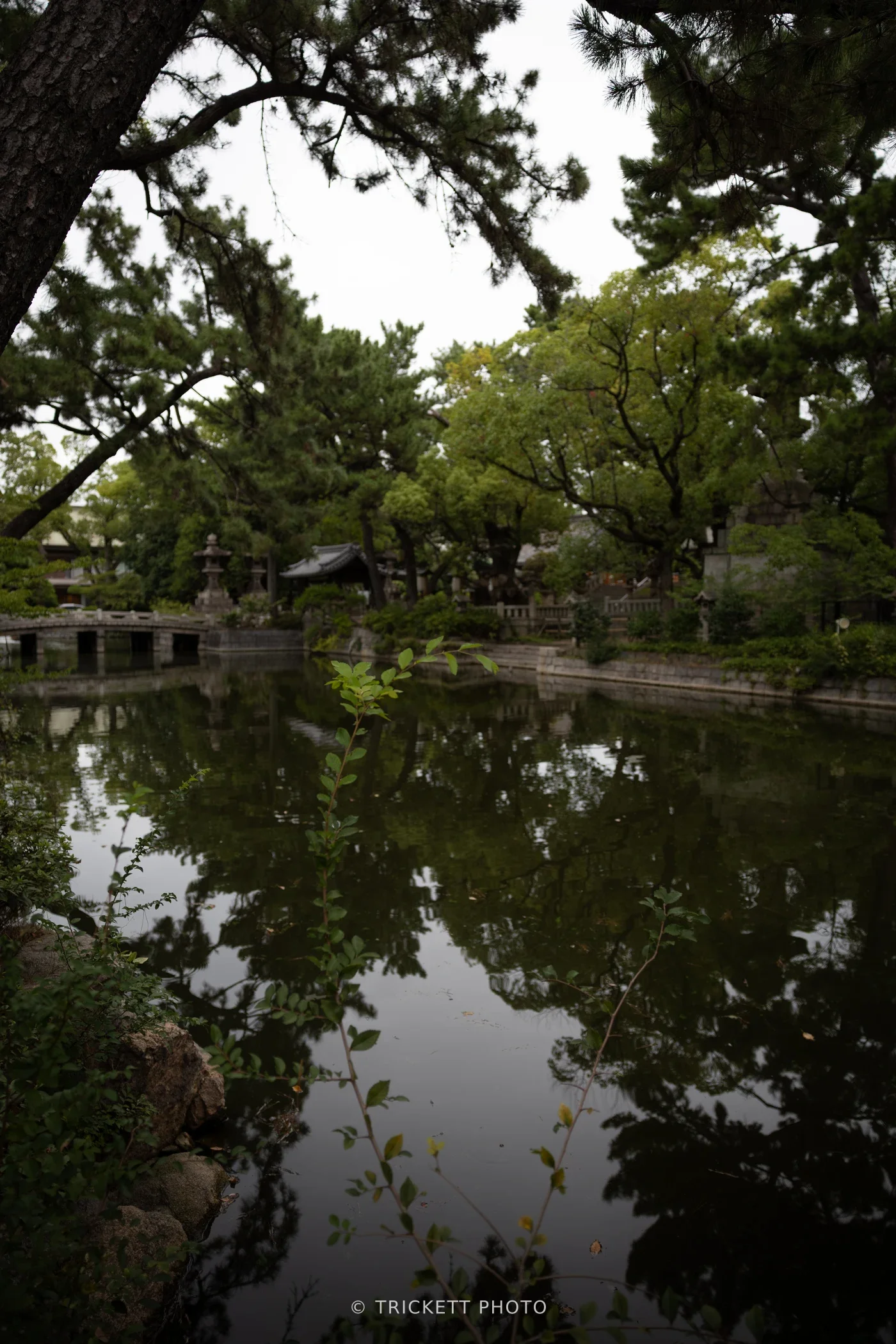
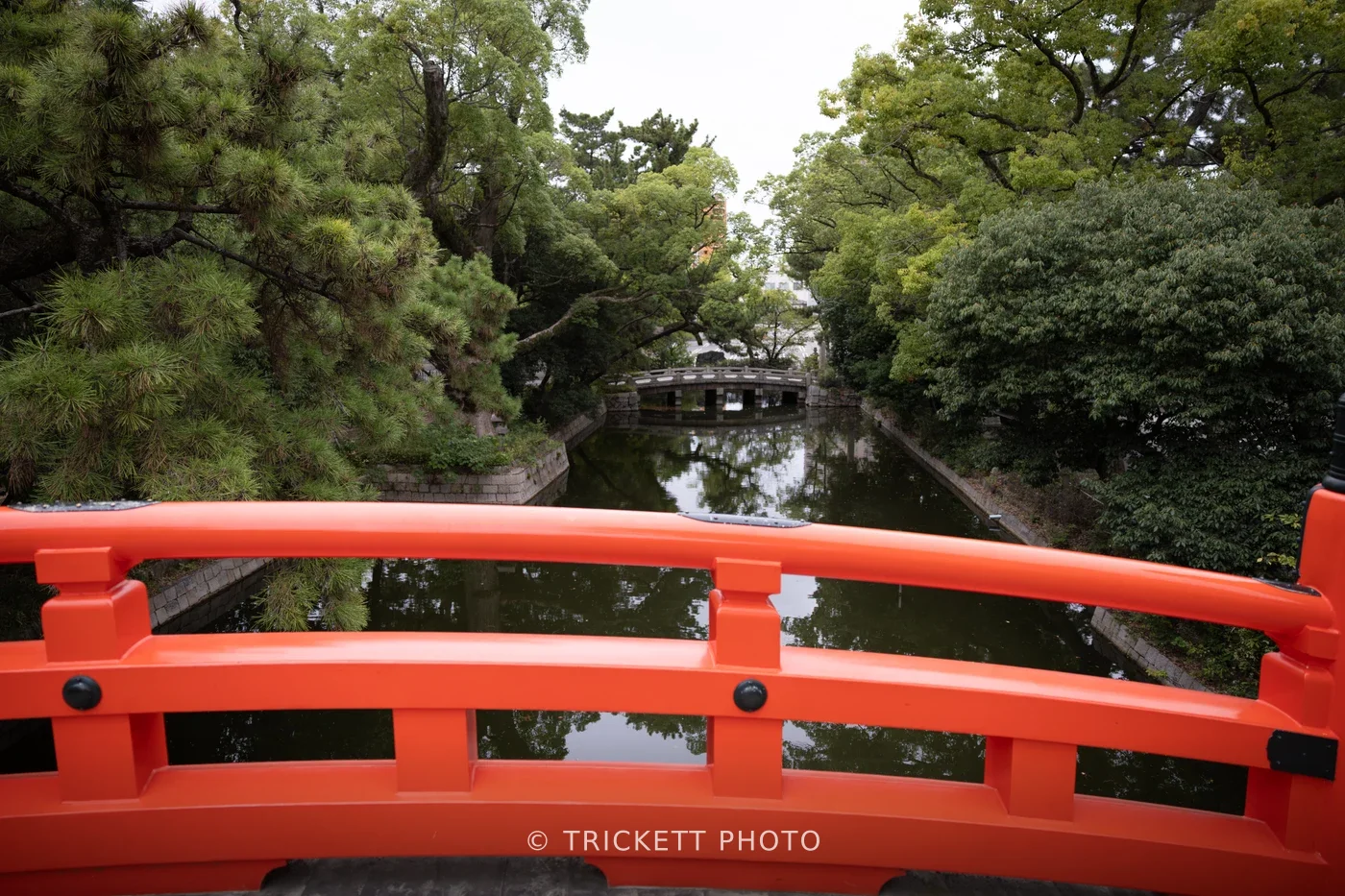
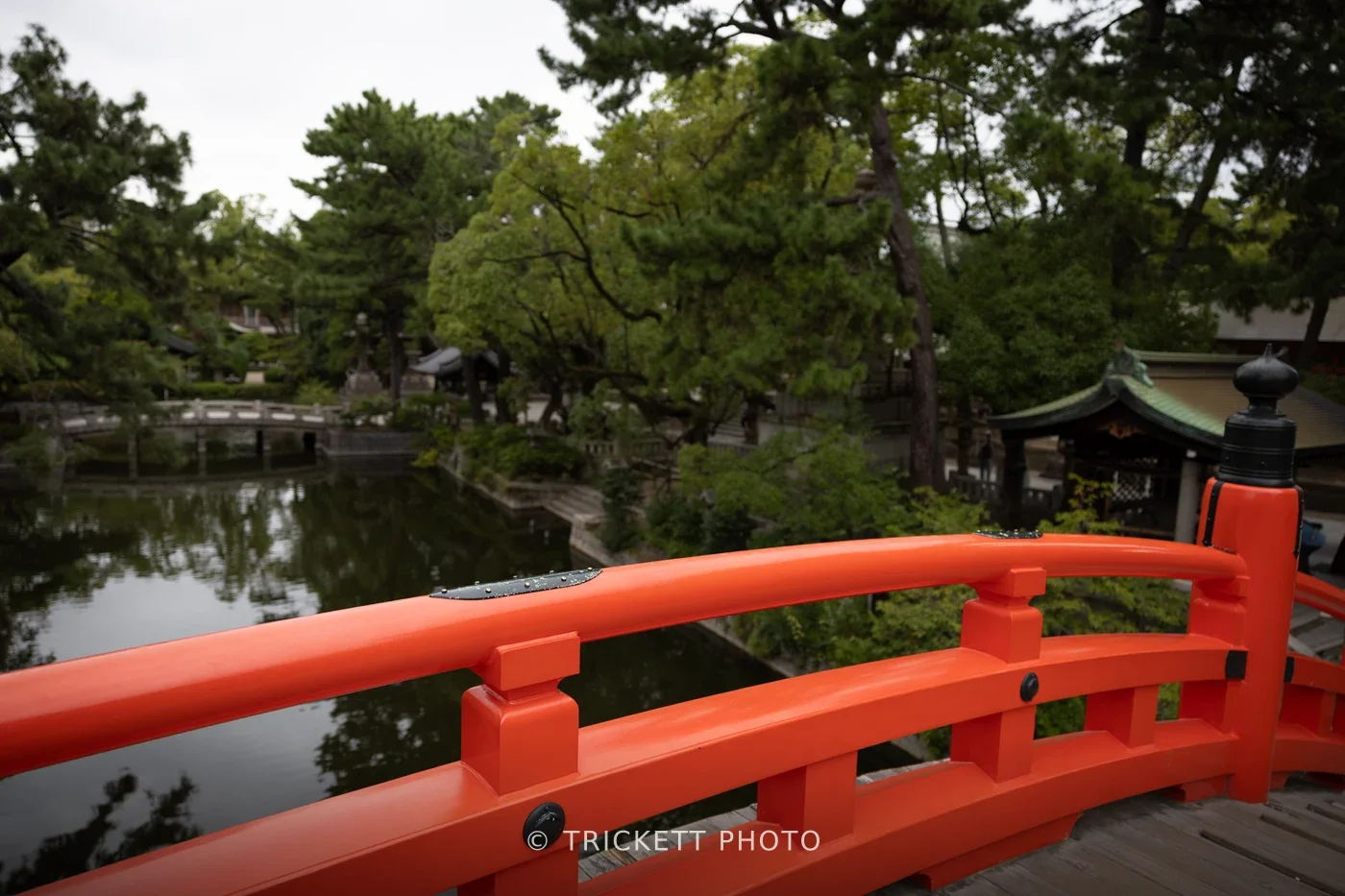
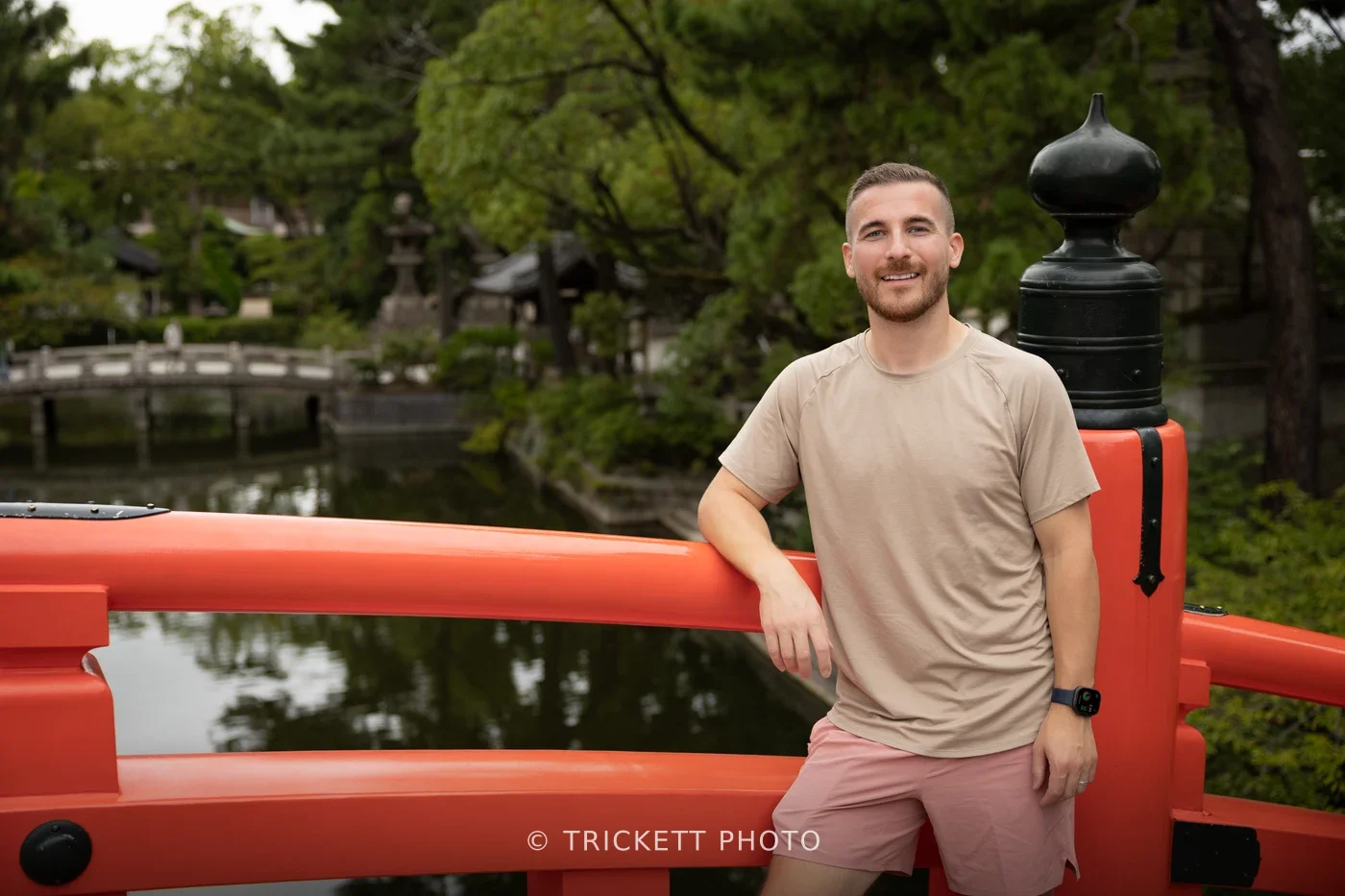
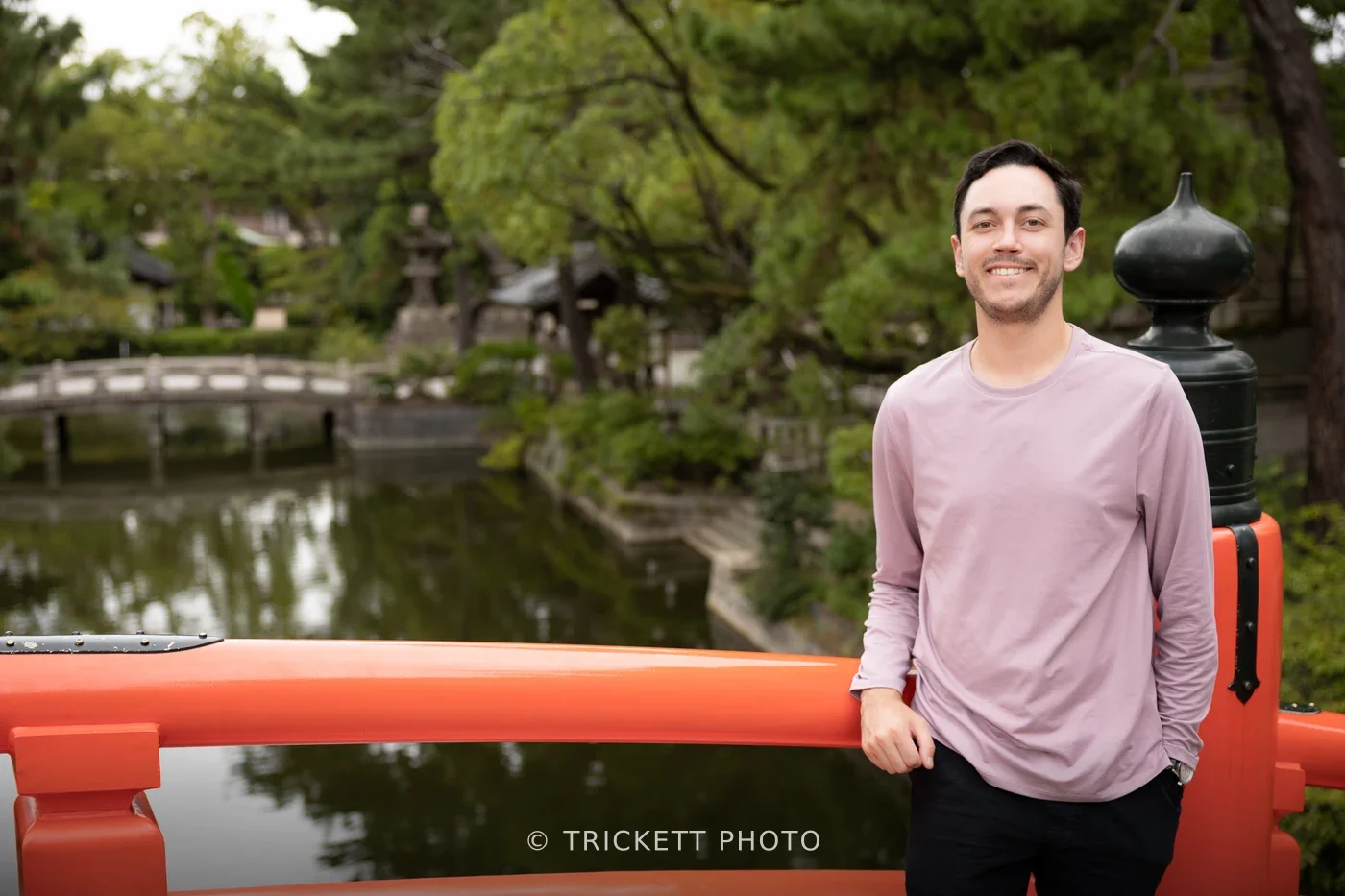
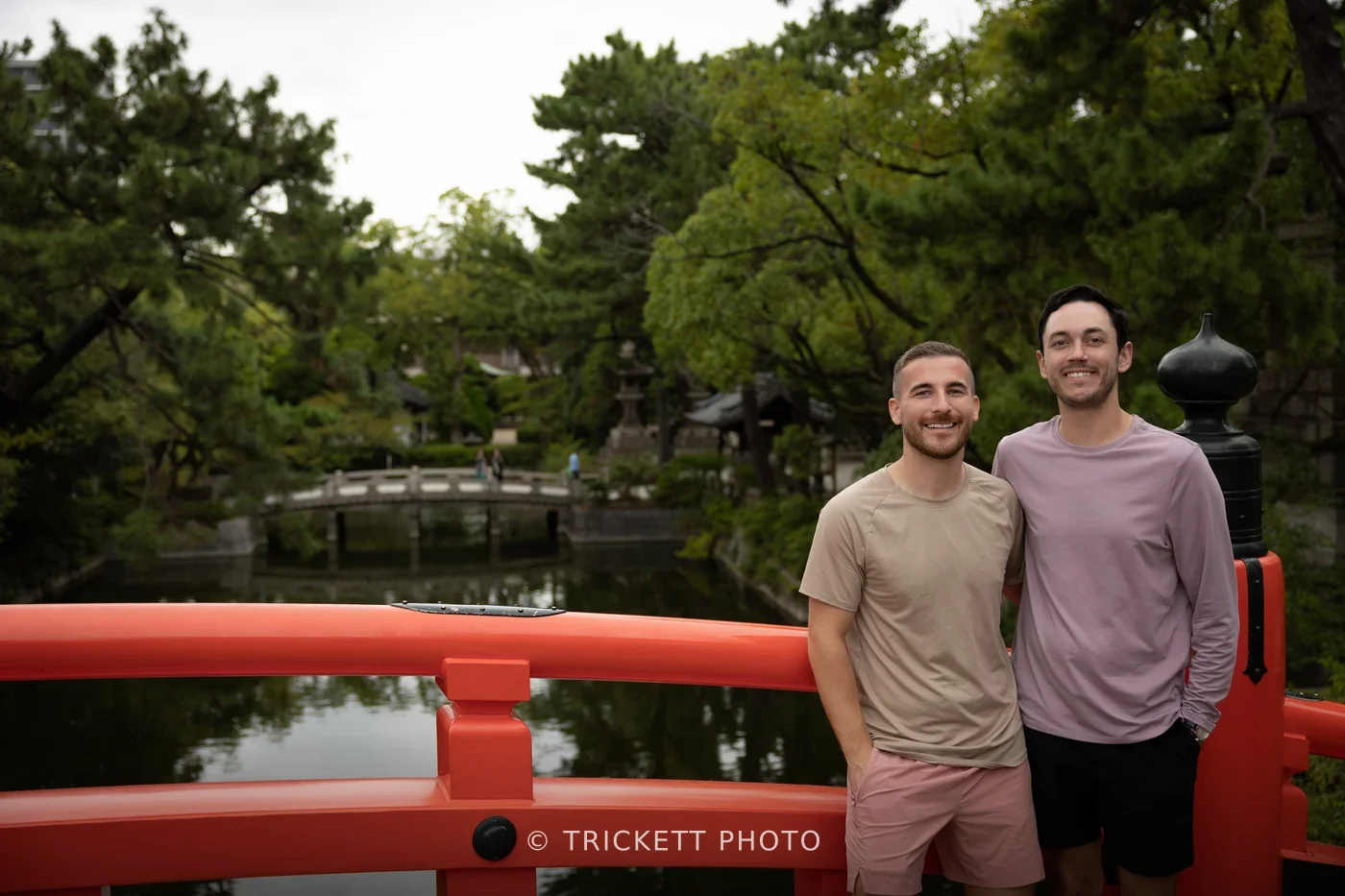
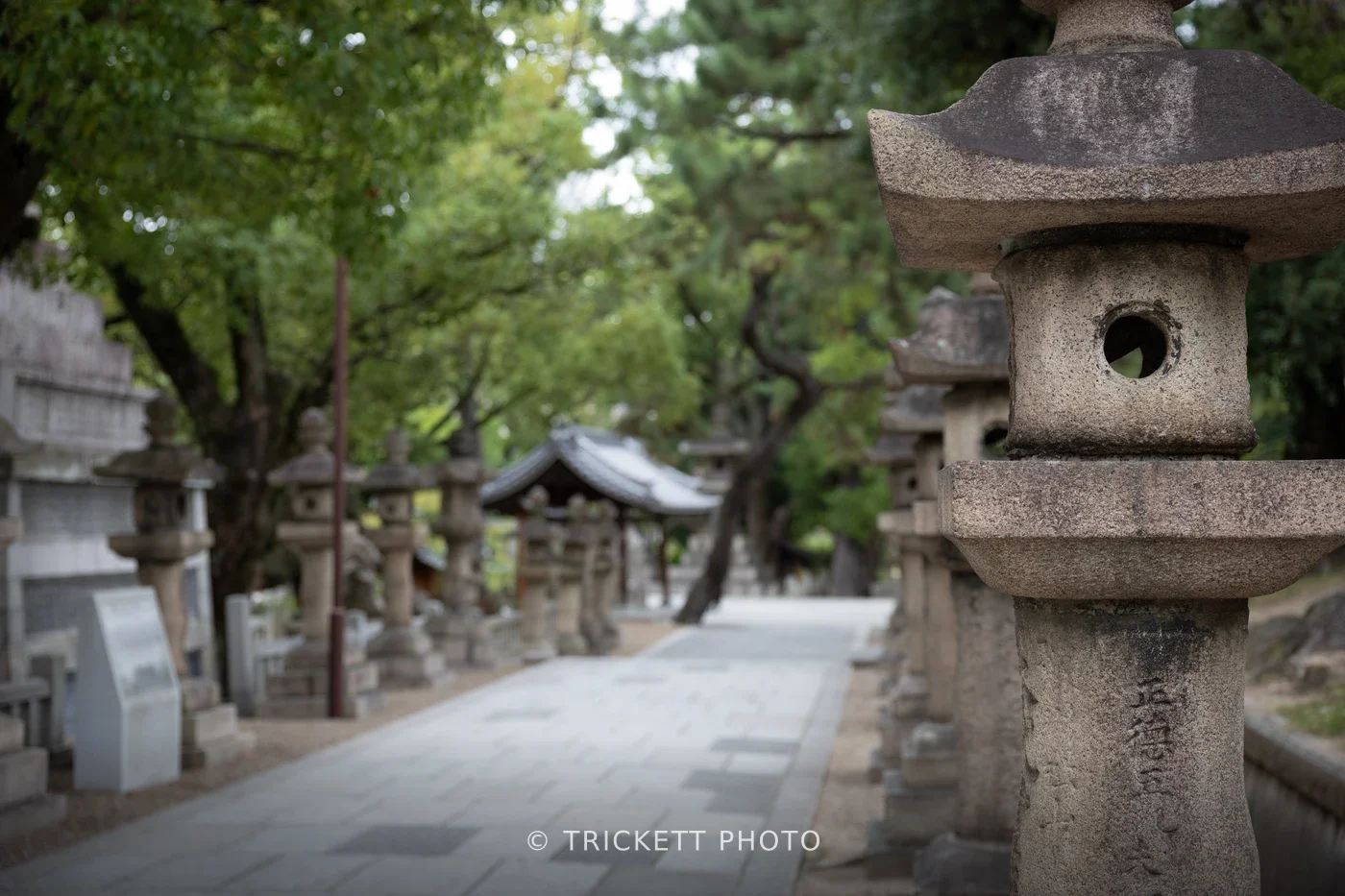
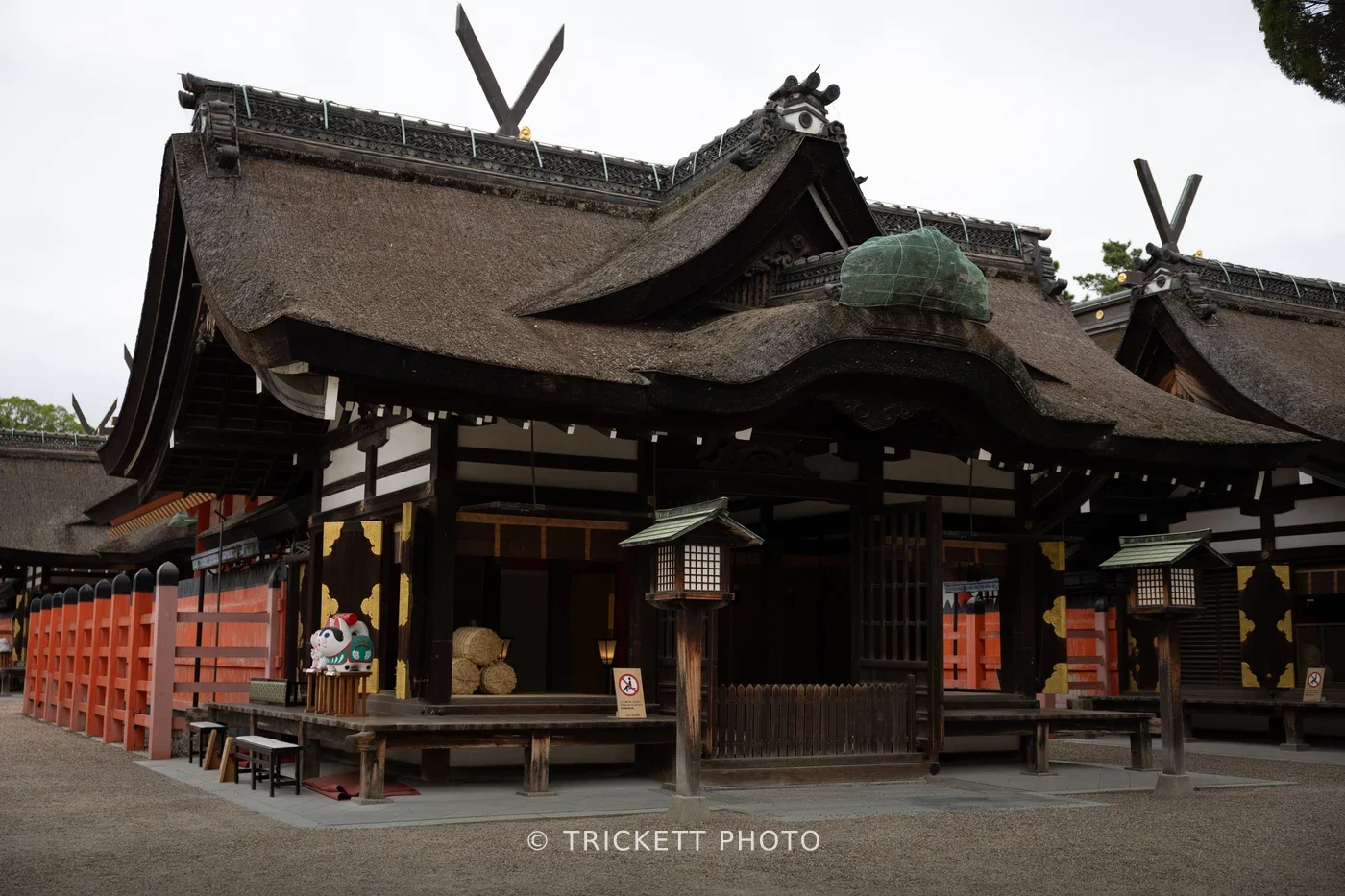
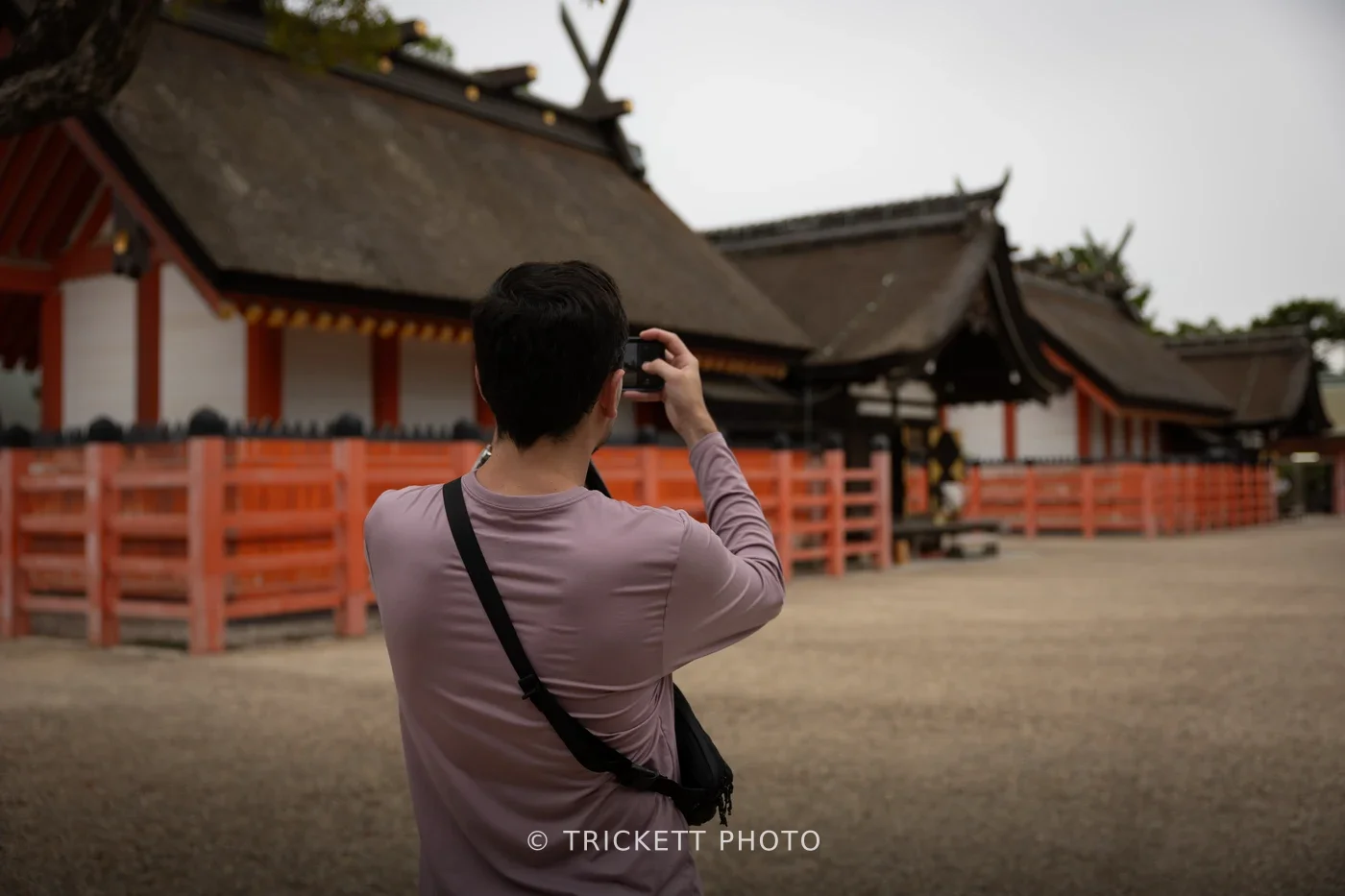
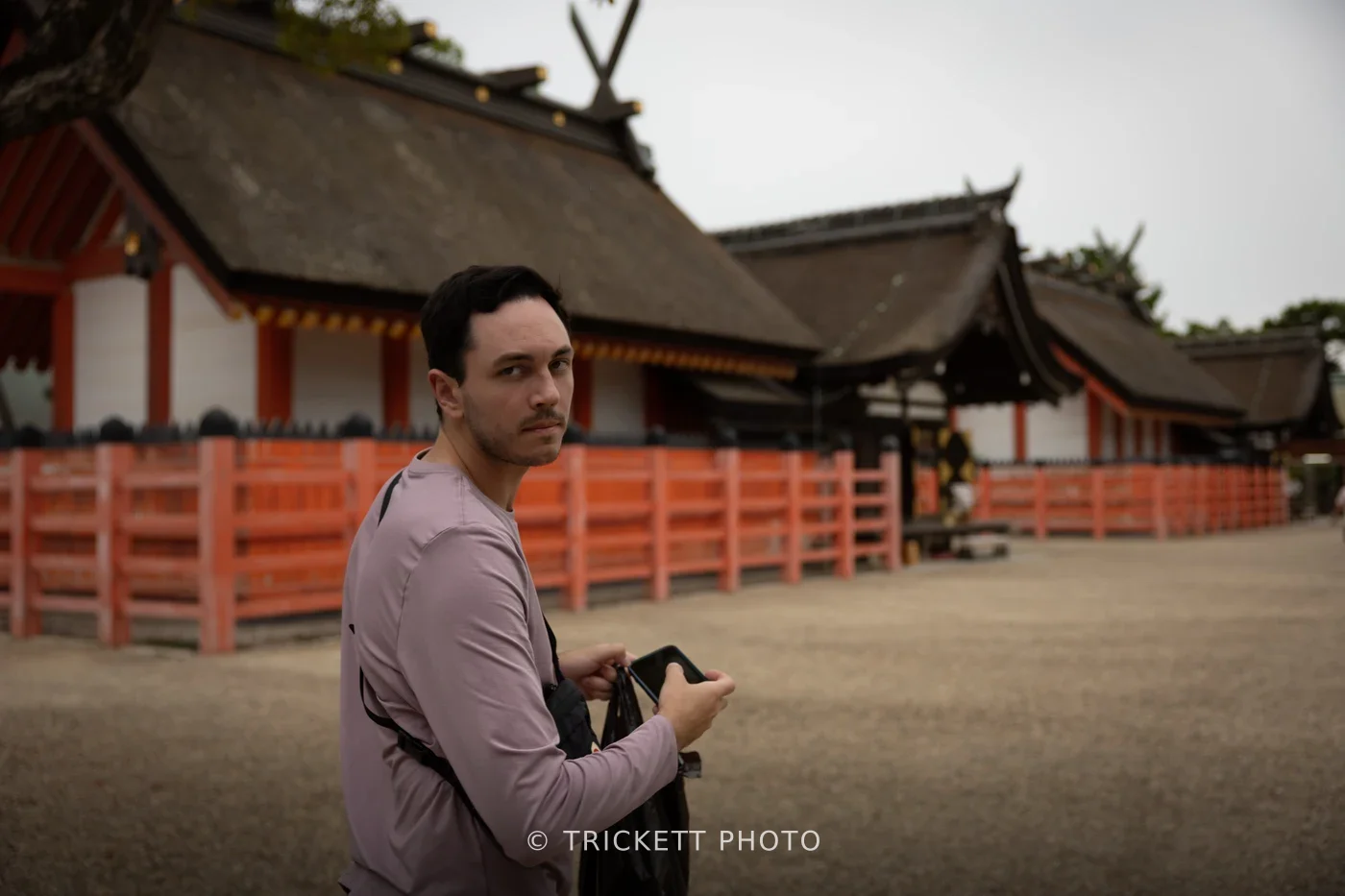
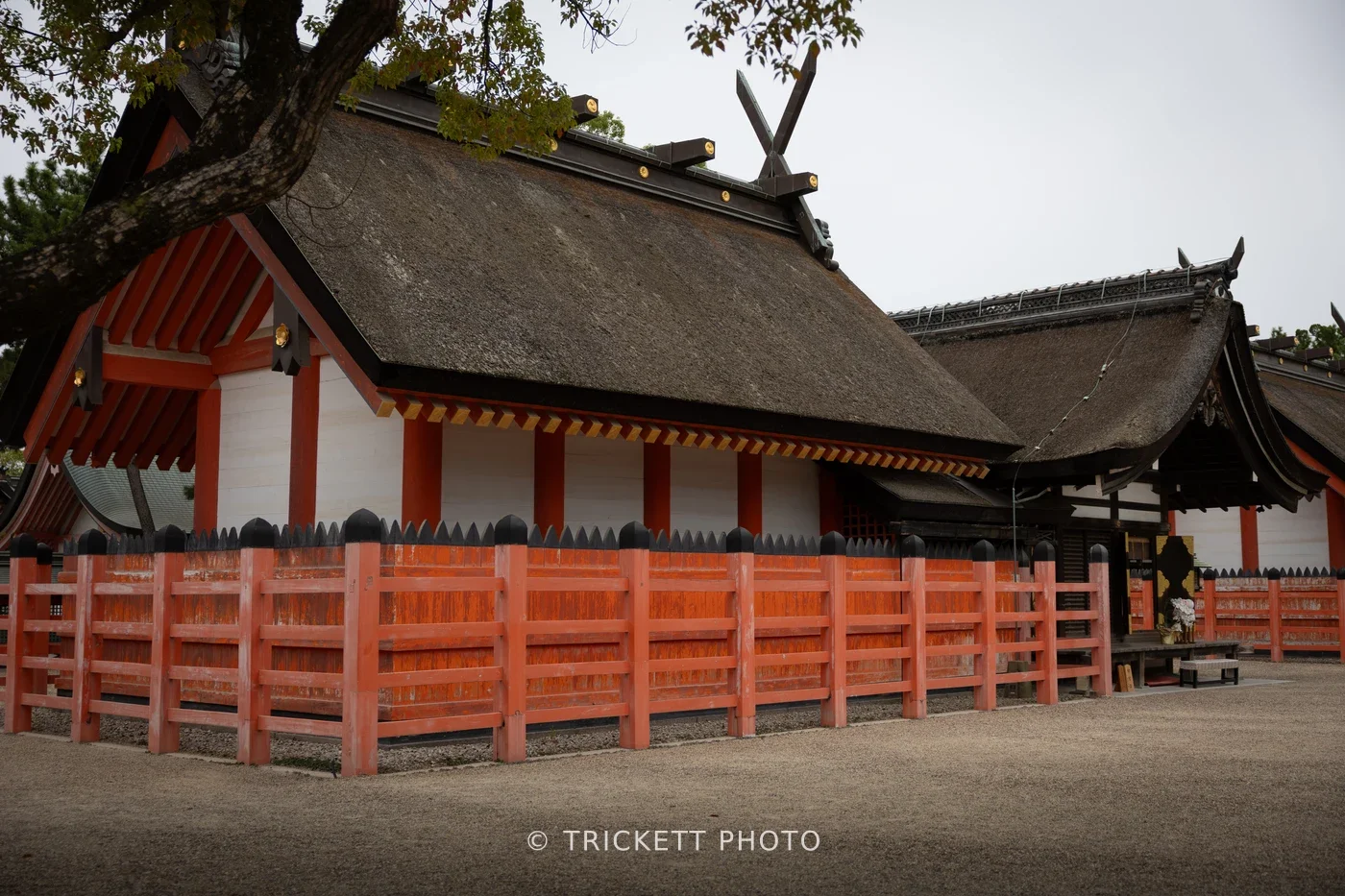
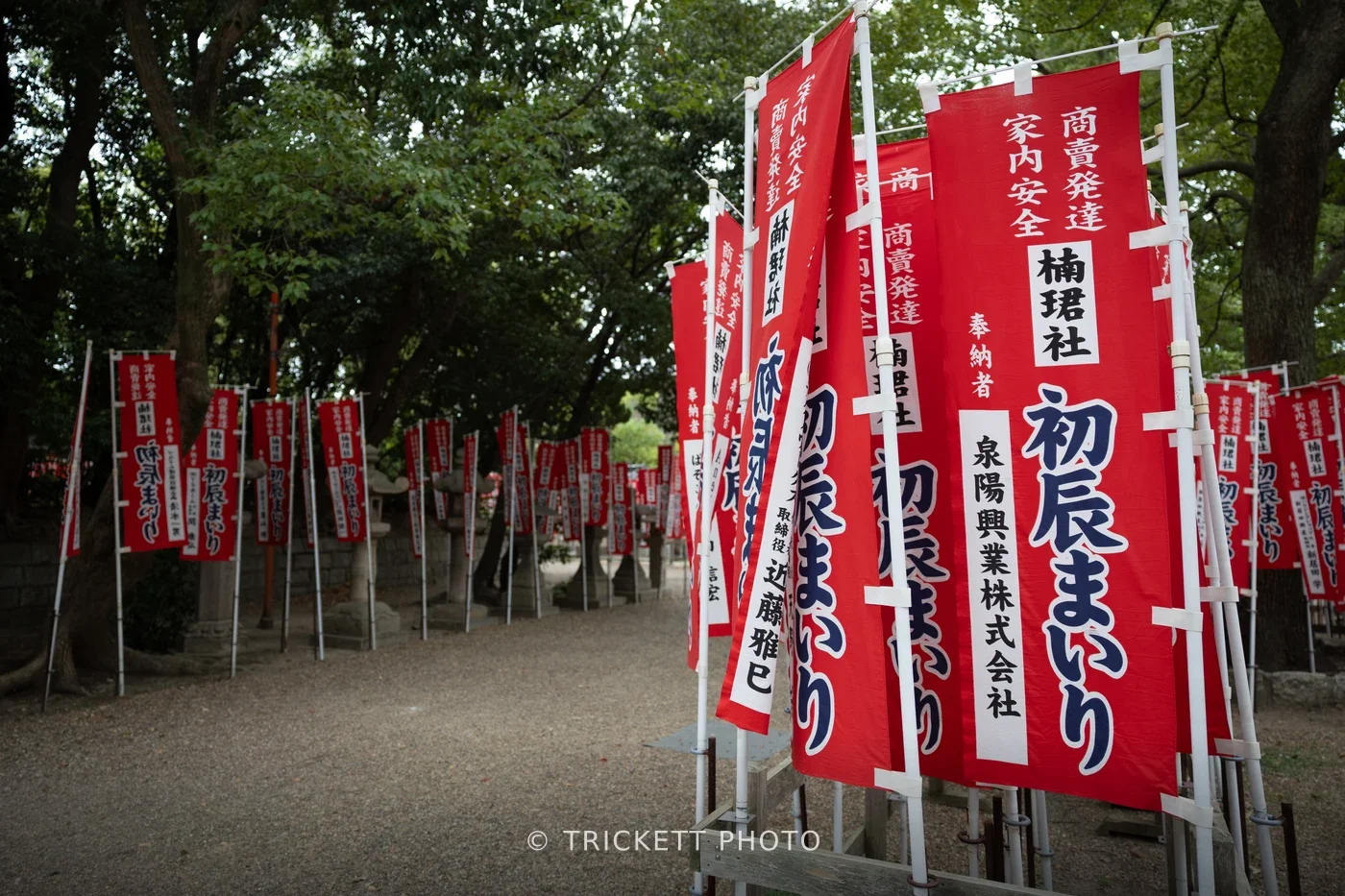
We made our way to Sumiyoshi Taisha, one of Japan’s oldest Shinto shrines. The four main buildings are built in a unique architectural style that predates Chinese Buddhist influence, with their distinctive straight rooflines and unpainted wood giving them a more natural, ancient feel than other shrines we’ve seen.
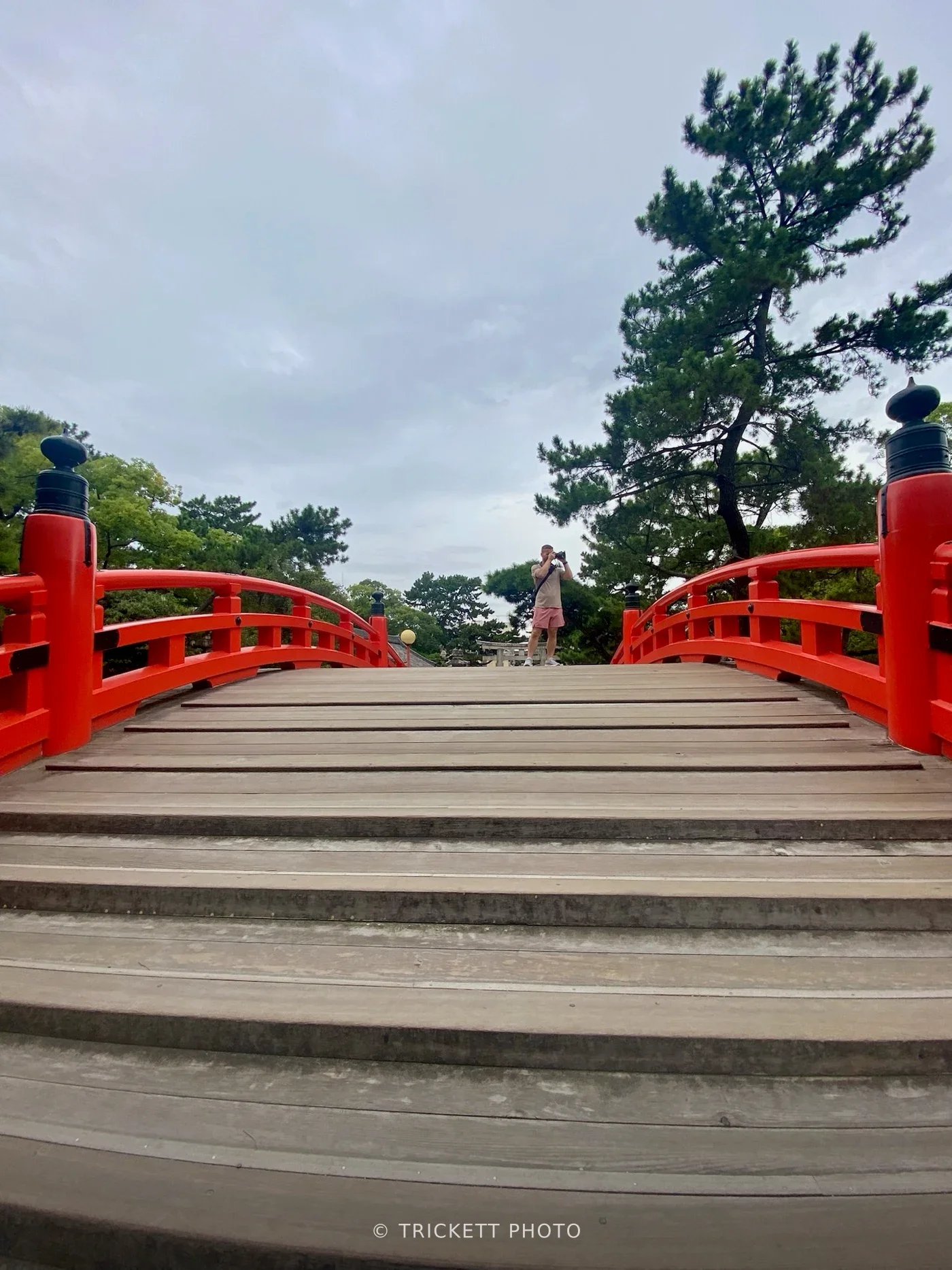
What really caught our attention was the famous arched bridge – it’s steep enough that climbing it feels like a mini workout, but the view from the top is worth it. The shrine grounds are spacious and peaceful, which was a nice change from some of the busier temple complexes we’ve explored.
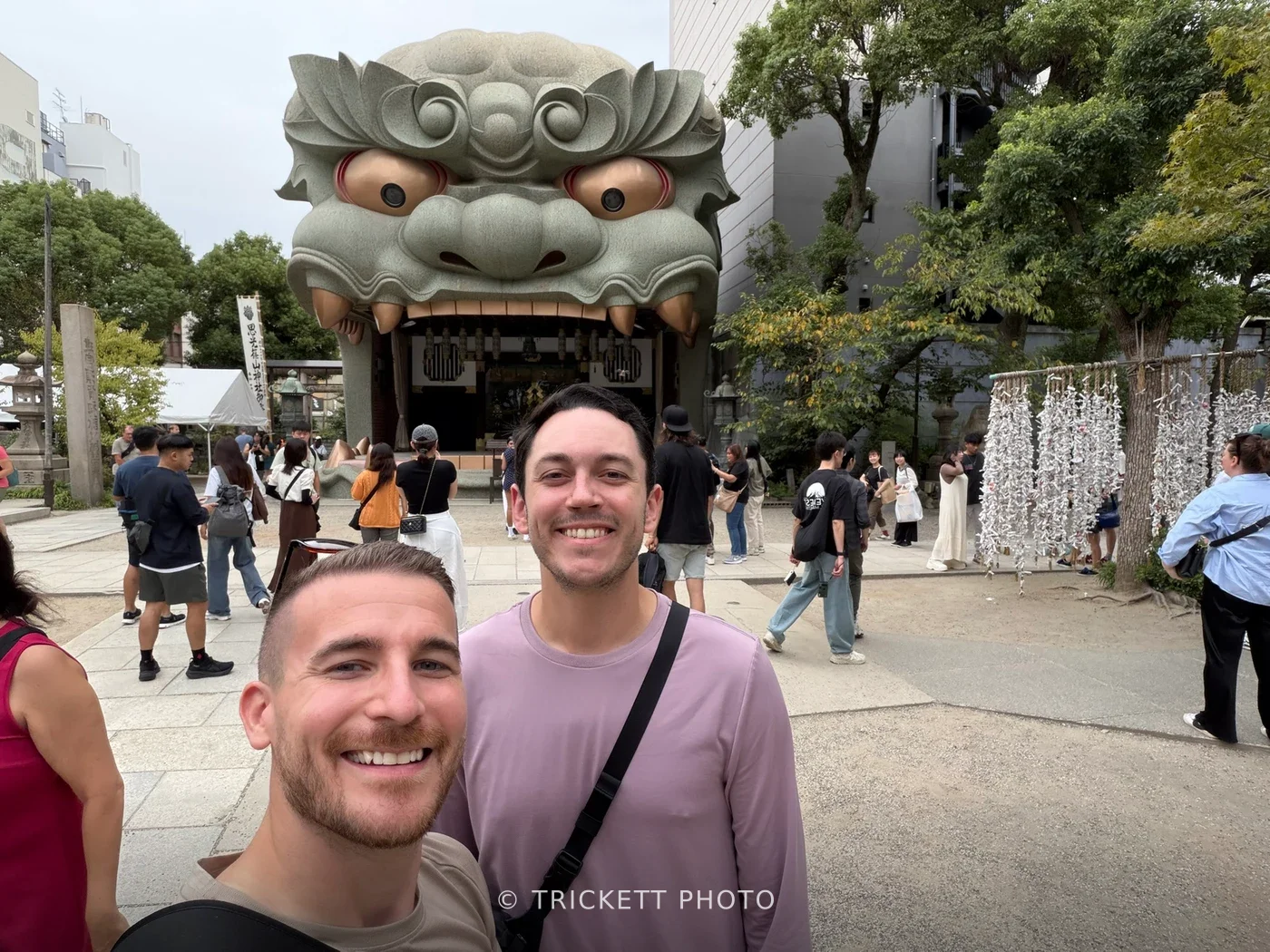
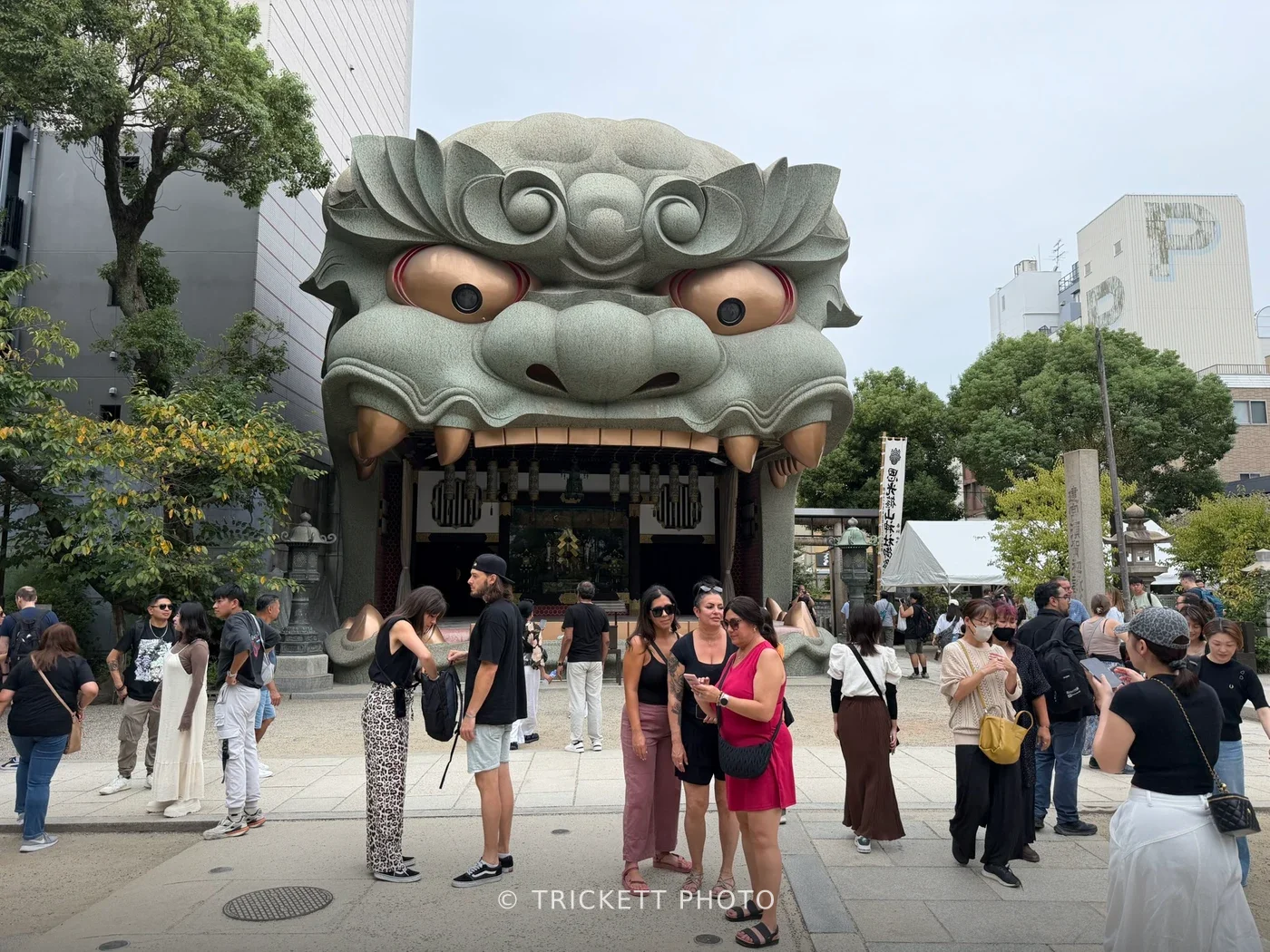
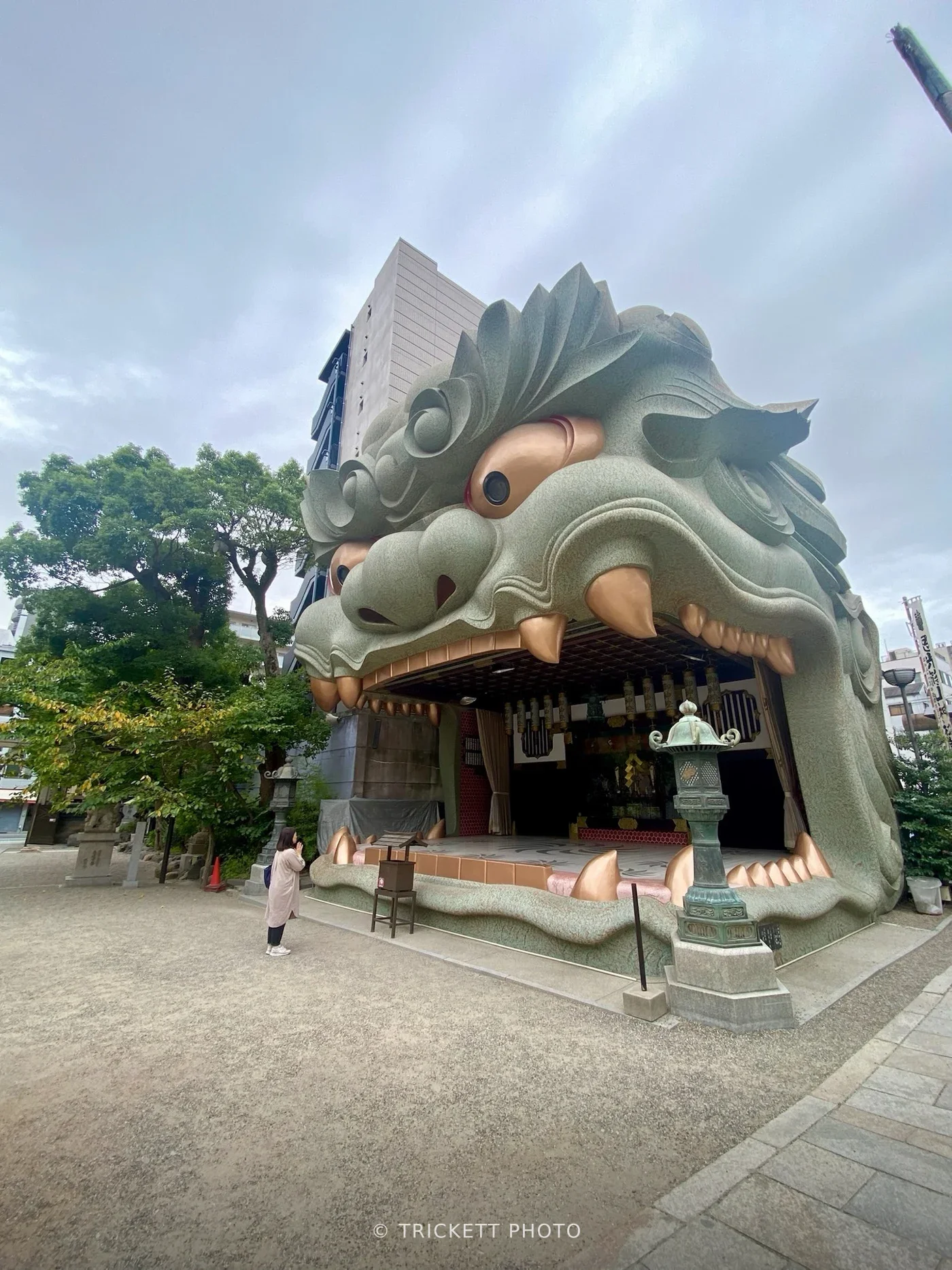
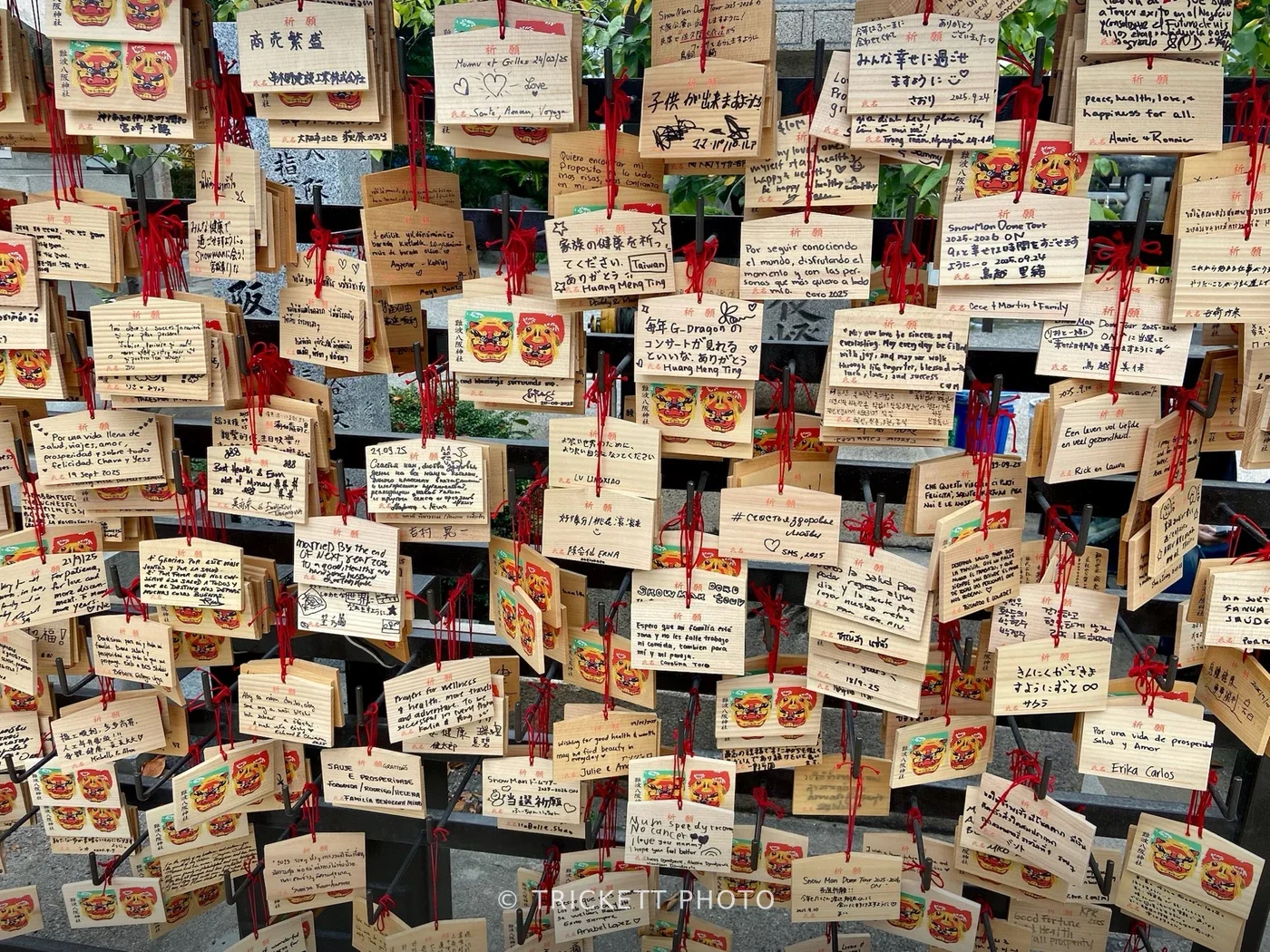
Namba Yasaka Shrine is famous for its massive lion head-shaped stage that dominates the small shrine grounds and it’s impossible to miss. The dramatic lion head is supposed to swallow evil spirits and bring good luck, making it a popular spot for both tourists and locals looking for some spiritual protection.
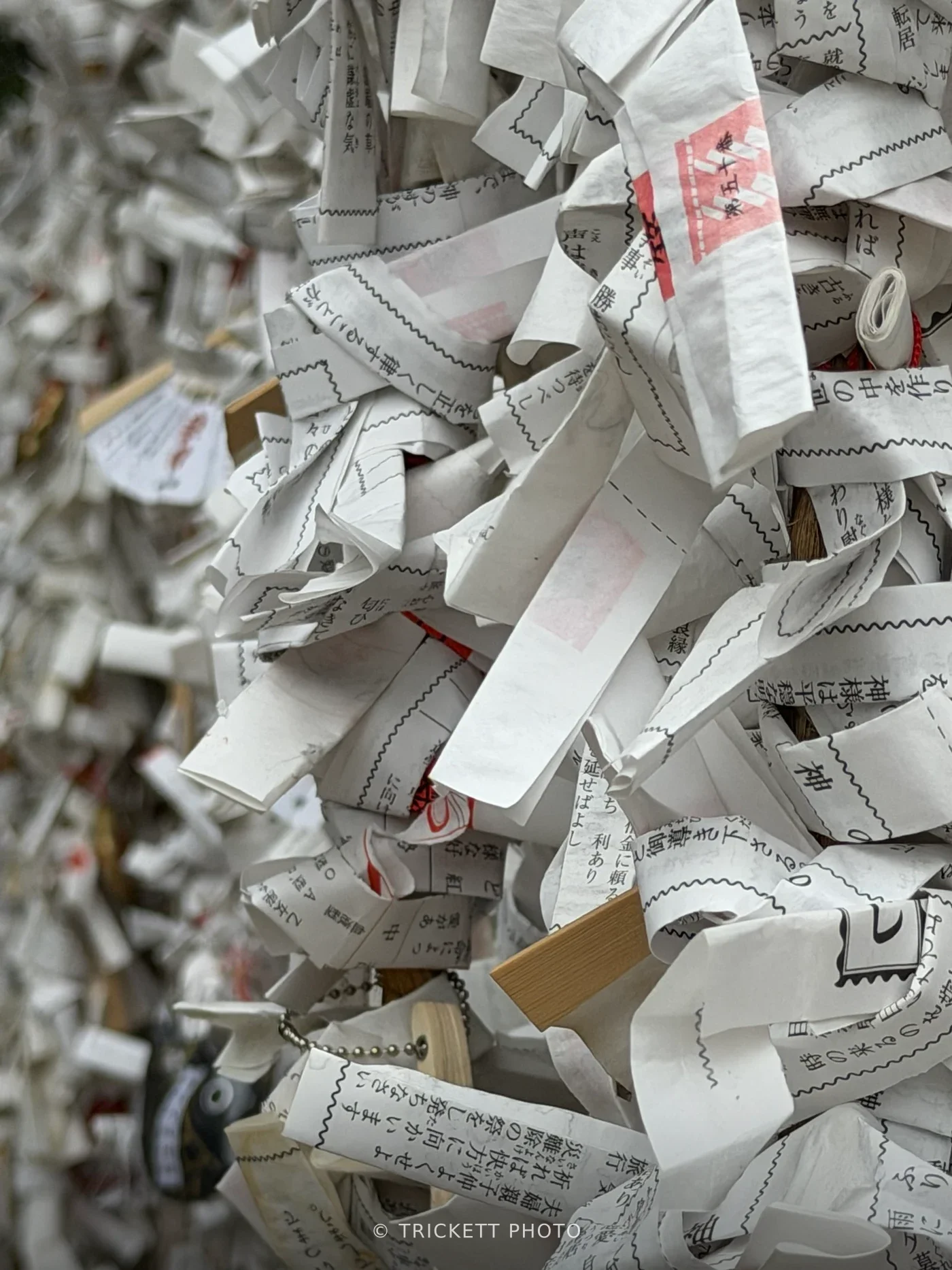
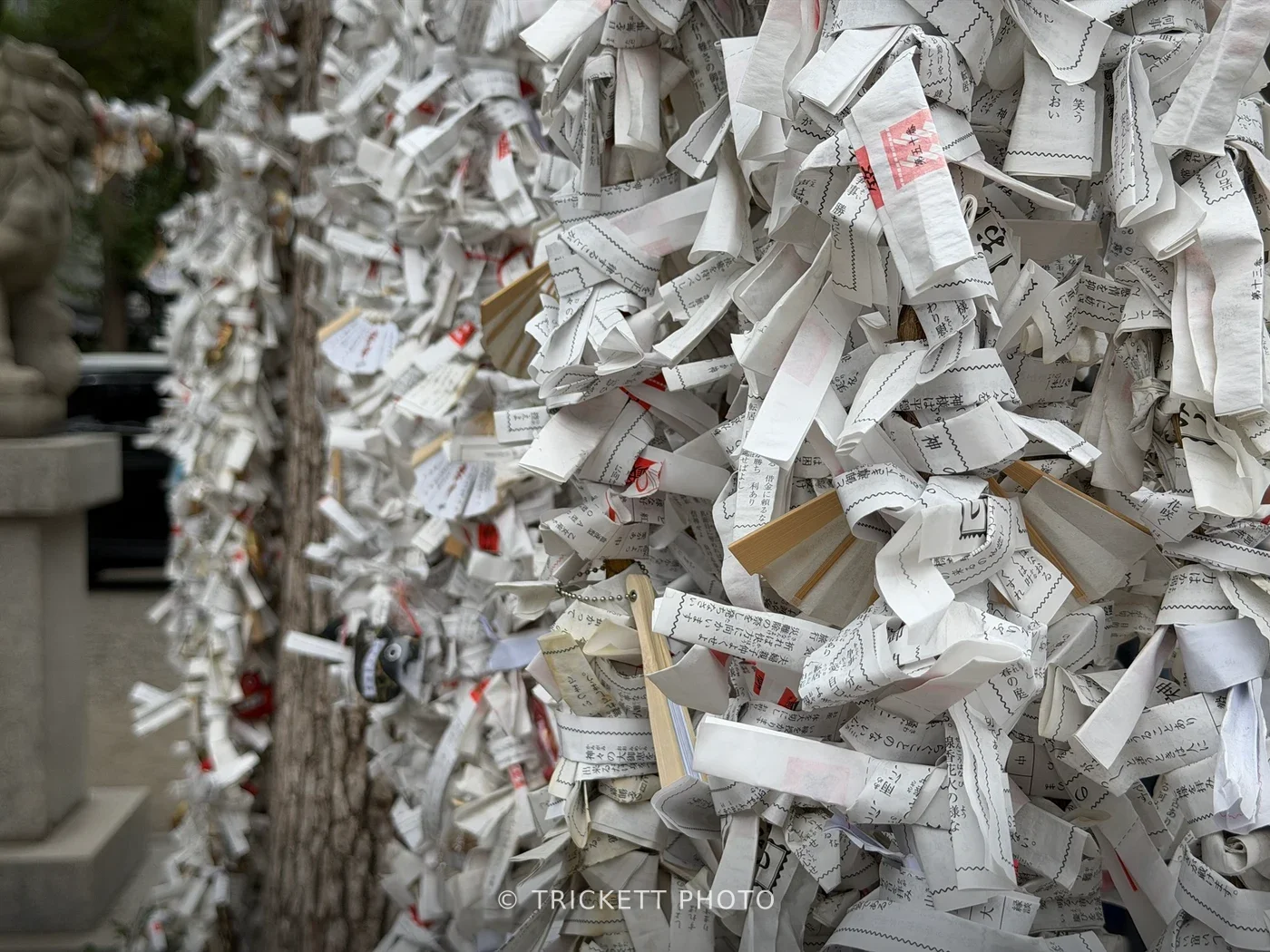
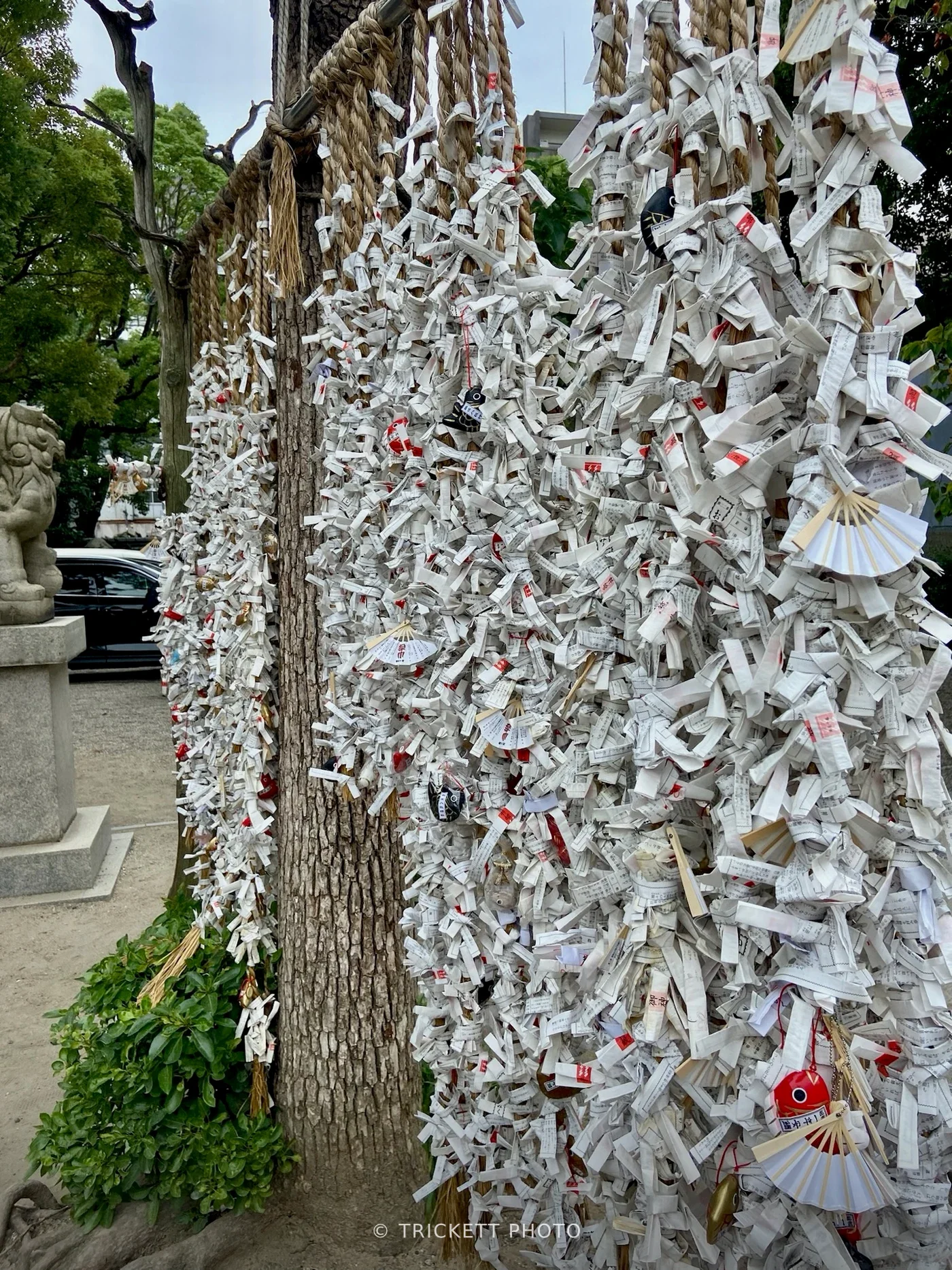
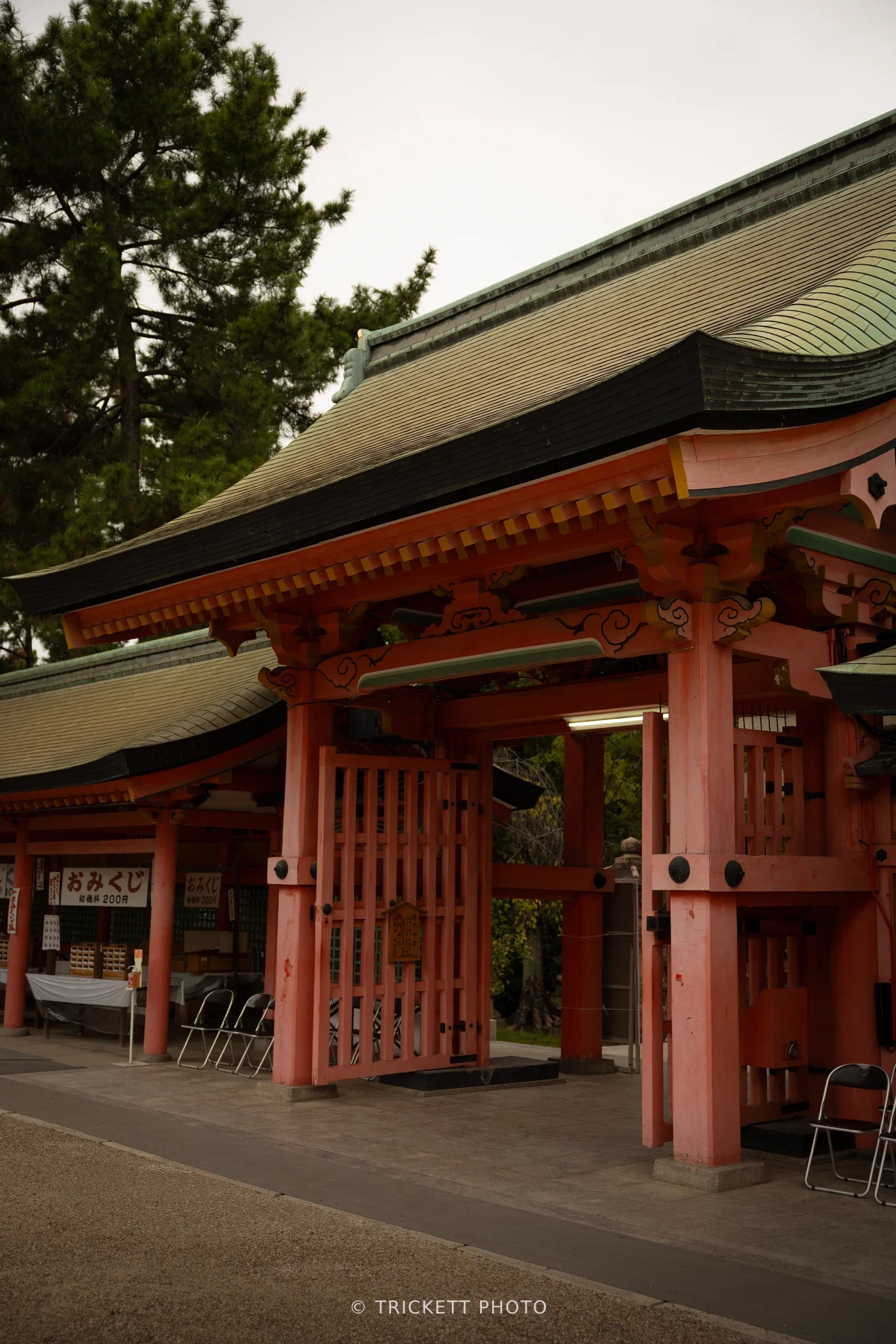
The white paper strips tied throughout the shrine are called omikuji – fortune telling papers that people purchase, read, and then tie to trees or designated areas at the shrine, especially if they contain bad luck predictions that they want to leave behind.