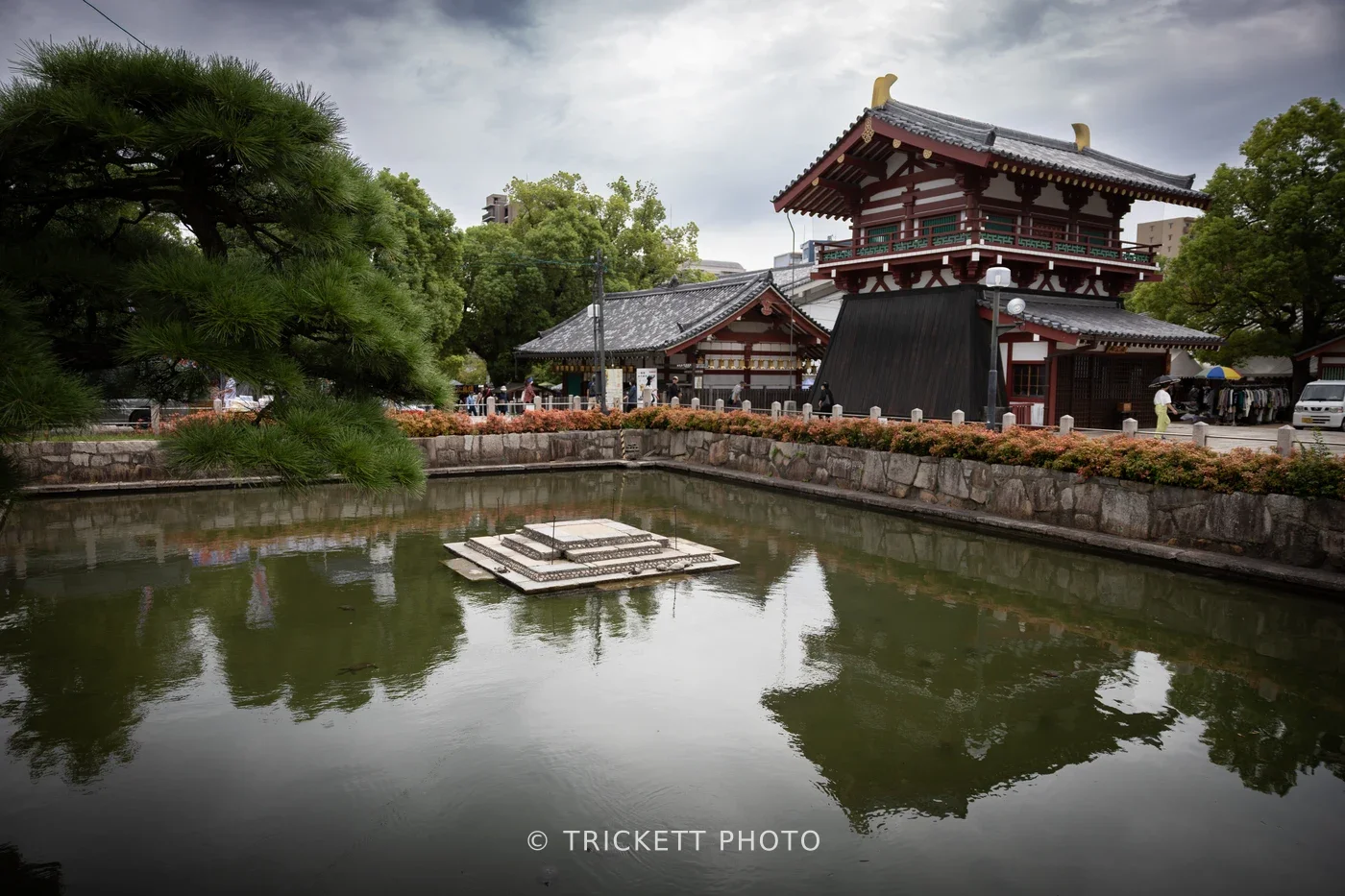
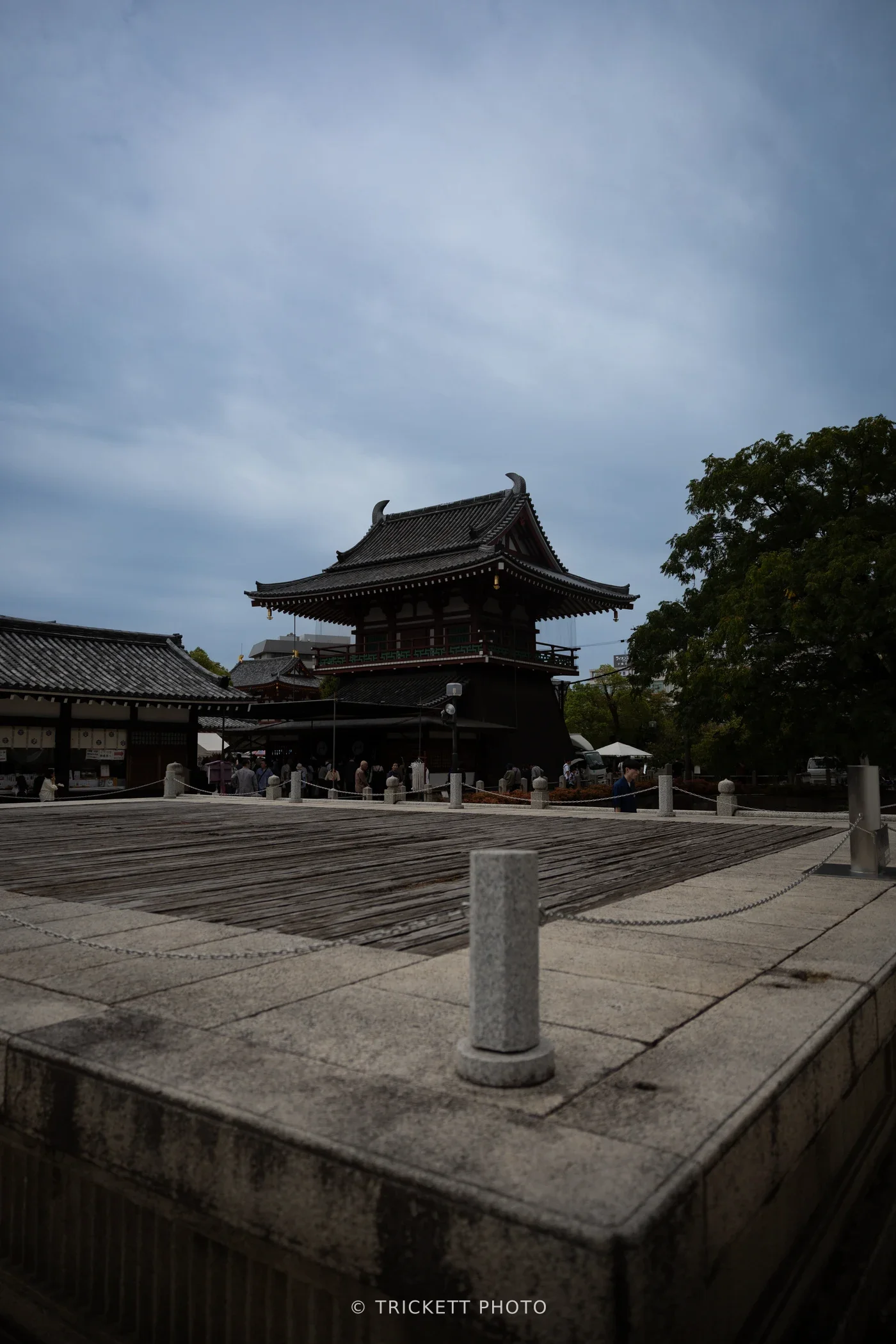

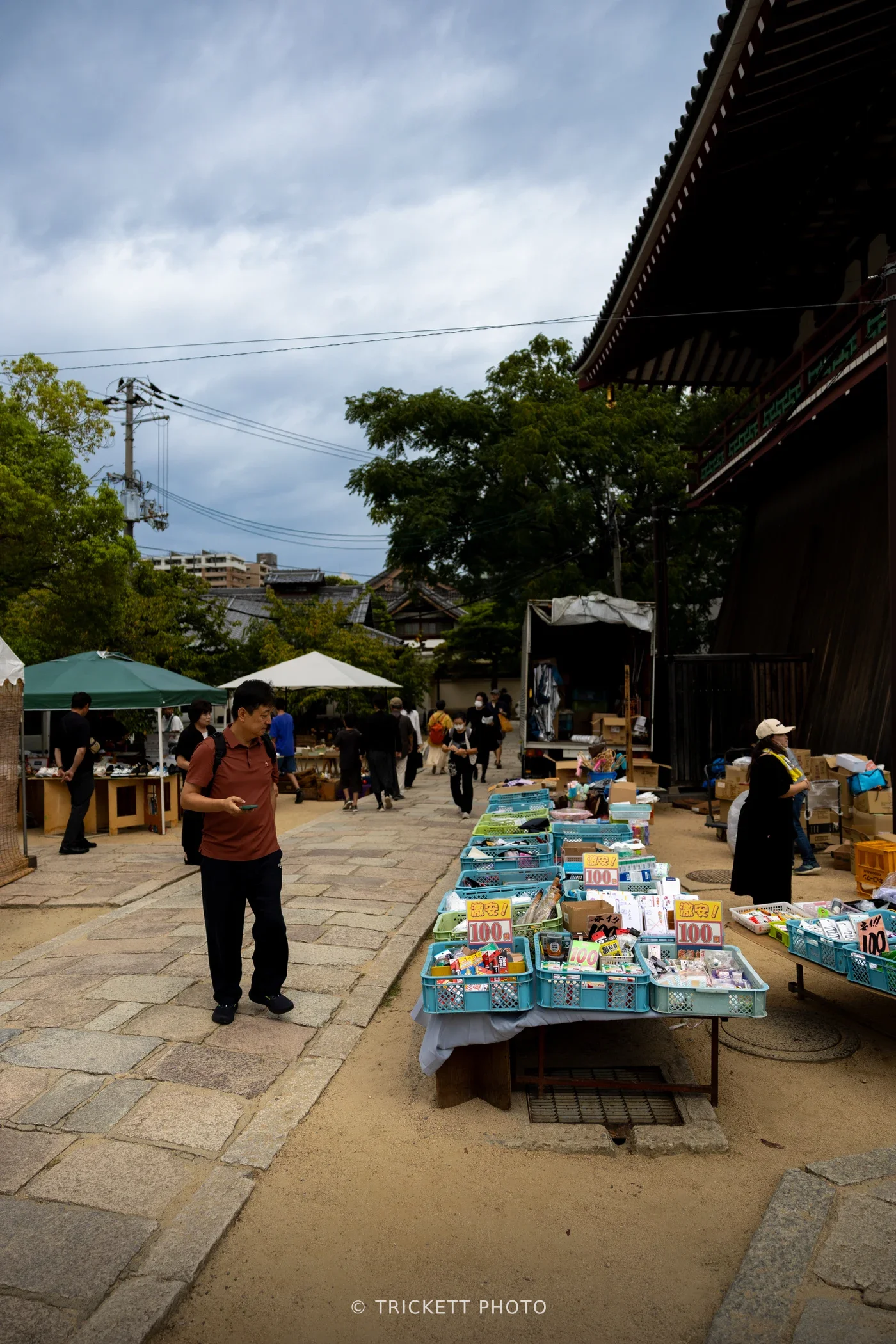
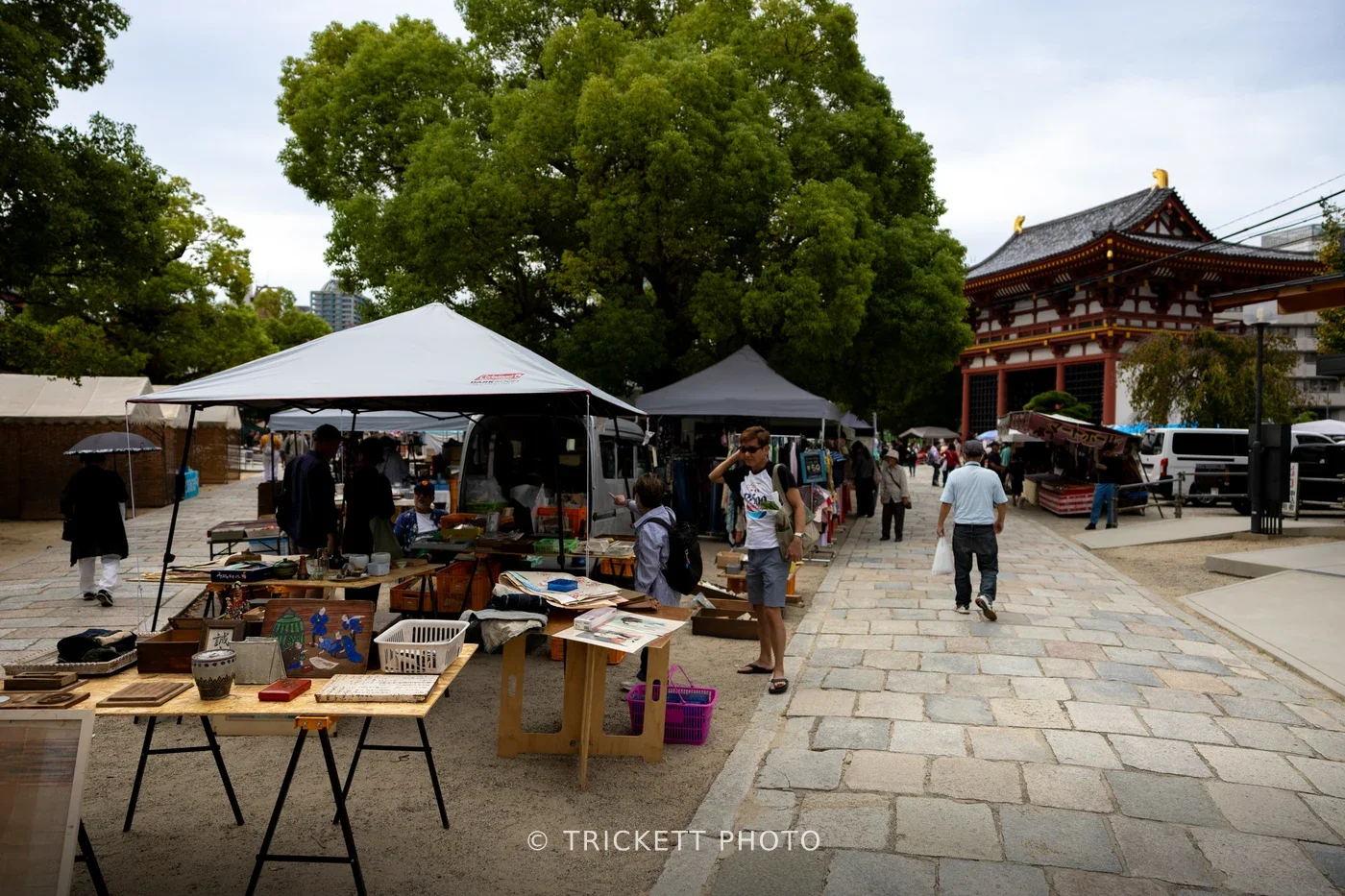
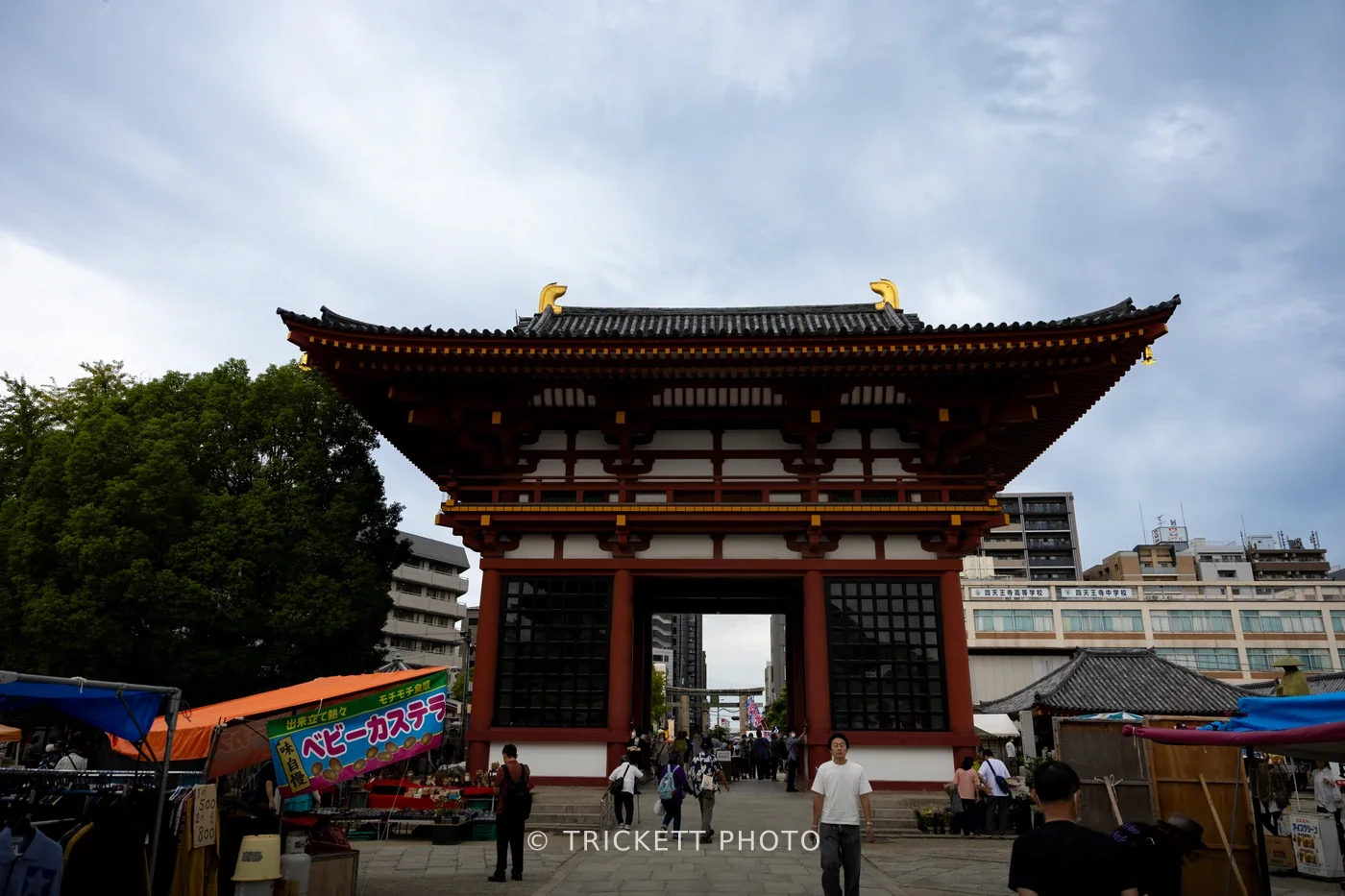
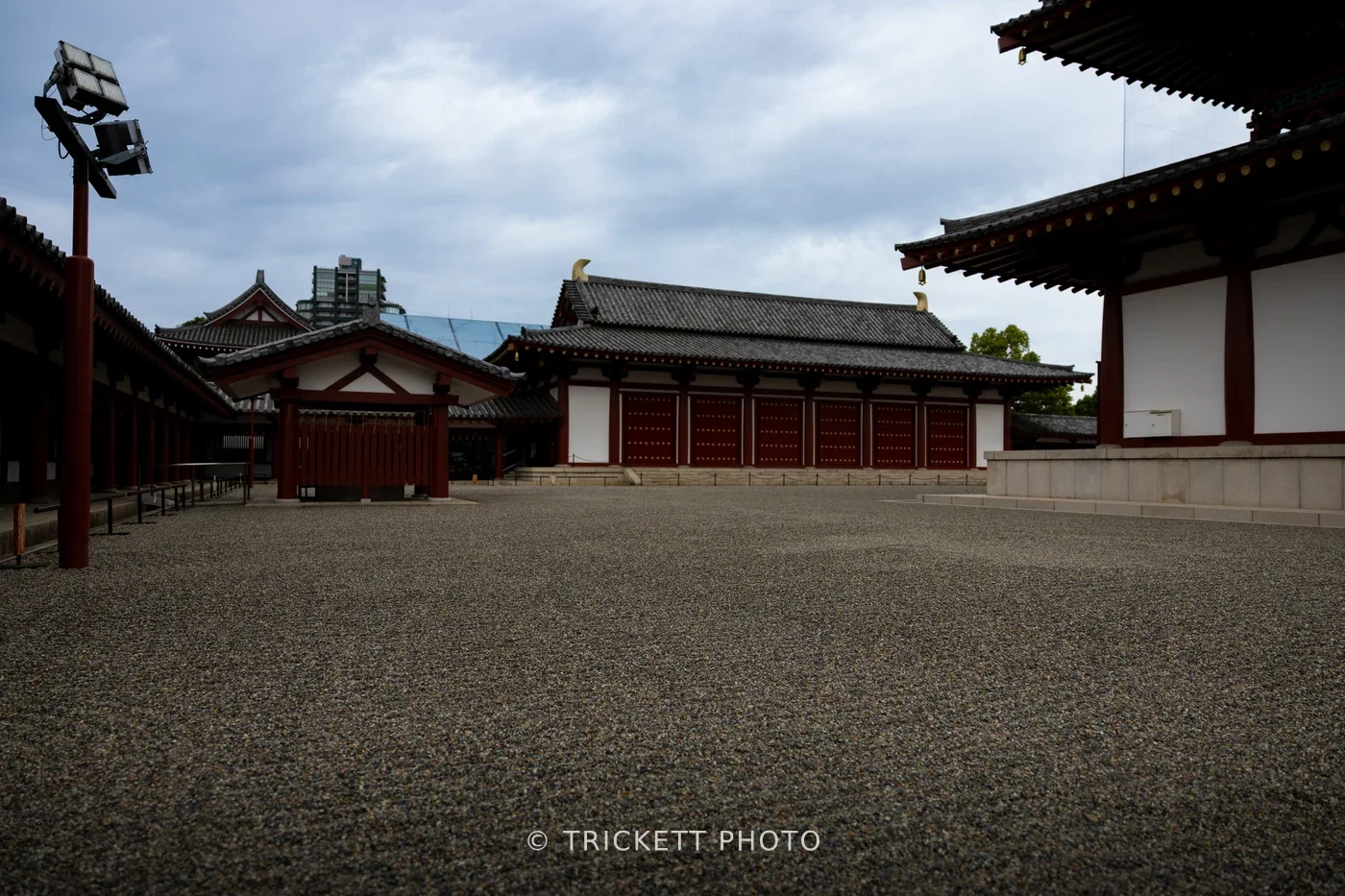
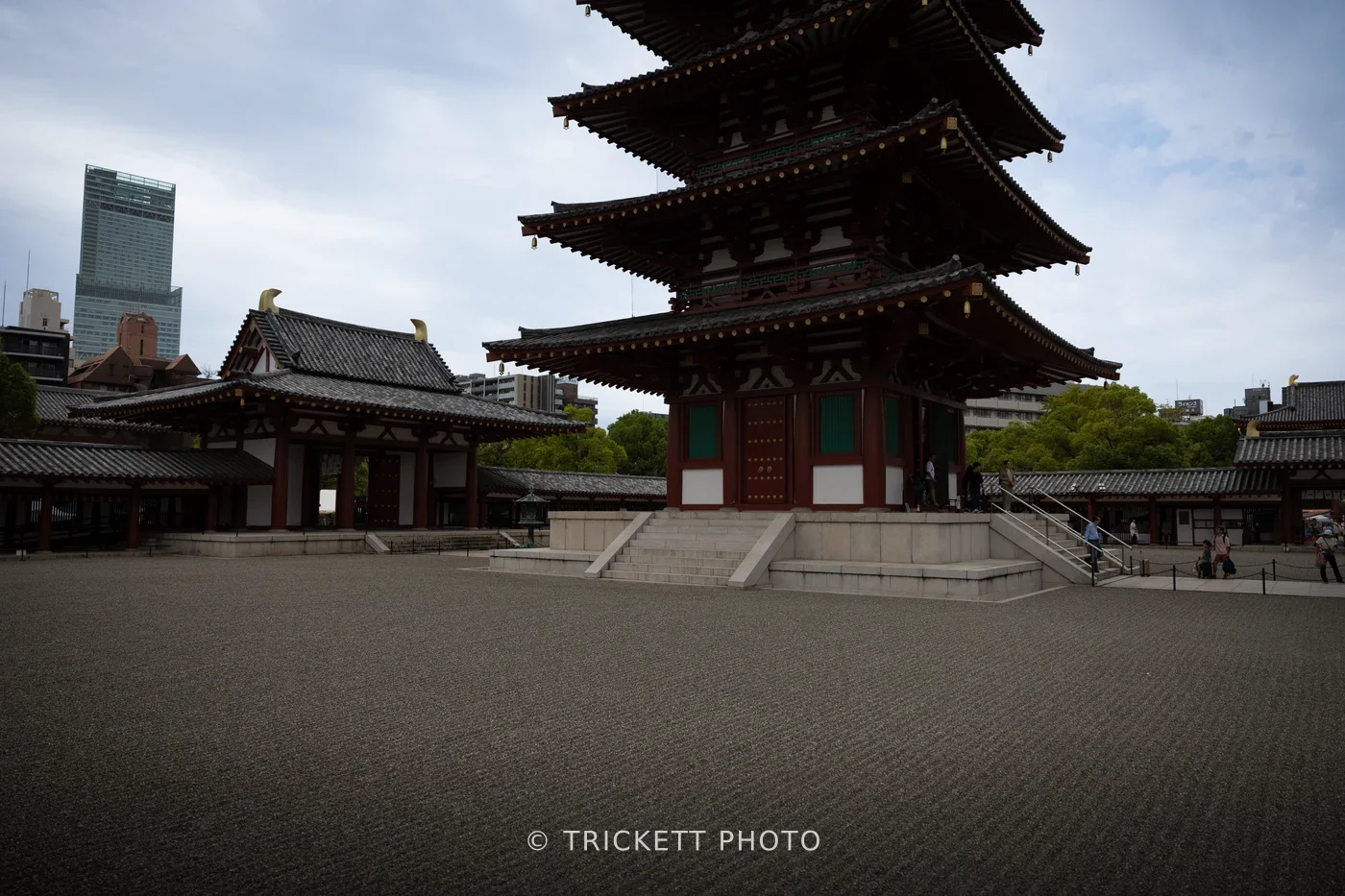
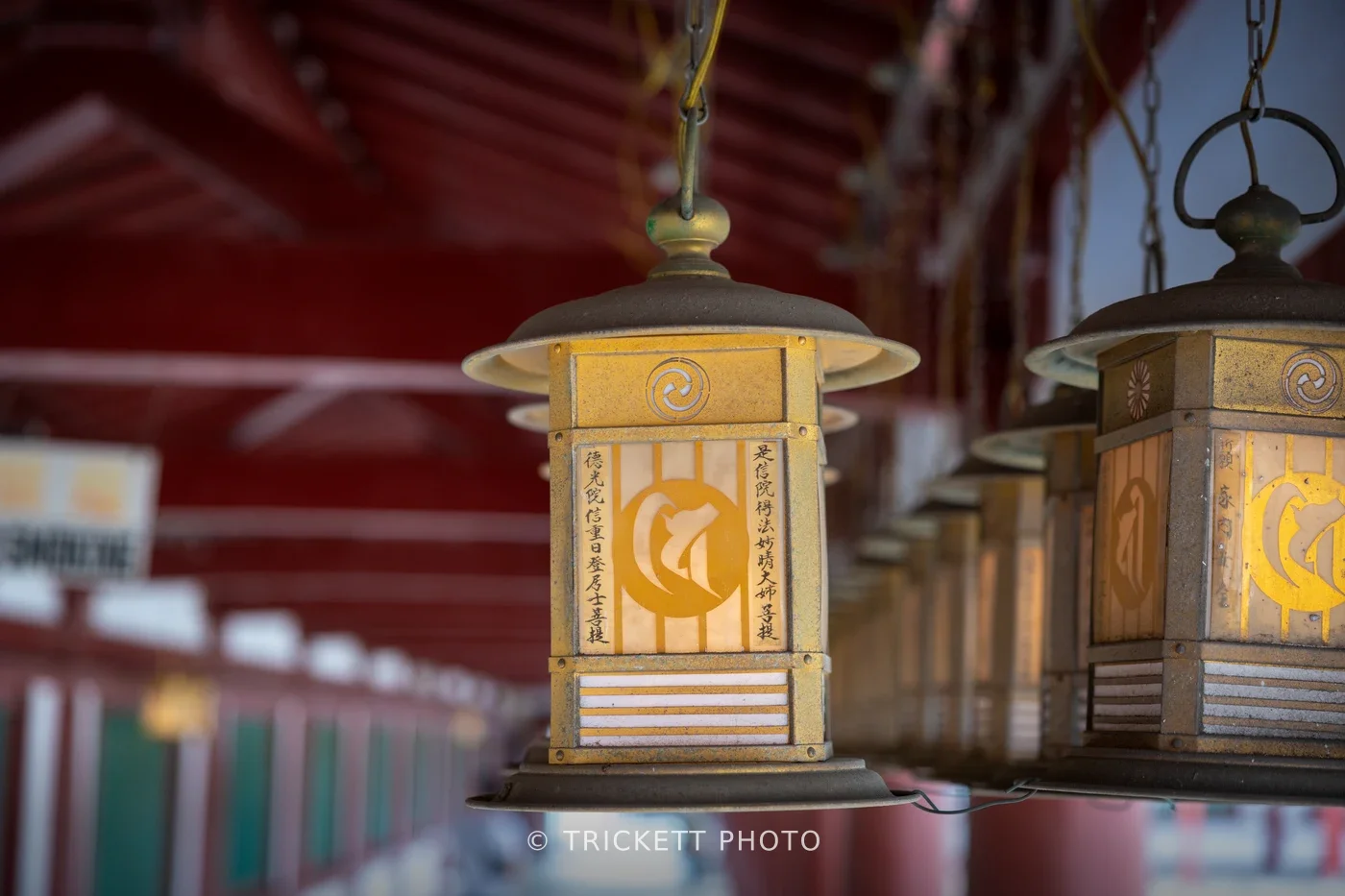
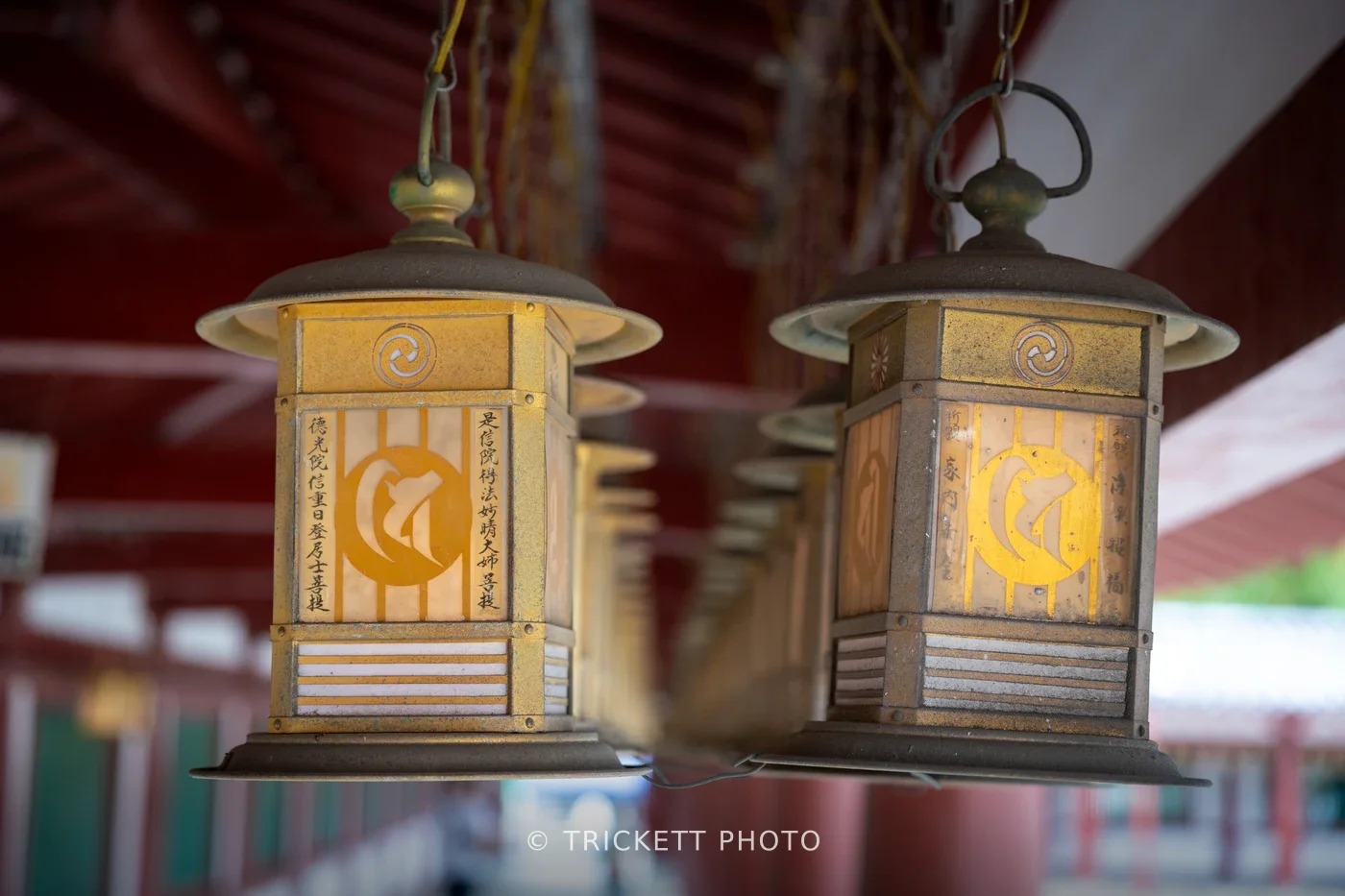
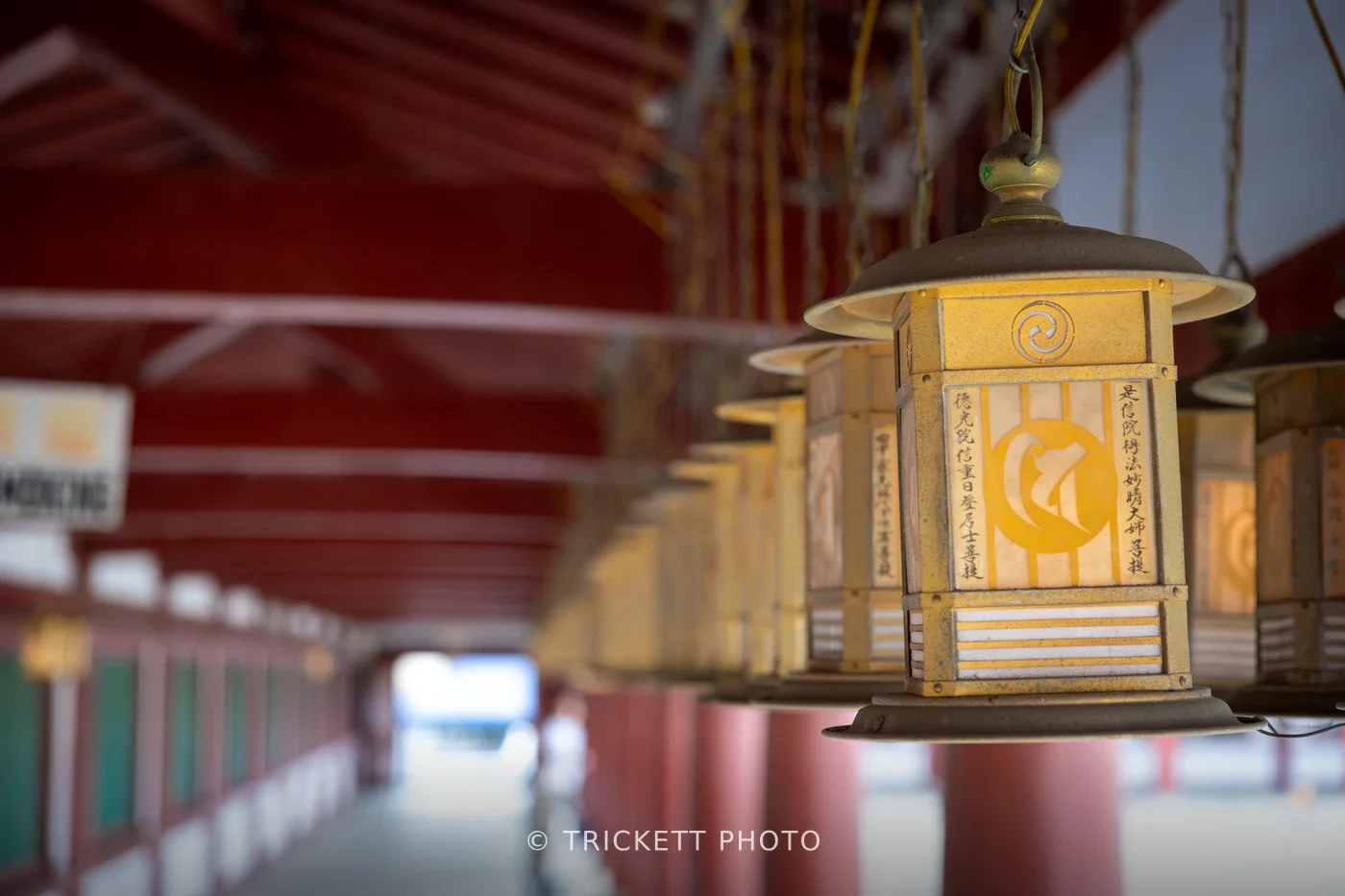
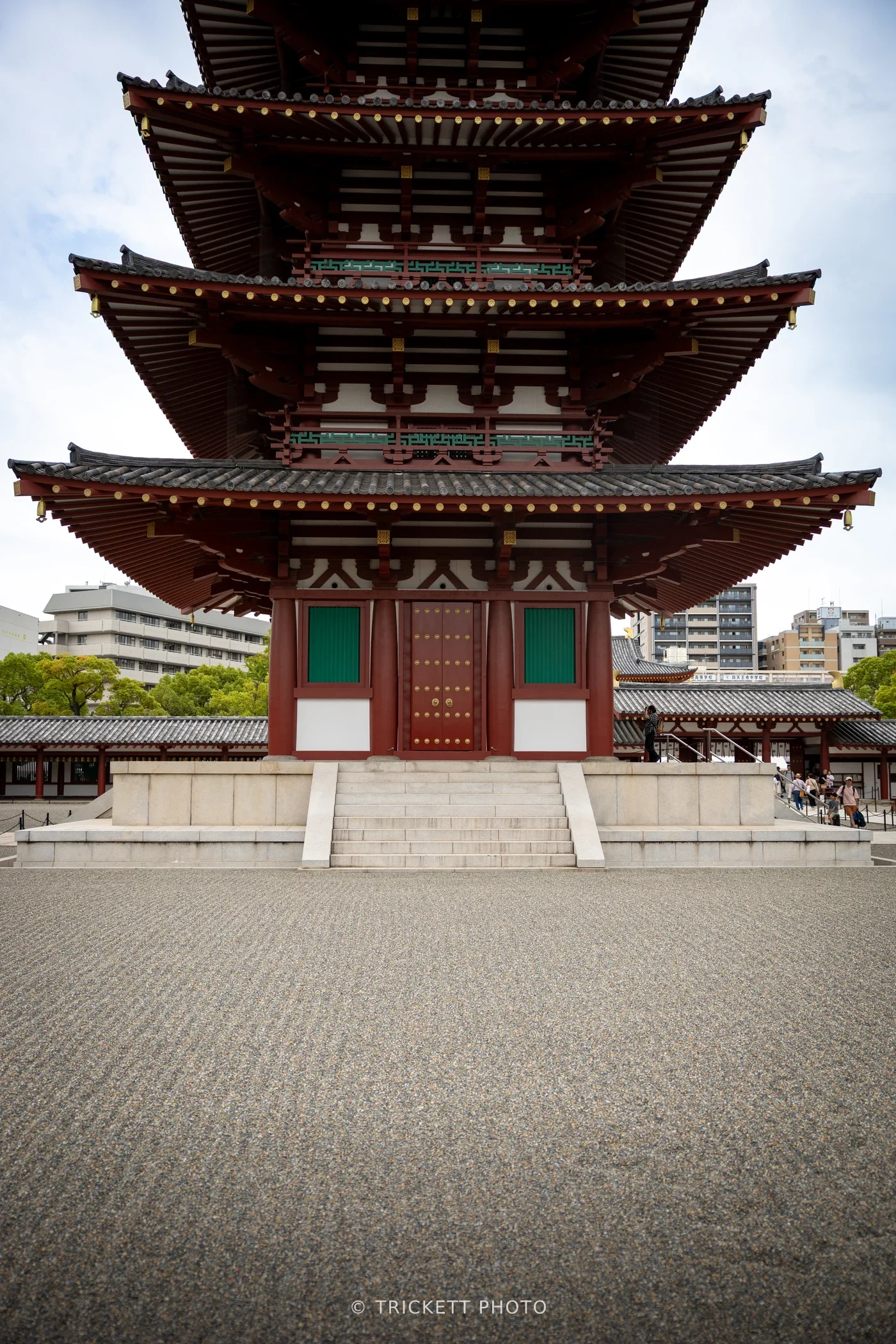
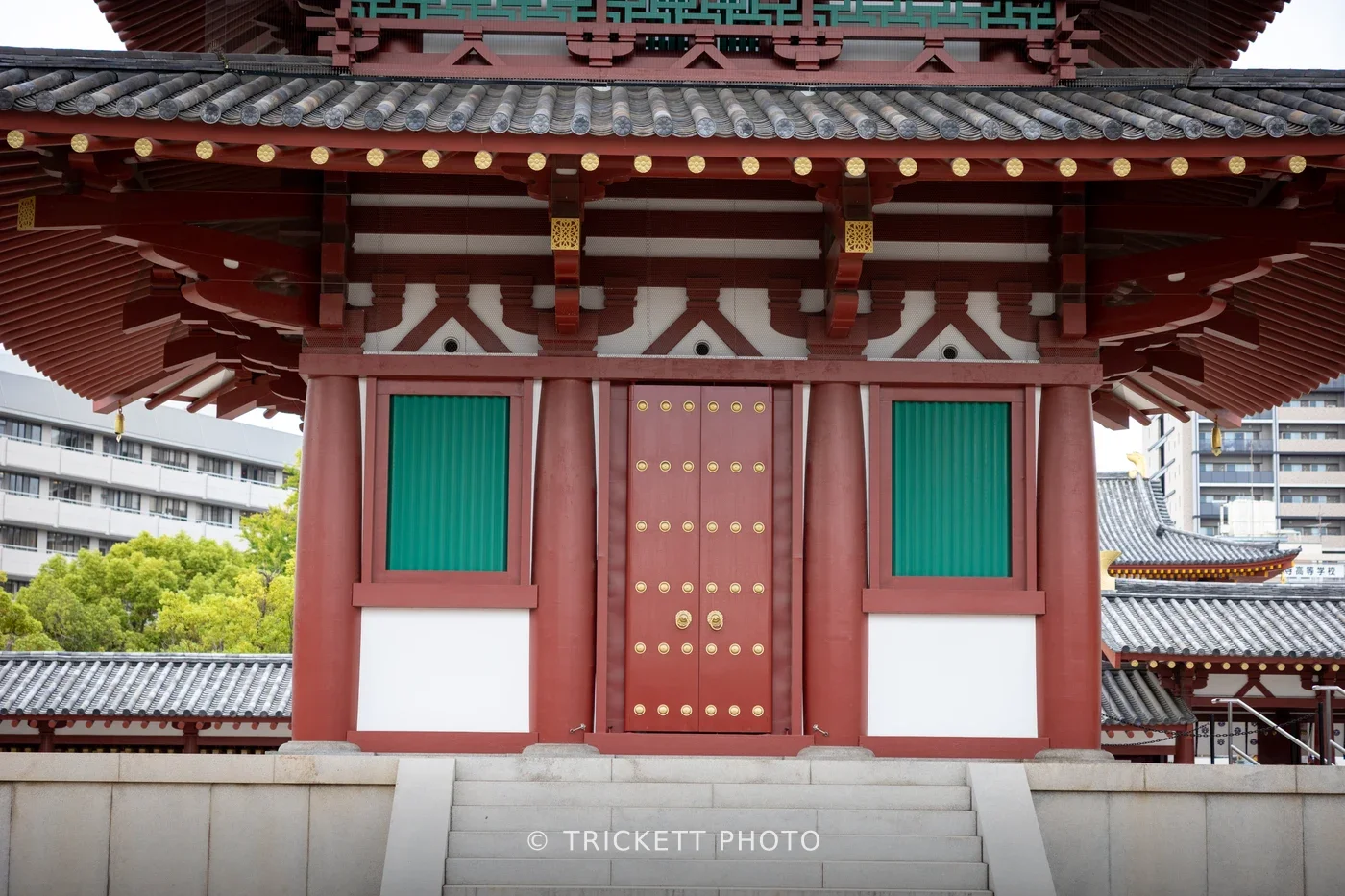
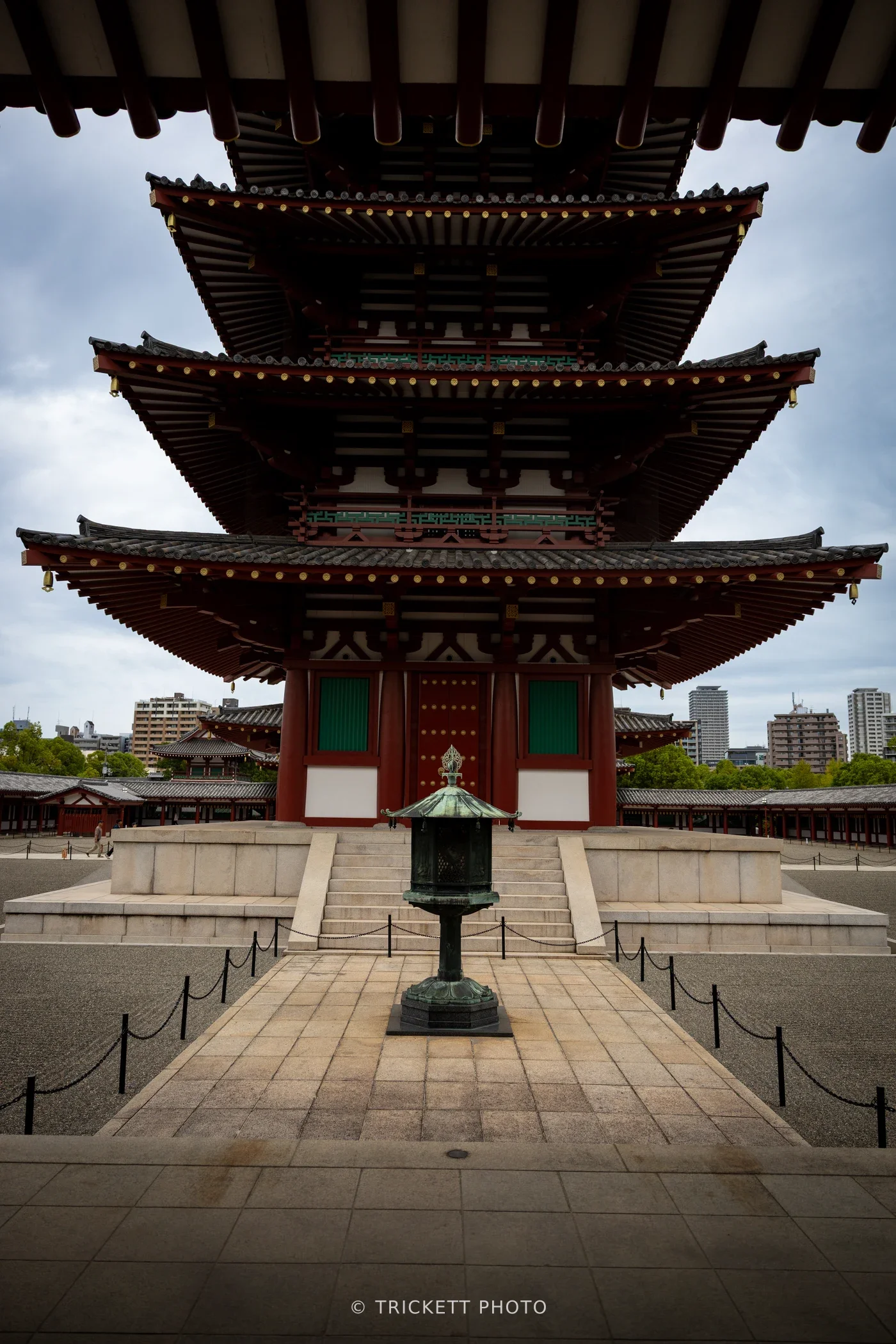
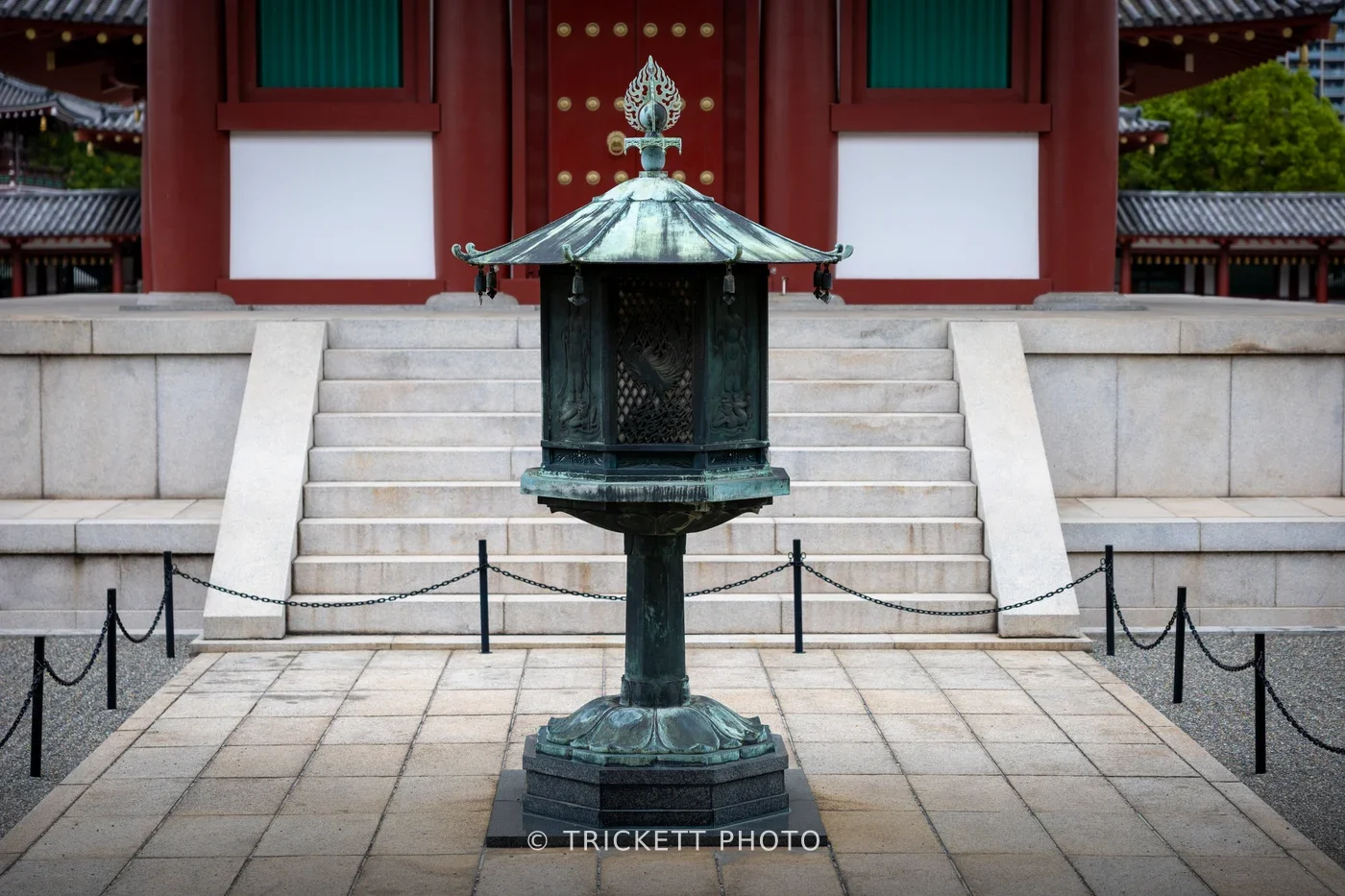
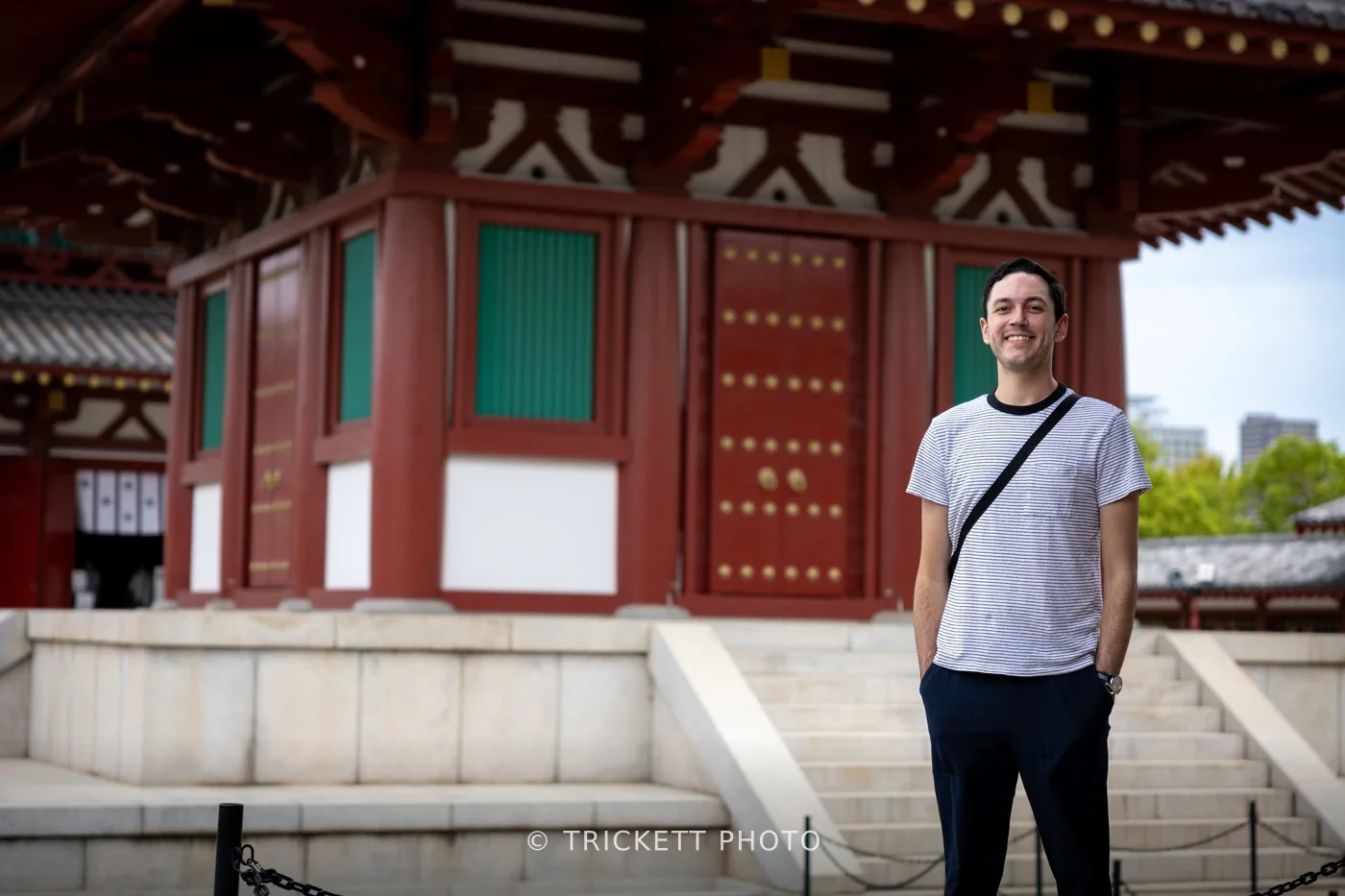
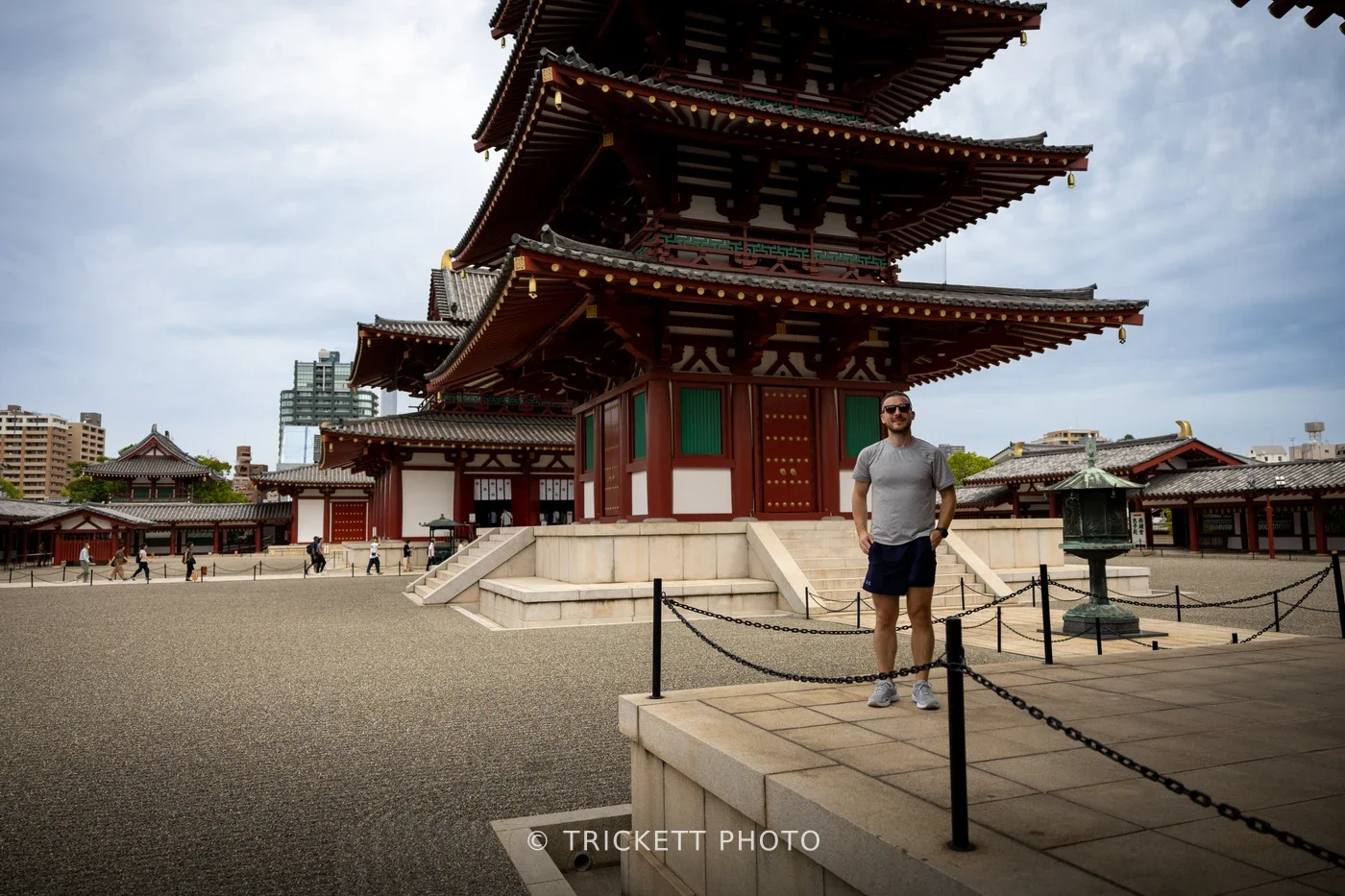
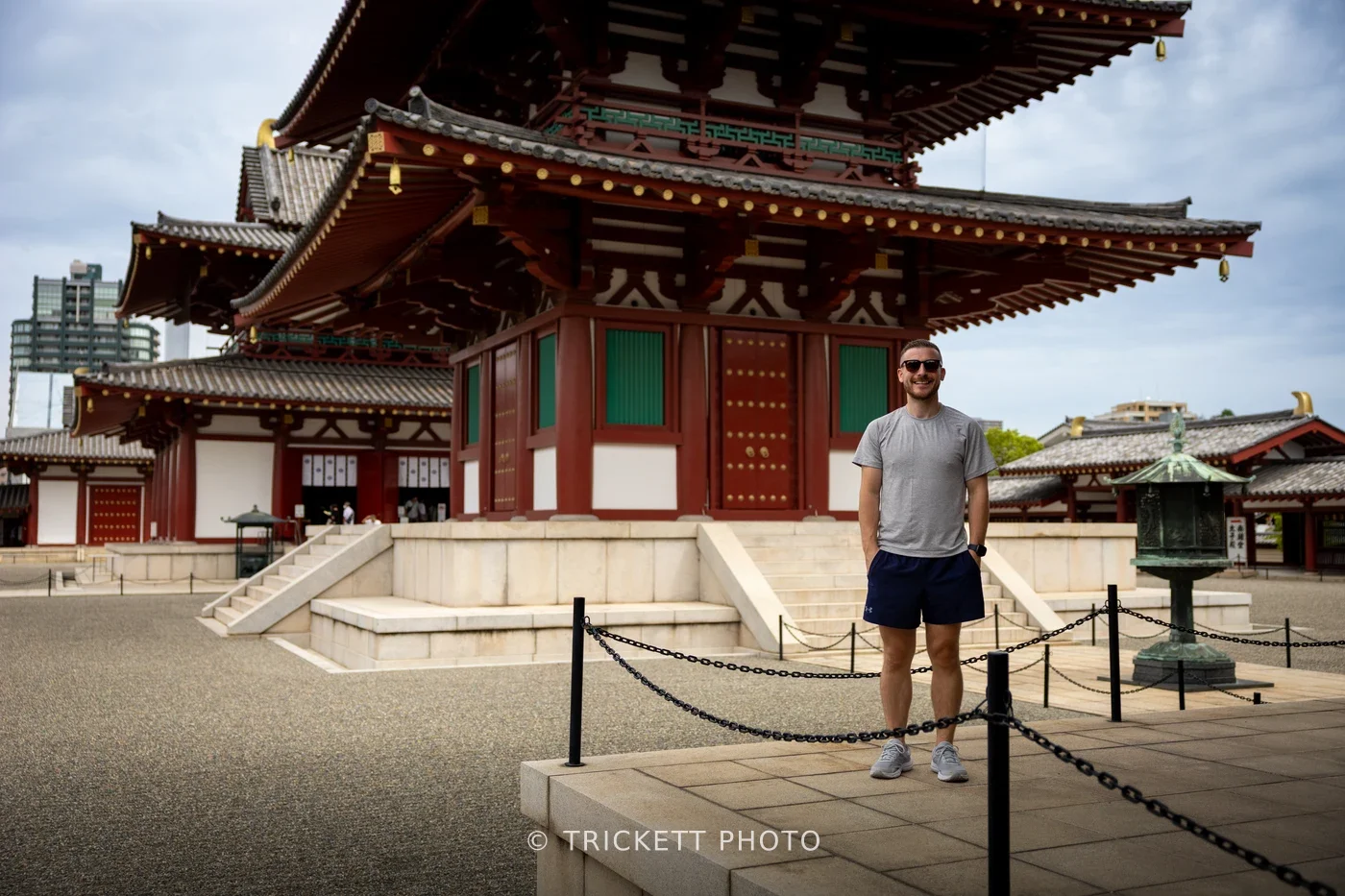
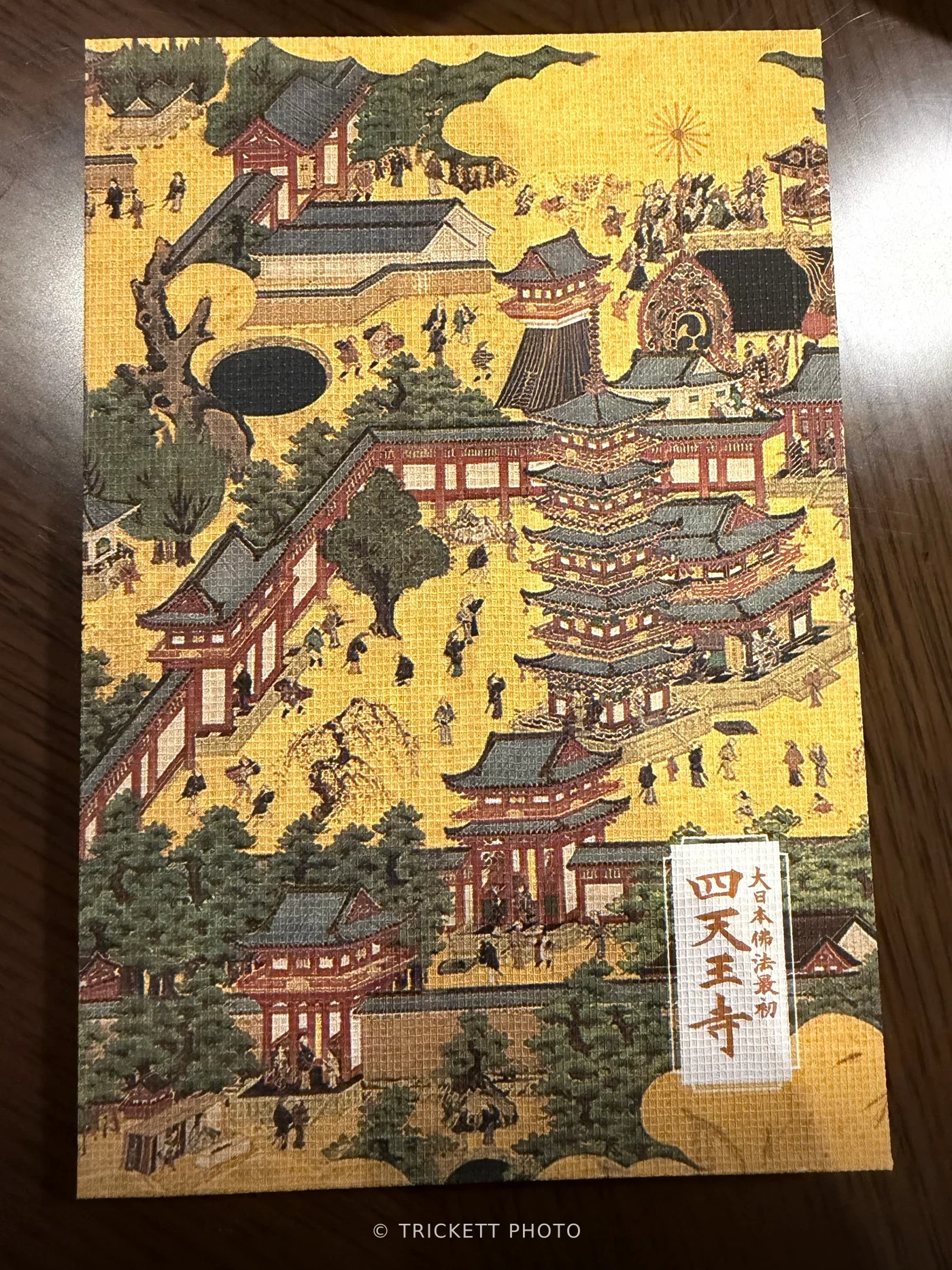
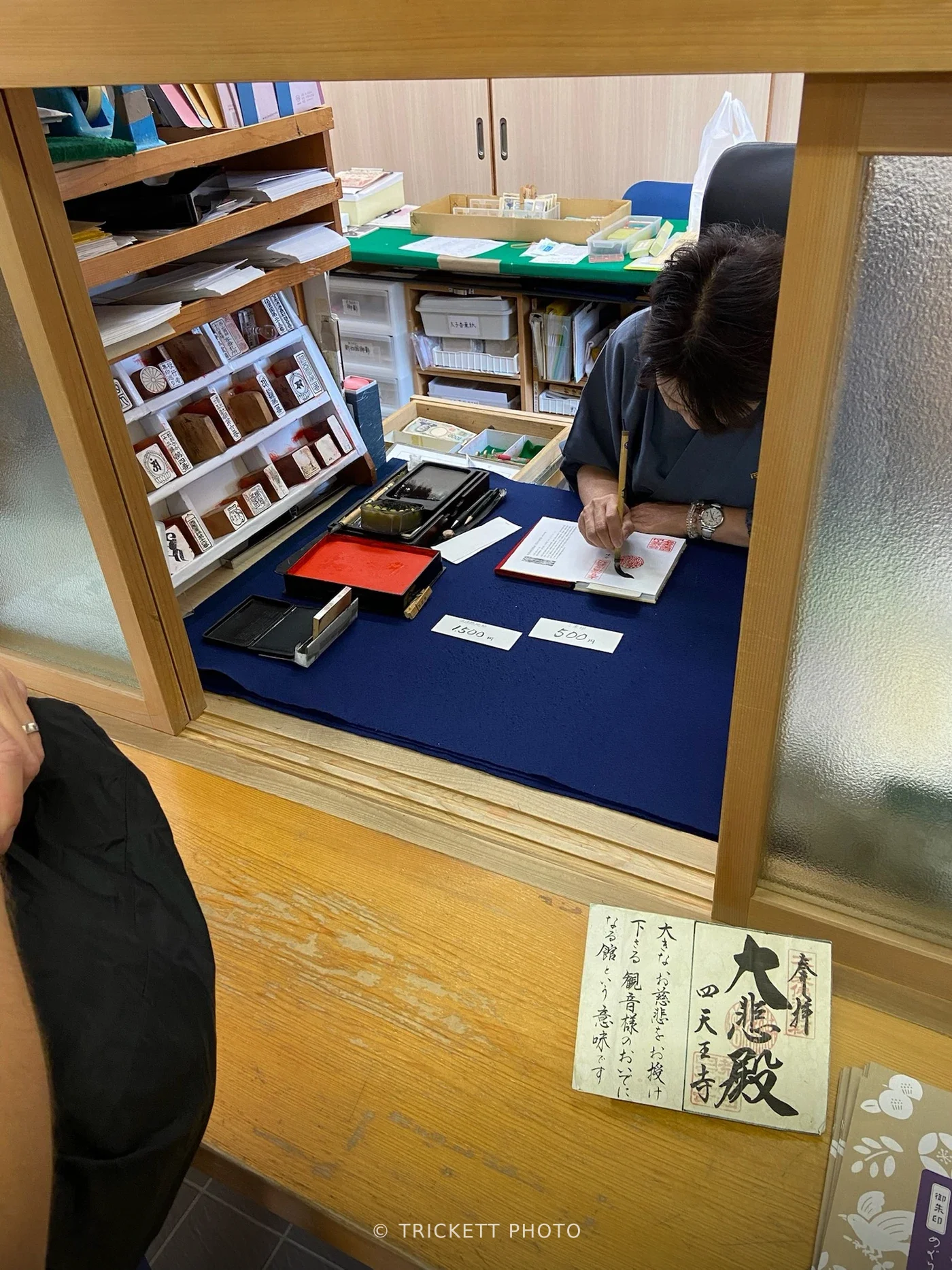
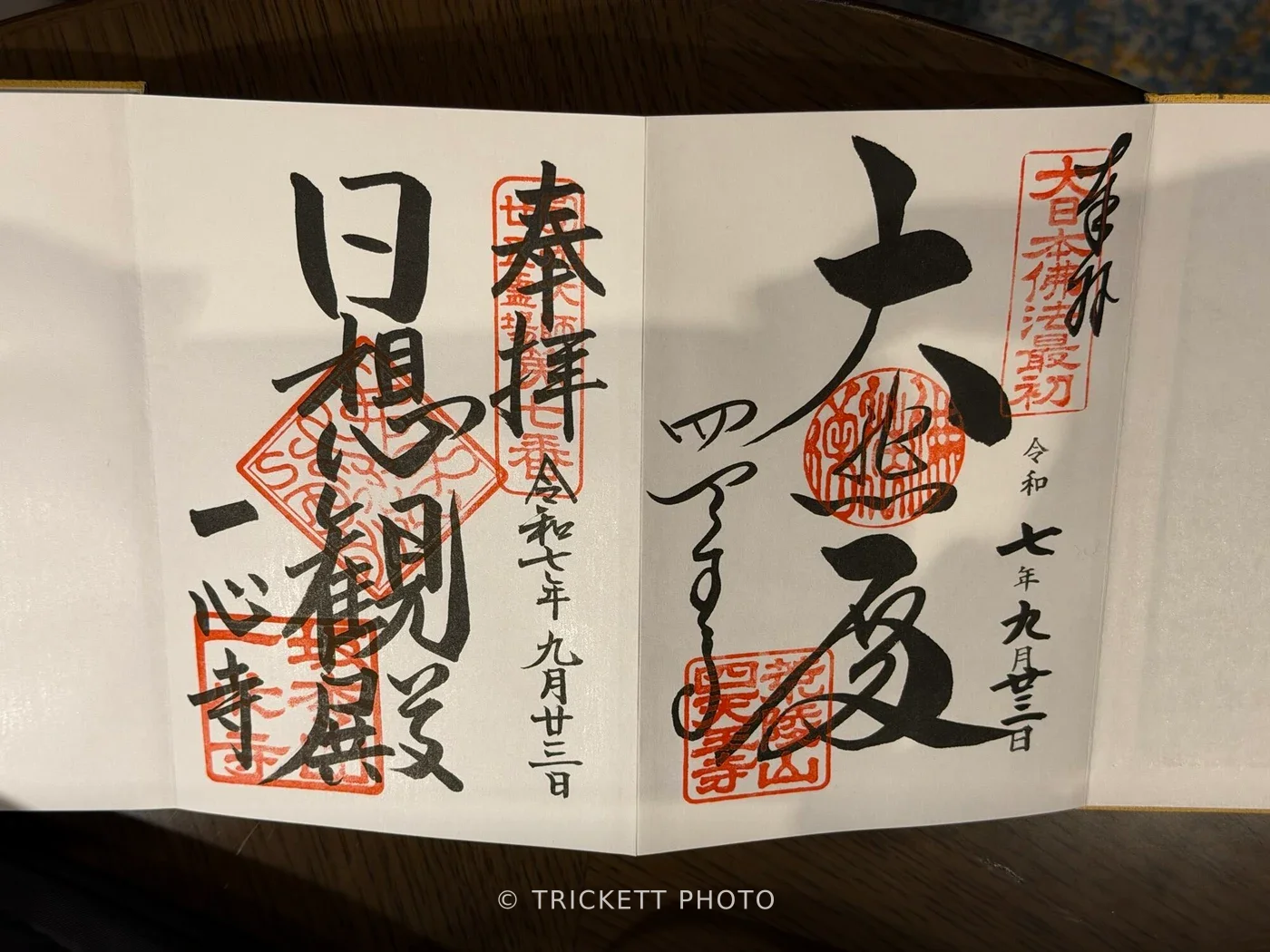
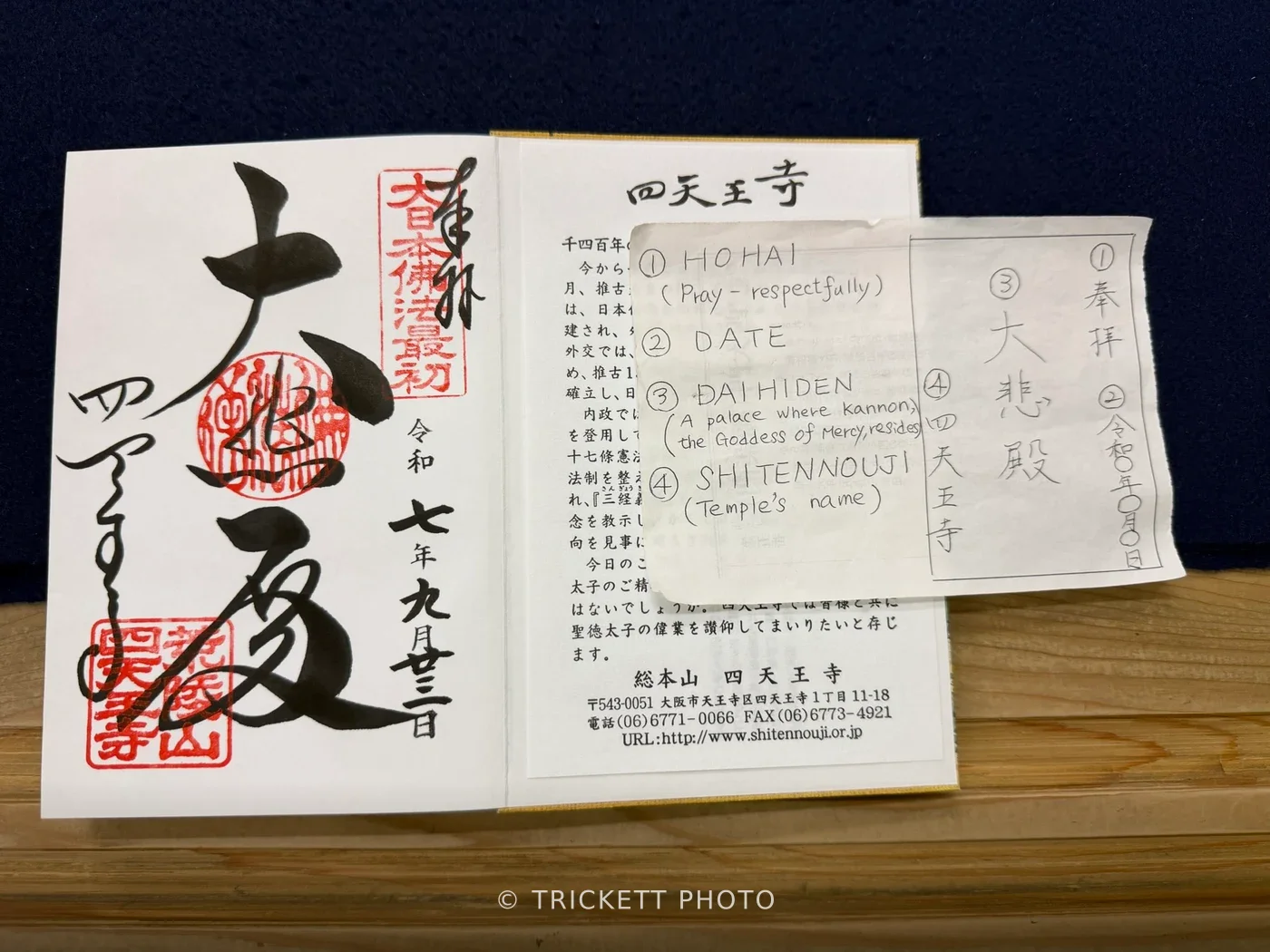
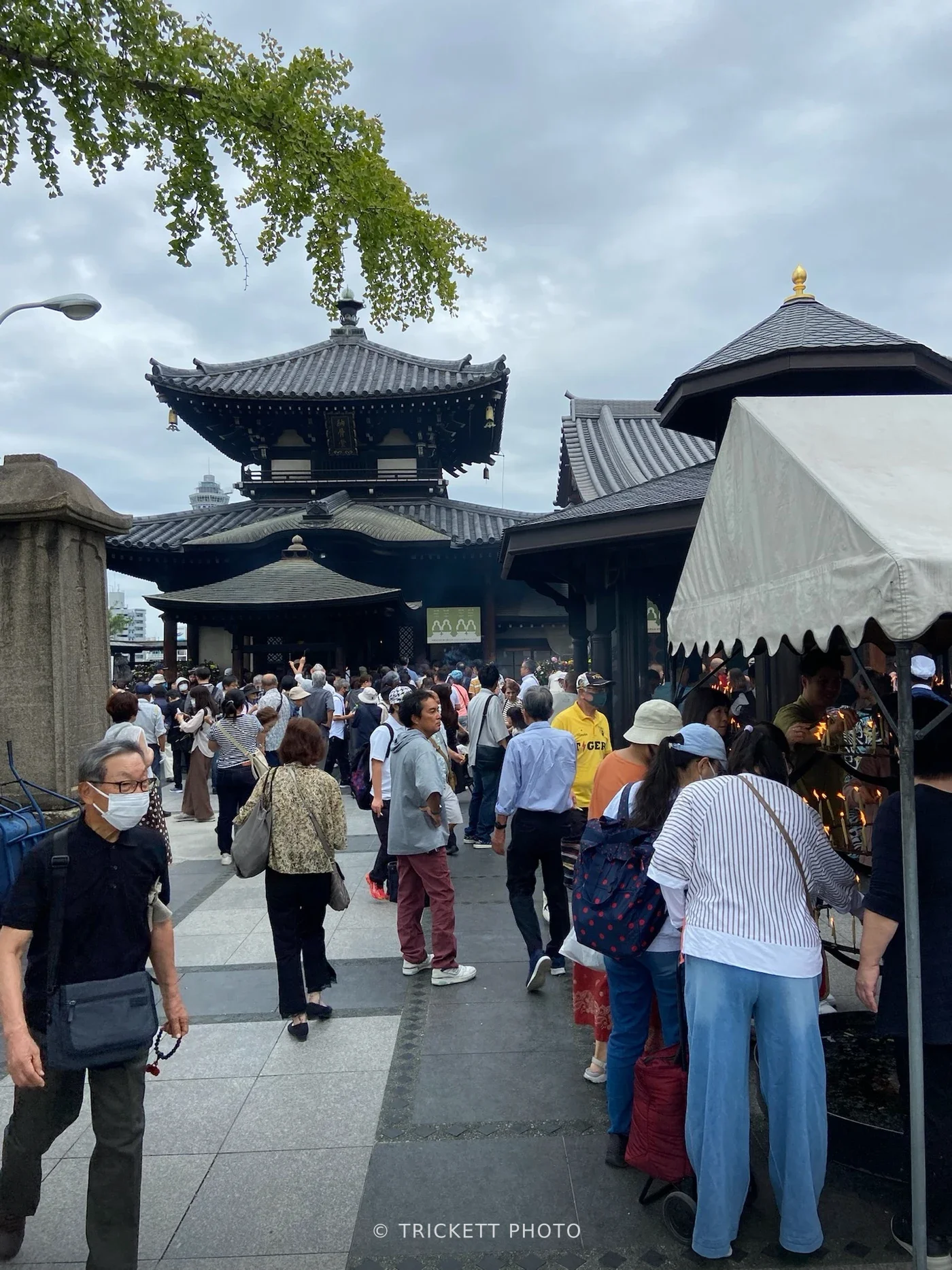
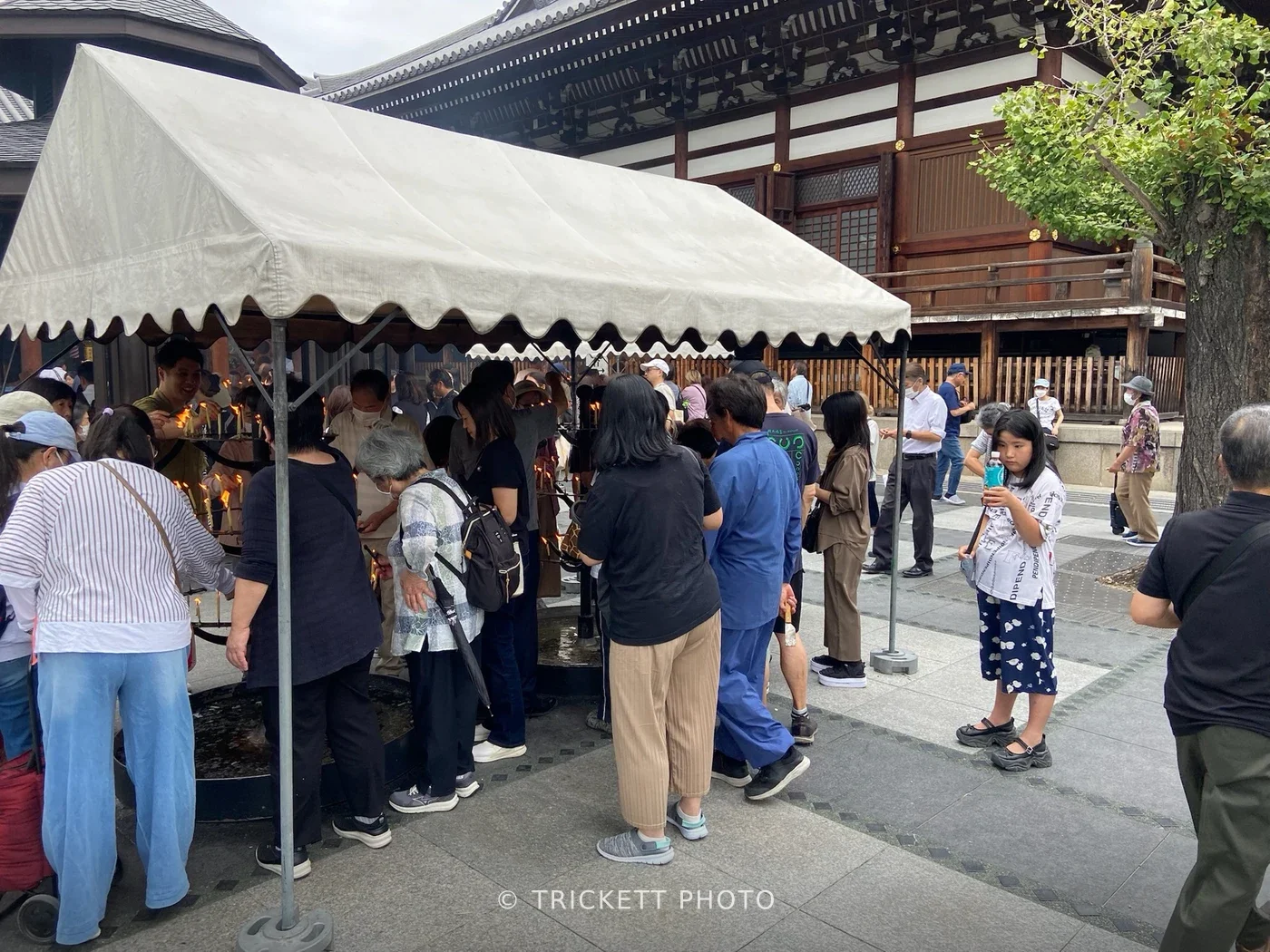
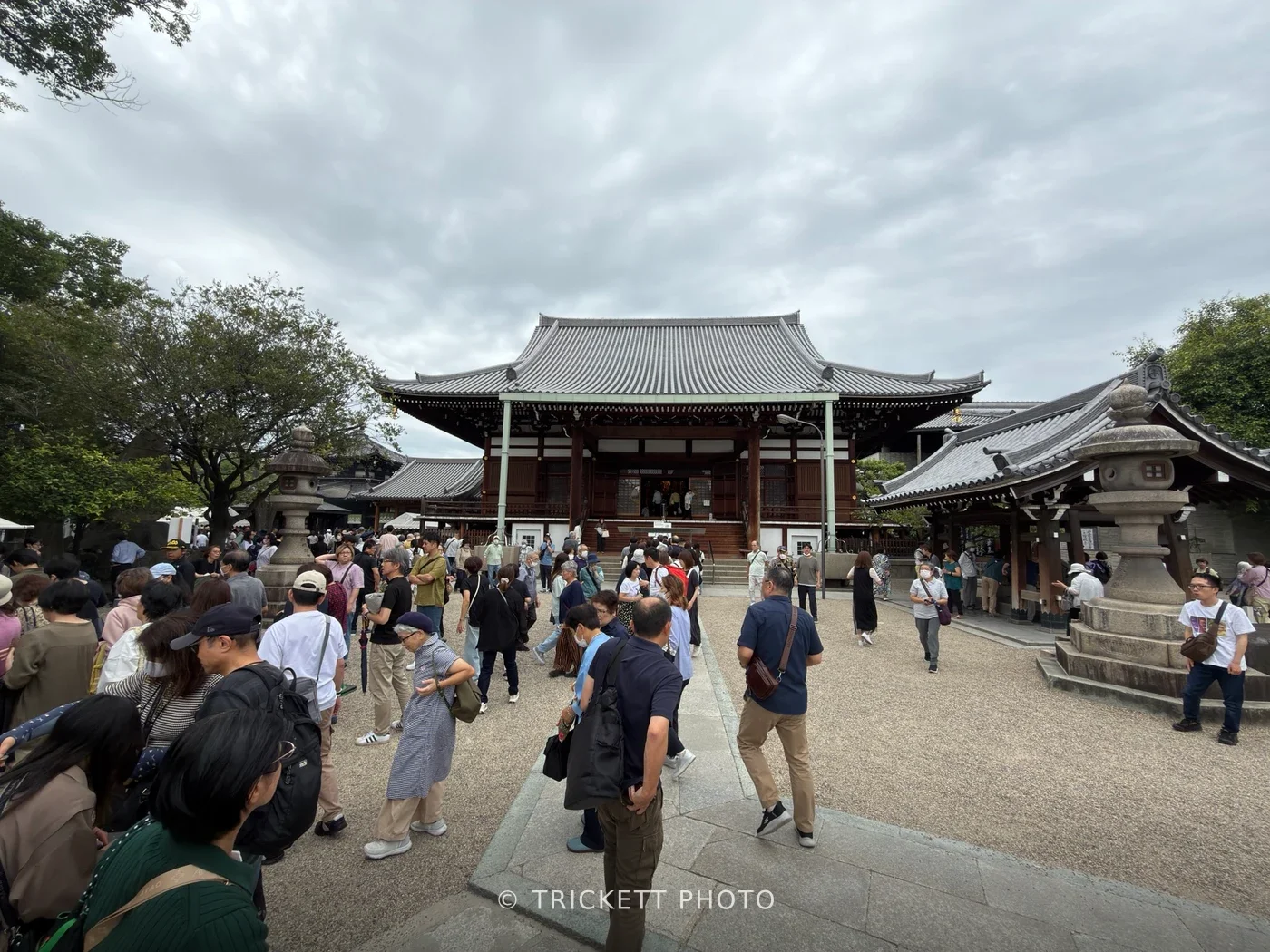
Today we started the day at the Shitennoji Temple where I bought Goshuin book (thanks Brad!) and began one of several new “collections.” A Goshuin book is essentially a stamp collection book for temples and shrines, but it’s so much more meaningful than that sounds. Each page captures a unique calligraphy piece created by monks or shrine attendants, featuring the temple’s name, date of visit, and often beautiful artistic flourishes in red stamps and black ink. It becomes a personal pilgrimage record and spiritual journey documented in the most elegant way possible. Every entry is hand-brushed right in front of you, making each page a small work of art and a tangible memory of your visit.
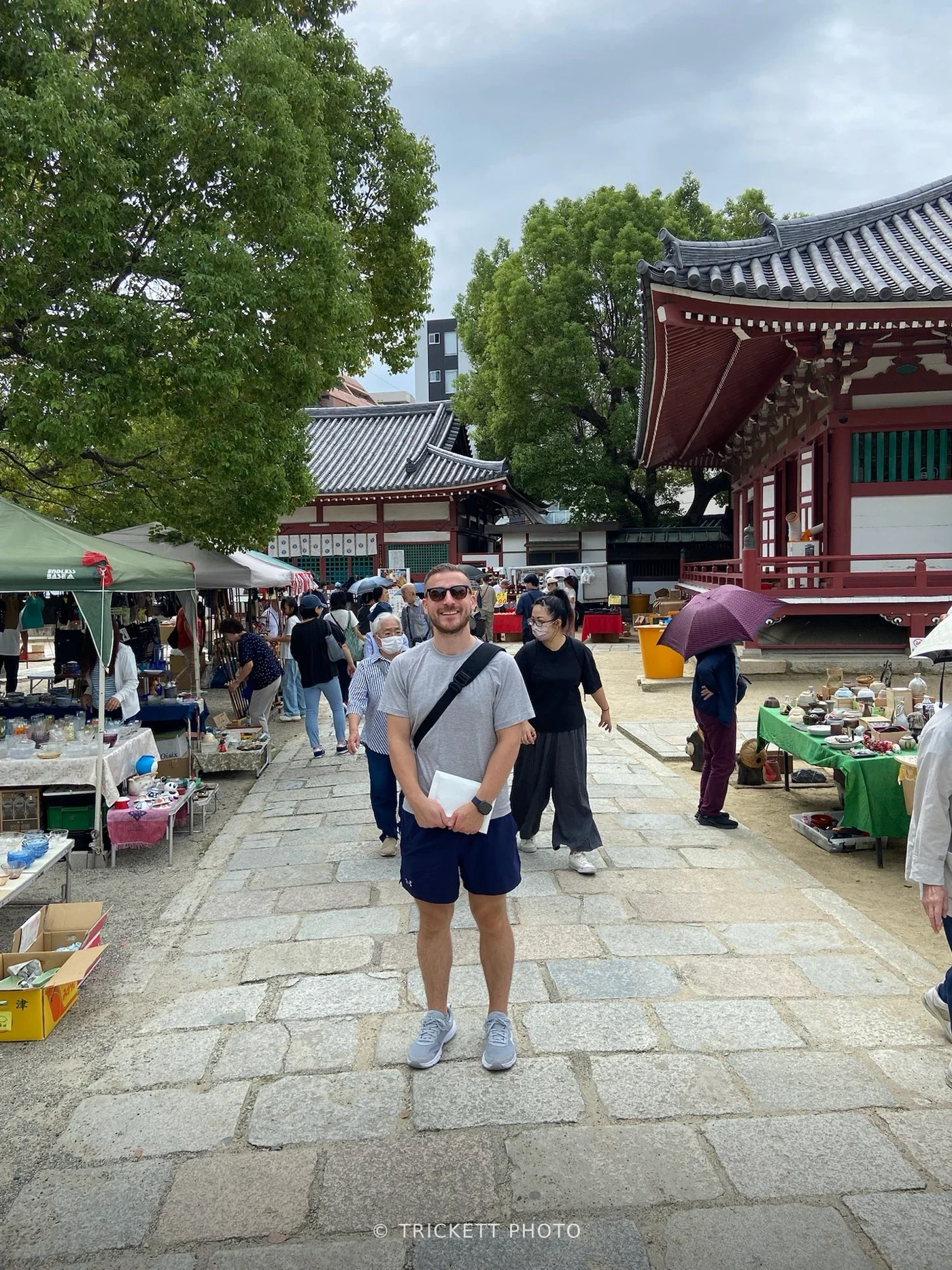
Shitennoji Temple holds the distinction of being one of Japan’s oldest Buddhist temples, founded in 593 AD by Prince Shotoku. Located in Osaka’s Tennoji ward, this ancient temple has been destroyed and rebuilt multiple times throughout history, yet it maintains its original layout and spiritual significance. The temple complex features a classic design with a five-story pagoda, main hall, and lecture hall aligned in a straight line, representing the pure land of Buddha.
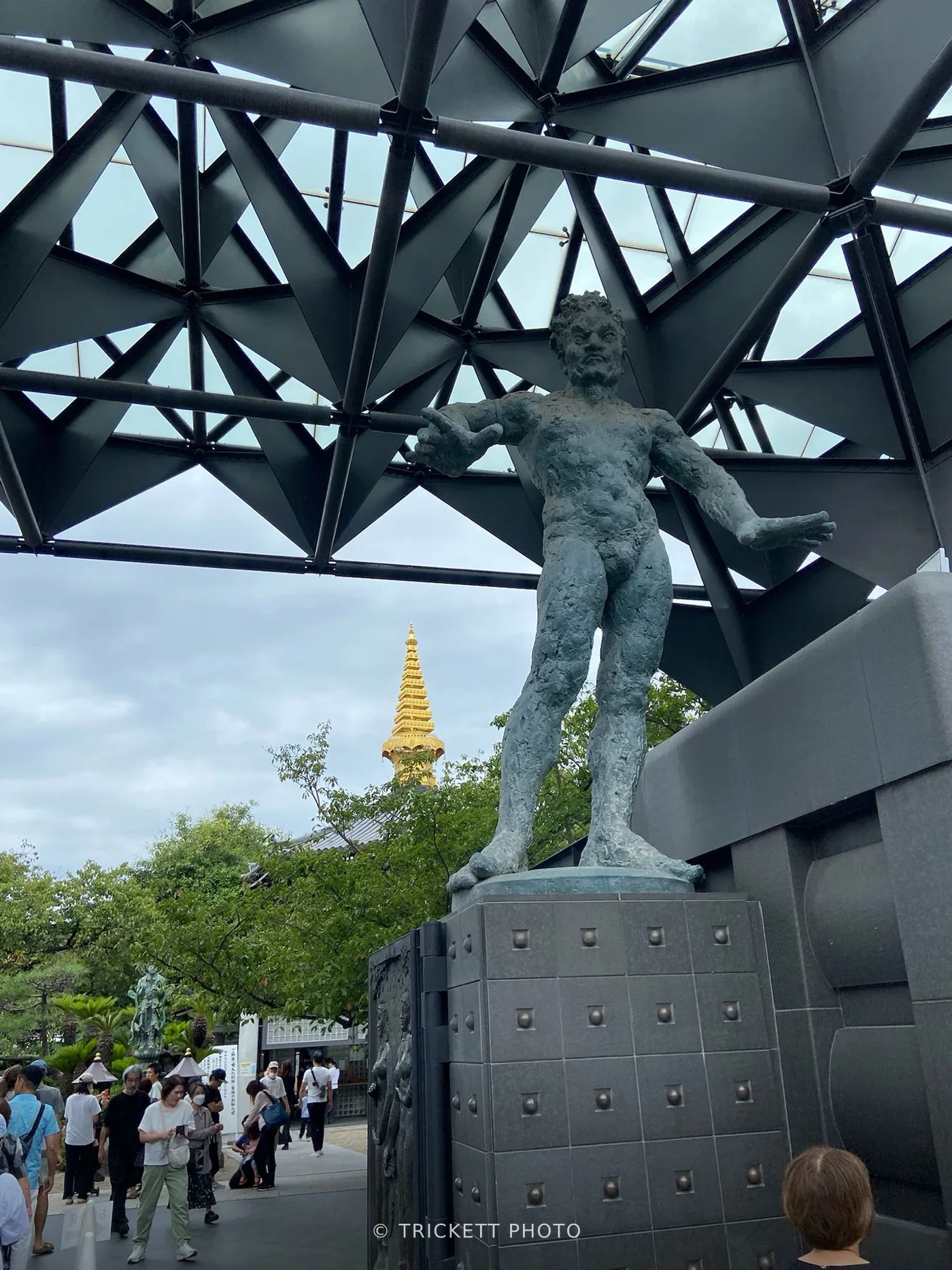
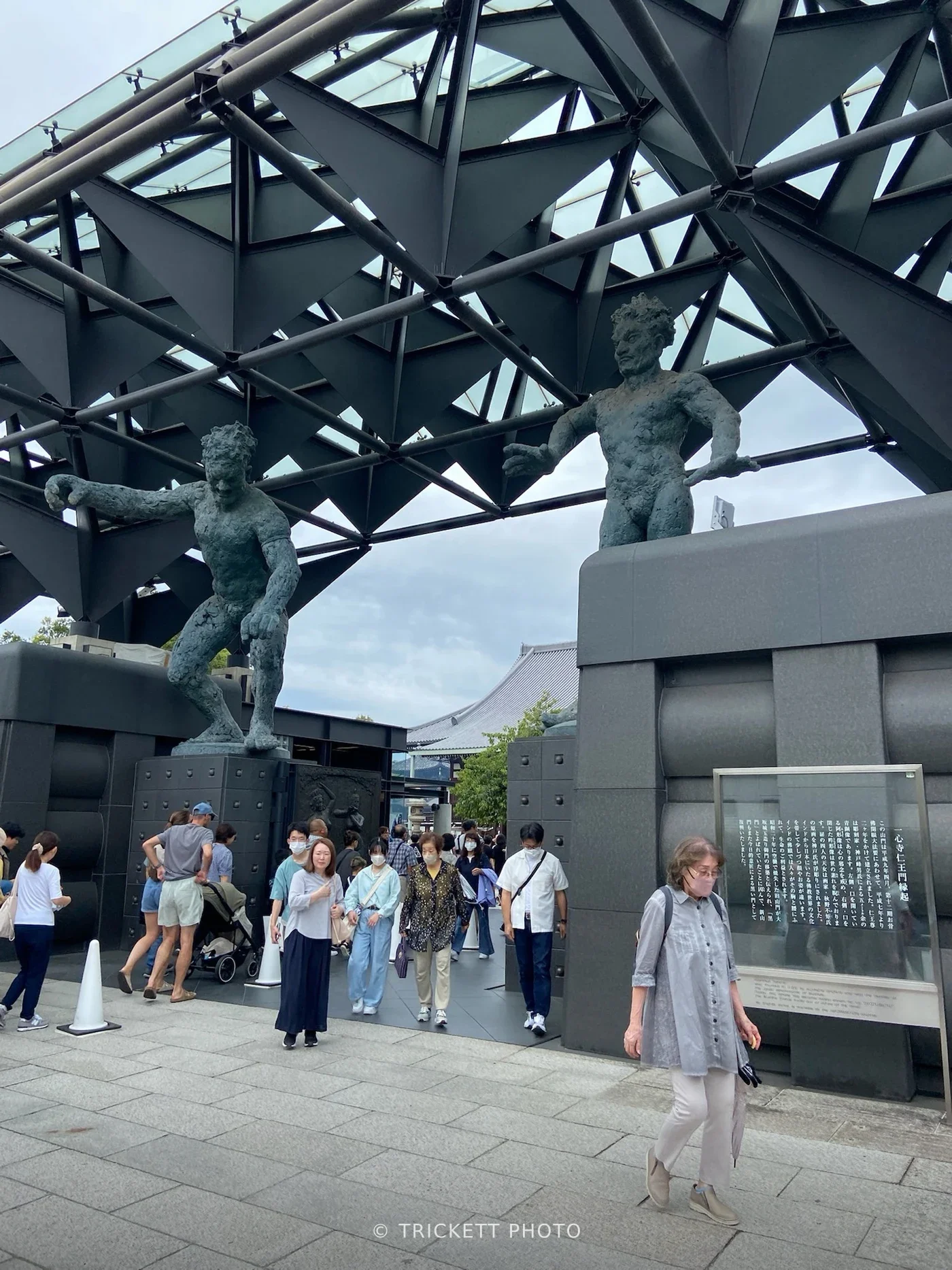
After that, we decided to walk to a shopping district, and along the way we came across yet another temple, Isshin-ji Temple. Walking through Osaka’s streets often means stumbling upon unexpected spiritual gems, and Isshin-ji was exactly that kind of discovery. This Jodo (Pure Land) Buddhist temple, founded in the Kamakura period, sits quietly among the urban landscape but houses something truly unique – a striking statue made entirely from the ashes of cremated believers. The temple’s most famous feature is this Buddha statue, created from the remains of over 200,000 people whose families chose to have their ashes incorporated into this sacred figure, creating a powerful symbol of collective spiritual devotion and the Buddhist concept of impermanence.
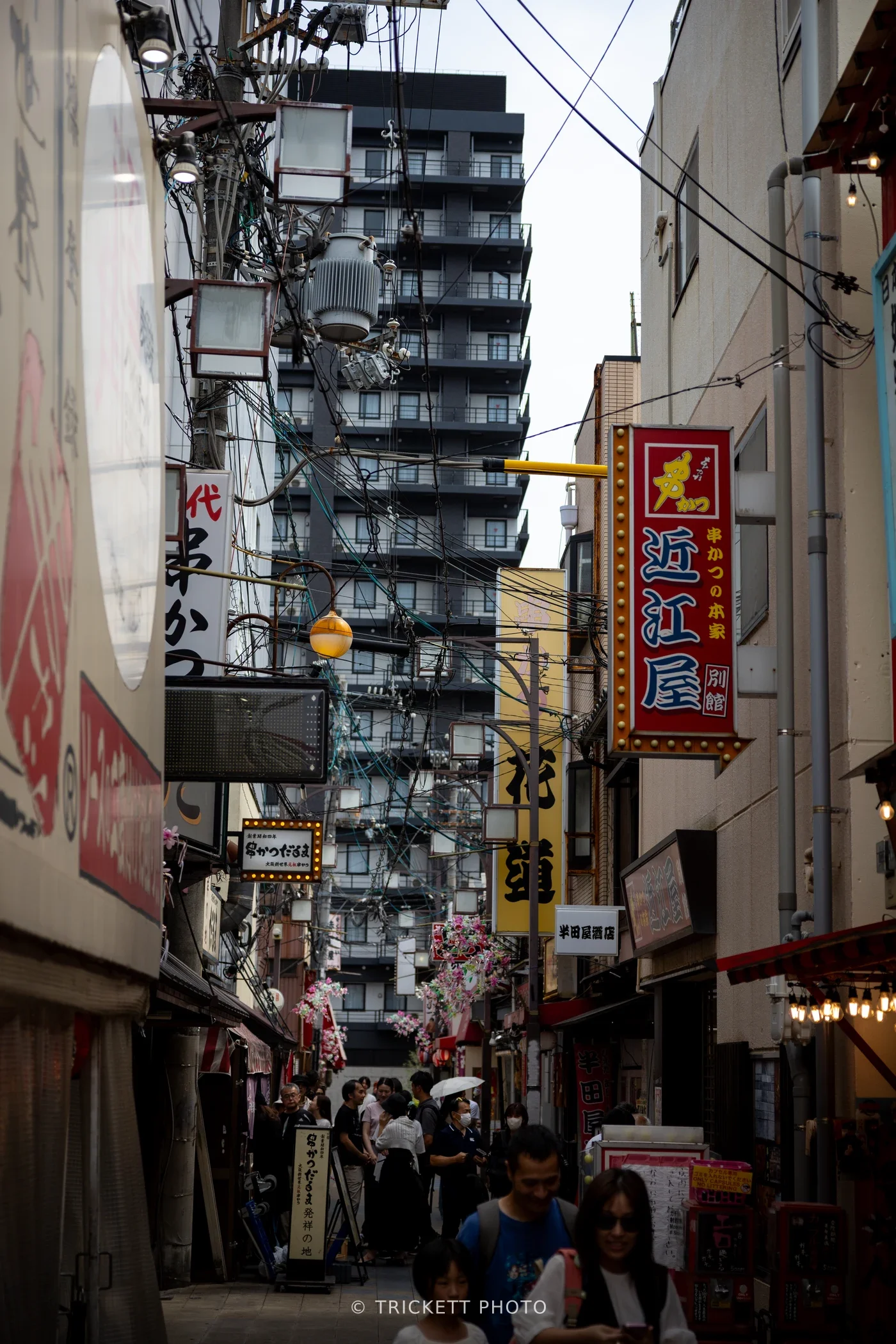
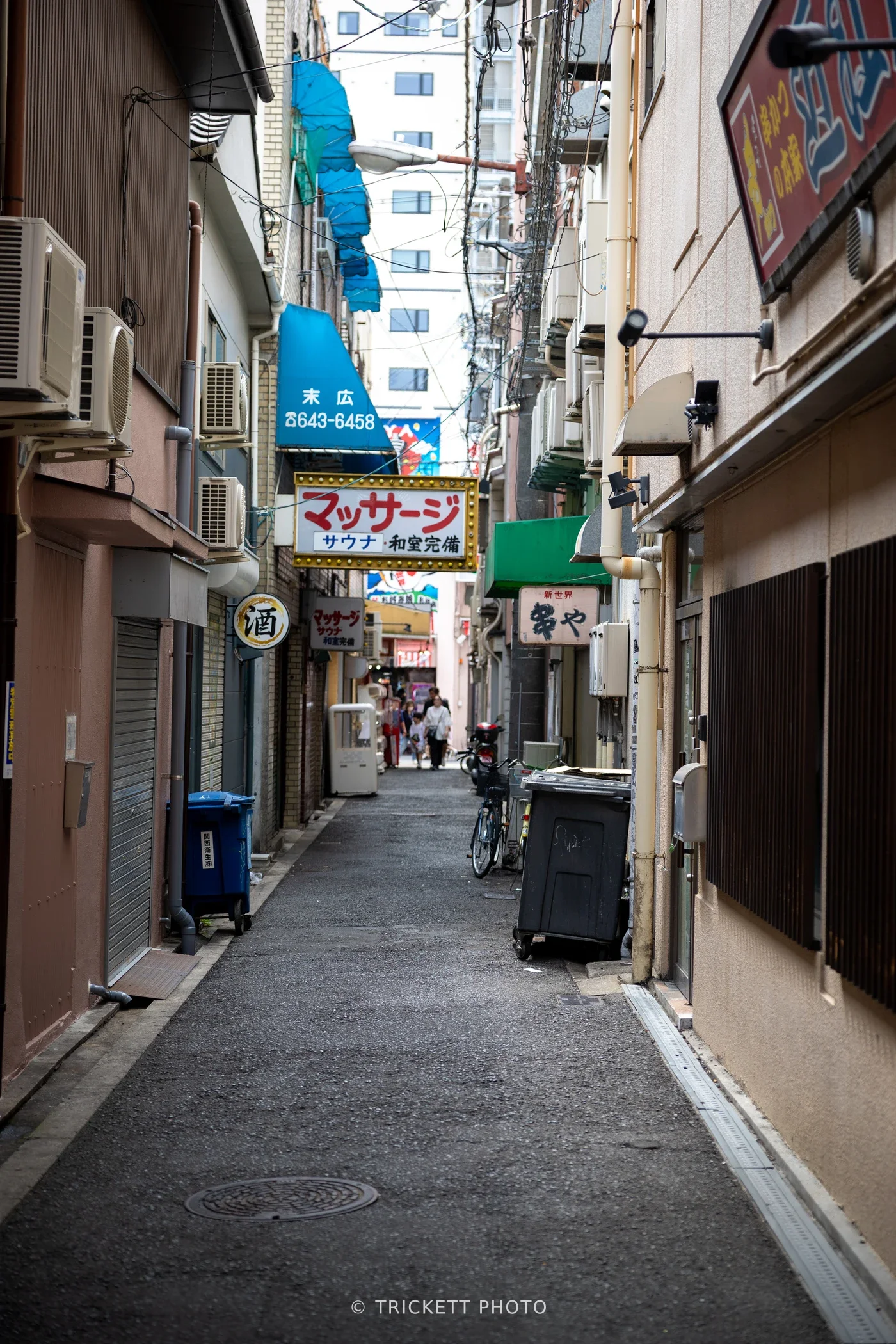
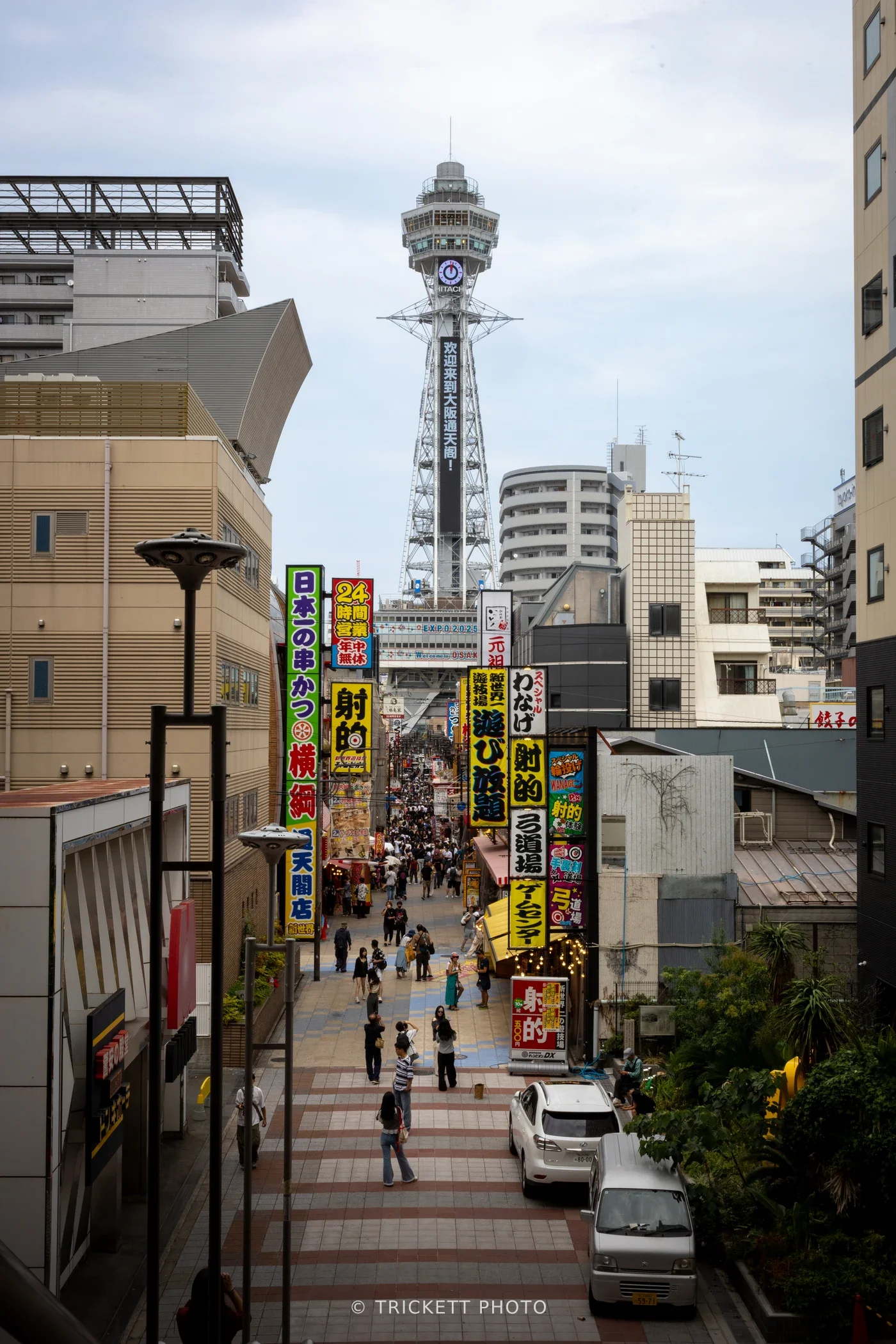
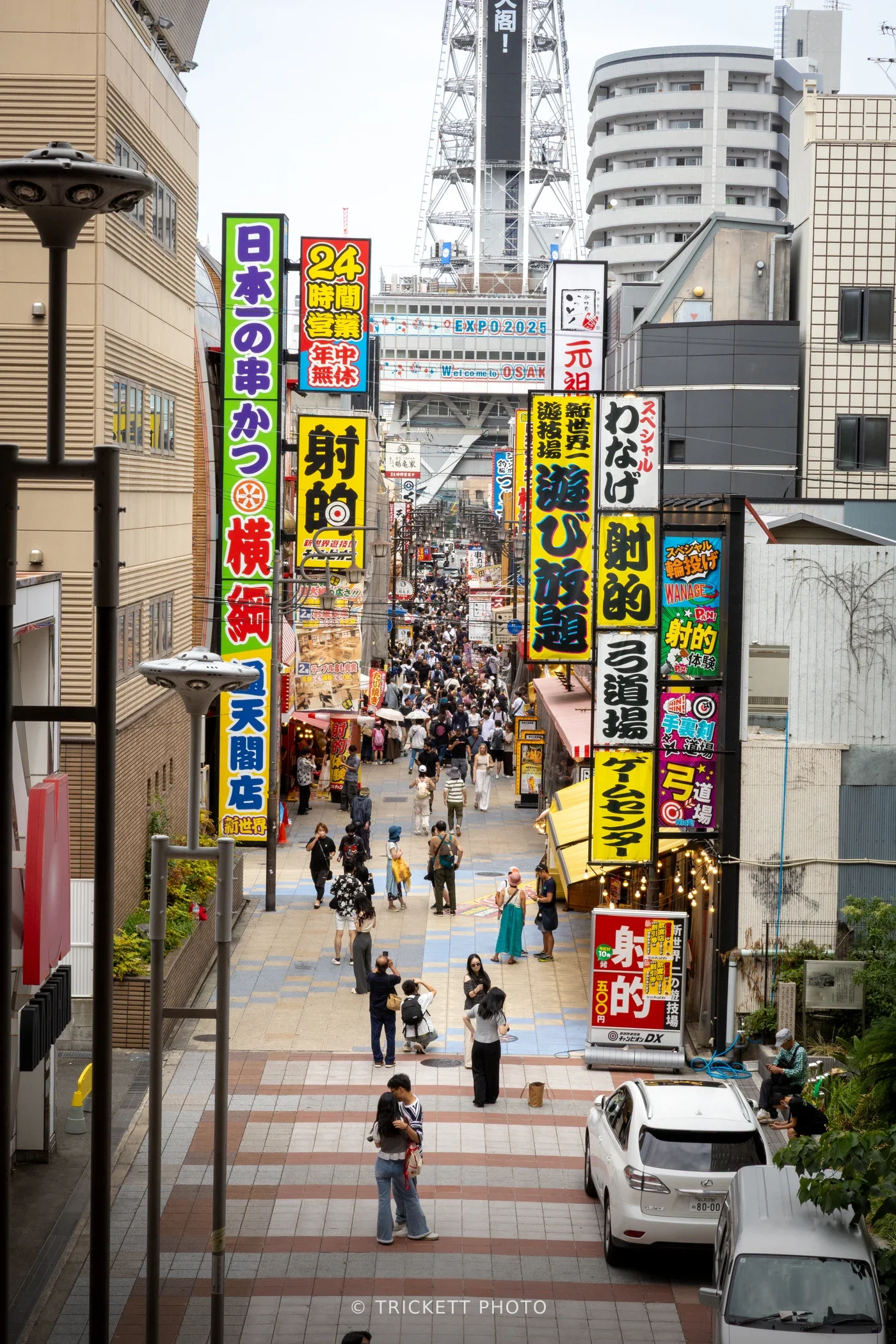
In a separate albums you’ll see our entire visit to a cat cafe as well as our experiences at shopping districts.